

Togo First
Togo recently raised CFA36 billion on the regional financial market

For its second issuance of securities on the UMOA-Titres regional financial market, Togo raised CFA36 billion, over an initial target of CFA20 billion.
Subscription rate for the operation was 180% and the country kept CFA22 billion.
In detail, investors living in Togo subscribed at a level of CFA18 billion (CFA14 billion retained), attesting that the country regained the trust of the local private sector, just like investors from other countries within the WAEMU.
In descending order, the best subscribers are Senegal (CFA6.5 billion retained), Côte d’Ivoire (CFA4.4 billion offered and 82 million CFA retained), Benin, among others.
The next issuance on the regional market is planned on February 8, 2019.
Séna Akoda
Yaovi Sedjro, best young entrepreneur of 2019, to represent Togo in Morocco
Yaovi Sedjro, the young Togolese agripreneur, won last Friday the award of the Best young entrepreneur of 2019 and will represent Togo at the coming CONFEJES’ (Conference of ministers of youth and sports from Francophonie countries) young entrepreneur international contest, next March in Morocco.
The award was given by the ministry of youth, to the best young entrepreneur backed by the Program to Promote Entrepreneurship for Youth (PPEJ). This program aims to select Togo’s three best young entrepreneurs.
The value of the prize won by Yaovi Sedjro is CFA200,000. This adds, as said earlier, to his participation in the CONFEJES contest which gathers best entrepreneurs from each of the five countries of the conference.
Togo’s port traffic grew by 25% in H1 2018, IMF says
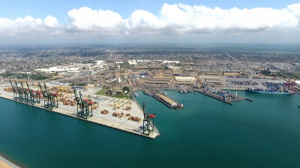
Togo’s port traffic increased by 25% between January and June 2018, a note from the International Monetary Fund (IMF) revealed.
According to the Fund, the increase, paired with good results in the sectors of agriculture (cotton) and mining (phosphate), helped stabilize the country’s economic activity. The latter actually grew 4.7% in 2018.
The Bretton Woods organization expects the country’s economy to grow by 5%, taking into account the first PND projects underway to make Togo a major logistics hub as well as a dynamic financial place and a solid industrial base (with industrial parks).
According to Dynamar, Lomé became at the end of 2017 the main container port of the sub-region, stealing Lagos’ place.
Fiacre E. Kakpo
Togo to pay next February 17 the first tranche of profits associated to its 2016-2026 6.50% Sukuk

Togo will, on next February 17, proceed to the semester payment of profits and partially reimburse capital associated to its “2016-2026 6.50% State Sukuk”, BRVM revealed in a statement.
While no detail filtered about the amount of this first partial payment, the notice released by the Joint Fund for Receivables Securization upon the sukuk’s issuance for its part indicates that a little more than CFA16.309 billion will be paid, over a total of around 217.635 billion.
This would be the first of 16 tranches to be made with the last set on August 17, 2026.
Let’s recall that Togo subscribed, in the framework of this sukuk, a total nominal amount of 150 billion CFA for a projected maturity period of 120 months, with a two-year grace period, at a unit price of CFA10,000.
According to the Islamic Development Bank, “a Sukuk is the Islamic equivalent of the western bond. However, unlike regular bonds where the investor owns a debt obligation owed by the issuer, a Sukuk provides the investor owns part of an asset linked to the investment, and also a portion of earnings associated to the asset, and shares part of the related risks. This complies with the Sharia – Islamic religious law, which prohibits interest billing or payment”.
Séna Akoda
Togo : Supreme Court to process in the next six months 500 pending cases dating from 1994 to 2010
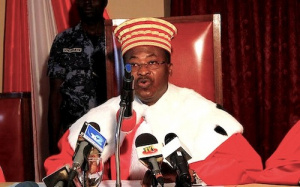
On Wednesday 23 January, Togo’s Supreme Court started processing all its pending cases. The procedure is to use six months to process 500 cases overall.
These cases cover the 1994-2010 period. The Court will process the cases during extraordinary audiences. This will satisfy tens of complainants who have been waiting for many years for the justice to deliberate on their cases.
While land issues represent most of the cases to process, according to Akakpovi Gamato, President of the Supreme Court, “there are also cases related to maritime issues, commercial issues”…and many more.
The magistrate adds that the new campaign marks a new era, an era in which “every actor, magistrates especially, is called to talk the law, only the law”, to better serve the Togolese people.
The campaign is backed by the European Union, through its Justice Support Program (PASJ) launched in 2016.
Ayi Renaud Dossavi
In 2019, Togo could get three new financing worth more than $100M from the IMF
This year, the International Monetary Fund (IMF) could provide Togo three new financing facilities valued at about $35 million each. However, the funds’ disbursement is conditioned by results of ECF-backed three-year program approved in May 2017 for the country, for an amount of nearly $241.5 million, when the agreement was signed.
This program was reviewed three times, enabling multiple disbursements. Overall, four transactions were conducted since the deal’s signing. The last of these four disbursement operations took place last December bringing total amount provided by the IMF in the framework of the program to 100.68 million SDR (around $139.5 million).
In 2019, three more reviews are expected. Each, depending on their conclusion, should result in a disbursement of 25.17 million SDR (around $35 million). This makes a total of at least $100 million in case all the reviews are conclusive. Respective approvals for the operations are expected in March, September and December.
Let’s recall that the program mentioned aims at reducing Togo’s budget deficit to ensure a long-term sustainability of its debt and external position, while reorienting economic policy toward an inclusive growth leveraging specific social expenses and viable infrastructure financing. It also intends to fix financial shortcomings of the two public banks.
Fiacre E. Kakpo
Togo : Yawa Tsegan Djigbodi becomes the first president of the national assembly in the history of the country

For the first time in Togo’s history, the national assembly will be presided by a woman: Yawa Tsegan Djigbodi is the new president of this assembly.
She is replacing Dama Dramani, president of the former mandate during which she was the first quaestor.
The ex-tax inspector who has also been the chief of staff of the ministry of transport will have the huge task of leading the parliament whose pressing areas are institutional and constitutional reforms.
“We will all work to give a new image to our assembly”, she said after her election during a process where she was the only candidate.
Elected to represent them at the national assembly by Kloto-Kpelé residents, the new president who is also treasurer of the national bureau of Unir (the ruling party) is not the only woman in the parliamentary office. She is backed by ten other deputies, including three women and the youngest member in the history of that office.
At 28, Tsitsope Kodzo Ameganvi, the young deputy of Nouvel Engagement Togolais (NET), is chosen as the third quaestor.
Newly elected parliamentary officers
President : Yawa Tsegan Djigbodi
First vice-president : Babiégue Taïrou
Second vice-president : Ibrahima Memounatou
Third vice-president : André Johnson
Fourth vice-president : Yaovi Missiame Adjourouvi
First parliamentary secretary : Kossi Donko Kasségnin
Second secretary : Léonardina Rita Doris de Souza
Third secretary : Mantöde De Poukn
First quaestor : Abiratou Bonfoh
Second quaestor : Modjibo Eklou Essohanam
Third quaestor : Tsitsope Kodzo Ameganvi
Fiacre E. Kakpo
Togo: OTR sets an electronic database for property titles

Togo Revenue Authority (OTR) announced it has just established an electronic database for land titles. The move aligns with a set of reforms deployed to reassure populations and investors, particularly with regard to land tenure in the country.
According to OTR, this tool makes it possible to know, in real time and chronological order, the nature of transaction/operation carried out on a land title. As a result, the institution will be able, at request, to easily identify if a particular property has been sold, mortgaged or if its title deed has been transferred.
Another advantage is that this database seems to reflect the view of OTR to gradually tap into digital filing of land documents. It is expected to ease the search for an established title to a property, significantly reducing the time required to do so.
Séna Akoda
Togo: South Korean foundation Saemaul invests CFA2.7 billion in Kara agropole
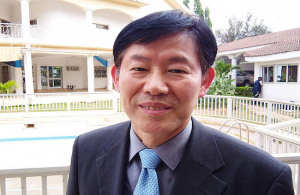
South Korean foundation Saemaul Undong will inject CFA2.7 billion in the agropoles project in Togo. In addition, the Asian foundation will provide technical training to local agricultural actors.
A support convention was recently signed between the foundation and Togo. In this famework, Korean experts started a reference mission this week, going around all 10 agrofood-processing centres of the Kara agropole.
Saemaul’s support should also boost the Togolese project which was launched two years ago and falls under the second axis of the national development program (PND).
Already, 35 billion CFA has been secured from the AfDB and BOAD for the project which requires about CFA64 billion overall.
The agropole project is steered by the Agency for the Promotion and Development of Agropoles in Togo (APRODAT).
Ayi Renaud Dossavi
Togo: OTR launches online platform for land complaints submission

Togo’s Revenue Office (OTR) just launched an online platform where it is possible to file complaints related to land issues.
The platform receives and processes any complaint related to land and cadaster. In effect, complainants fill a form, adding the object of the complaint, phone number, place of residence, etc. OTR’s audit directorate then responds to the complaints within 48 hours.
This platform allows on one side the people to get clarifications and easily report their complaint and on the other, improvement of OTR's services, especially relative to land. Its establishment falls under a battery of reforms put in place by the OTR to improve Togo’s business climate.
Séna Akoda