
Togo First
Togo: South Korean foundation Saemaul invests CFA2.7 billion in Kara agropole
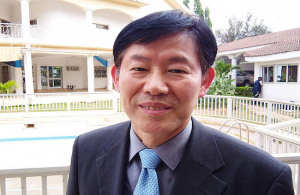
South Korean foundation Saemaul Undong will inject CFA2.7 billion in the agropoles project in Togo. In addition, the Asian foundation will provide technical training to local agricultural actors.
A support convention was recently signed between the foundation and Togo. In this famework, Korean experts started a reference mission this week, going around all 10 agrofood-processing centres of the Kara agropole.
Saemaul’s support should also boost the Togolese project which was launched two years ago and falls under the second axis of the national development program (PND).
Already, 35 billion CFA has been secured from the AfDB and BOAD for the project which requires about CFA64 billion overall.
The agropole project is steered by the Agency for the Promotion and Development of Agropoles in Togo (APRODAT).
Ayi Renaud Dossavi
Togo: OTR launches online platform for land complaints submission

Togo’s Revenue Office (OTR) just launched an online platform where it is possible to file complaints related to land issues.
The platform receives and processes any complaint related to land and cadaster. In effect, complainants fill a form, adding the object of the complaint, phone number, place of residence, etc. OTR’s audit directorate then responds to the complaints within 48 hours.
This platform allows on one side the people to get clarifications and easily report their complaint and on the other, improvement of OTR's services, especially relative to land. Its establishment falls under a battery of reforms put in place by the OTR to improve Togo’s business climate.
Séna Akoda
Egyptian group Orascom to expand across sub-Saharan Africa, Togo included
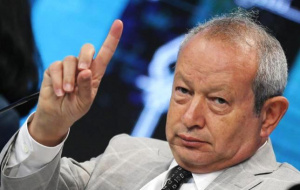
Orascom, the group owned by Egyptian business mogul Naguib Sawiris, Africa’s richest person according to Forbes, plans to invest in many sub-Saharan African countries including Togo.
To this end, the group intends to use a $170 million financing it obtained from the Africa Export Import Bank (AfreximBank).
Besides Togo, other countries the group plans to expand to include Rwanda, Eritrea, Nigeria and Sao Tomé & Principe.
For Sawiris, the collaboration with the pan-African bank aligns with his group’s goal to “significantly help the potential of intra-African investment blossom”.
Orascom operates in the sectors of telecommunications, new technologies, media and construction. In 1998, it launched Egypt’s leading phone operator, Mobinil.
Ayi Renaud Dossavi
Burkina Faso, Benin and India were Togo’s top 3 exports destination in H2 2018
During the second half of 2018, Burkina Faso, Benin and India were Togo’s main customers. This is revealed in an economic, financial and social report released by Togo recently.
Data from the report indicates that Togo’s exports to Burkina Faso represented 39.5% of all its exports across the West African Economic and Monetary Union (WAEMU). Exports to Burkina Faso comprised mainly “clinker cement, sachets, plastic pockets and cones”.
Behind Burkina Faso is Benin which captured 19.5% of all Togolese exports within the WAEMU over the period reviewed. The exports comprised mostly “bags, sachets, plastic pockets and cones”, beauty products and refined palm oil.
Third is India which captured 7.2% of Togo’s overall exports, worth CFA15.9 billion, in the second half of last year. This is against 5% in the previous half; a volume valued at 12.3 billion CFA. Exports to India included mainly “flat rolled iron or non-alloy steel products, not plated or coated”.
Séna Akoda
Over the past month, property transfer delay reduced to 7 days average

From December 13, 2018, to January 15, 2019, average delay for property transfer in Togo was seven days, from nine days previously, a note from the tax commissioner office reveals.
The delay period starts from submission of transfer demand.
The improvement aligns with the country’s efforts to better its business environment. Actually, other reforms implemented in this framework include: creating a single desk for property transfer and the dematerialization of land titles enabling investors and the people rapidly get their deeds.
Most of all, the improvements allow business owners to get bank loans mortgaging their lands when required.
Togo let’s recall soared in the Doing Business ranking, from the 182nd position in 2018, to the 127th position in 2019.
Séna Akoda
Togo may get CFA614 million from GEF by 2021 to tackle coastal erosion
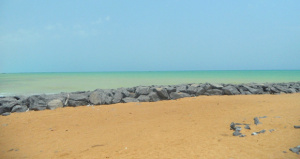
The Global Environment Facility (GEF) plans to spend in Togo about CFA614 million, over the next two years, on the project to boost resiliency of coastal populations against climate change.
Announced on January 17, 2019, this project is carried out by the Togolese division of the World Food Program (WFP), and aims to subsequently slow the sea’s progression. To do so, coastal people, youths and women especially, will be taught how to establish revenue-generating activities, besides selling sea sand which aggravates coastal erosion.
Indeed, for more than ten years now, the sea has been advancing at an average pace of 10m per year, in some places. A phenomenon exacerbated by the sale of sea sand.
New activities to which the populations will be trained include vegetable farming, aquaculture and fishery products processing.
This is not the first time, let’s note, that Togo gets support from the GEF to protect its environment. This month, seven NGOs received around CFA145 million, under the microfinancing program, also steered by the same fund.
Ayi Renaud Dossavi
Togo : Customs gets new intervention unit to fight smuggling
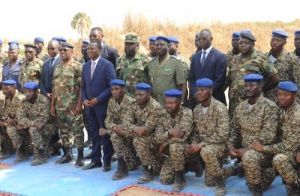
On Jan 21, 2019, Togo’s revenue office (OTR) will receive the first batch of its special customs intervention unit (USID).
The new task force’s creation aims at improving operational capacities of Togo’s customs services. This first batch regroups 33 civil servants. They followed a nine-week training during which they were taught combat skills, close protection, escorting, and goods conveyance.
The USID’s mission will mainly be to “efficiently fight smuggling and prohibited trafficking as these impair the country’s economy”, reveals Col. Monigbeni Mongorgou, commander of the first military region of Togo. The special armed and mobile force will perform police and security tasks, carrying out investigations and interventions, during special operations.
According to Kodjo Adedze, General Commissioner of the OTR, “smuggling has gained momentum in the recent years, turning into organized crime”. A situation that called for the creation of the newly established intervention unit.
Ayi Renaud Dossavi
Togo: BOAD to back banks partnering MIFA with credit lines
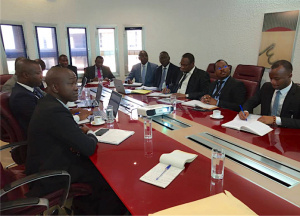
The West African Development Bank (BOAD) has committed to support the Agricultural Incentive Financing Mechanism (MIFA). The news was disclosed by MIFA’s deputy coordinator for the pilot phase, Aristide Agbossoumonde.
On January 21, 2019, MIFA’s coordination team was at the BOAD’s headquarters to proceed to the project’s presentation. The mechanism aims to boost farmers’ access to bank loans.
The deal with BOAD will first help secure funds more easily from banks involved in the project. Secondly, it is a strategic partnership which will support the development of the mechanism.
According to sources close to the coordination team, once the partnership agreements are effectively signed, Orabank and other financial institutions partnering the MIFA should get credit lines dedicated to agriculture financing.
Séna Akoda
Cizo Project: Kya Energy selected to build five solar academies in Togo
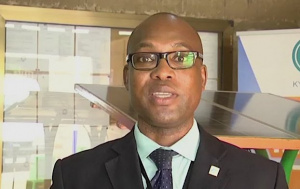
Kya Energy, local firm specialized in producing solar-powered generators, will build five solar academies across Togo. The firm recently secured the related contract.
This project falls under the CIZO, an electrification program funded by the African Development Bank (AfDB) and steered by the Togolese Agency for Rural Electrification and Renewable Energies (AT2ER).
Leveraging its substantial access to solar energy, Togo plans to train some technicians to deliver adequate services under its solar development strategy. In this framework, the solar academies will train and certify local technicians and installers.
Under its contract, Kya Energy will have to create and equip the five solar academies, which are spread across Togo’s five regions. In the long run, the academies will train 3,000 technicians (600 per academy) to off-grid solar energy. The project is expected to last six months.
Let’s recall that Kya Energy Group, led by Yao Azoumah, won last November BOAD’s first prize for best innovative renewable power project. The corresponding reward was CFA30 million, among others, granted by Danish firm ByteBlocs.
Ayi Renaud Dossavi
Togo: 25% of firms registered in 2018 are owned by women
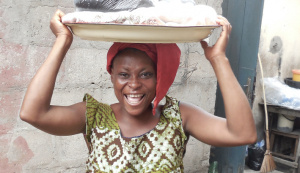
In Togo, 25.61% of newly registered firms at the center for business formalities (CFE) last year are owned by women. The number is 2,701 businesses out of 10,545 businesses registered overall.
According to studies from the World Bank on a sample population of 1,500 micro-enterprises in Lomé, it appears that more women who are getting more involved in the private sector are performing better.
The survey’s statistics indeed state that profits of trained entrepreneurs, men and women, soared by 30% average over the period under review. For women alone, profits grew more than 40%.
Fiacre E. Kakpo