

Togo First
South Korea to support Togo’s agropole project
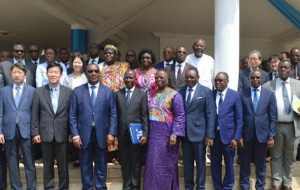
South Korea will technically and financially support the Kara agopole project (414km North of Lomé). A financing agreement was signed in this framework last Friday, by Sani Yaya, minister of economy and finances, and Tchang Dong-Hee, president of South Korean foundation Saemaul Undong, under the Togo agrofood processing project (PTA-Togo).
Under the deal, the foundation will help boost capacities of local agricultural actors through technical trainings, introducing them to the South Korean experience, especially in terms of agricultural products processing.
Togo’s Prime Minister, Komi Selom Klassou, who was present at the signing ceremony, recalled that in the framework of a national development program, Togo’s new strategy focuses on “ways to boost agroindustries via agropoles”, in order to “consolidate food security bases as well as accelerating economic growth and promoting wealth and job creation, in rural areas particularly”. South Korea’s financing is hence quite opportune.
Kara’s agropole project, was launched two years ago and falls in line with the second axis of the National Development Plan. Valued at CFA64 billion, 35 billion has already been secured towards its realization. Preparatory stage for the project is expected to be completed this year.
Ayi Renaud Dossavi
Champiso drinks to soon be sold in Canada and Egypt

Soon, the mushroom-based drinks made by Togolese entrepreneur Edem Bessanh will be sold in Canada.
We have signed a contract with businessmen and under the deal, our firm, Champiso, will soon be represented as a franchise in Canada, Bessanh told Togo First in an interview.
According to the entrepreneur, detox products are very much appreciated in developed countries, due to their medicinal nature. He then explained the decision to open a franchise by needs to find favorable outlets for his business.
Actually, this experience will be replicated in Egypt. “Soon, we will do the same in Egypt. With the government’s support, we took part at the end of December 2018 in a major business forum in Egypt and found there partners that are ready to acquire the firm’s franchise and produce our drinks”.
Séna Akoda
Togo reaffirms zero-tolerance policy against corruption
On Thursday January 17, 2019, the Higher Authority for the Prevention and Fight against Corruption and Related Offences (HAPLUCIA) organized an anti-corruption sensitization campaign targeting Togolese private sector actors.
The campaign whose theme was “Contribution of citizens in the fight against corruption and related offences”, aimed at reaffirming Togo’s zero tolerance policy in terms of corruption.
The HAPLUCIA plans, according to its president, to use the private sector as a vector to tackle this plague. Often, he says, “it is believed that if the corrupted individual is a public officer, the one corrupting is in the private sector”.
Ending corruption, he also emphasized, aims at “protecting the whole economy, including the private sector”.
According to the minister of trade and promotion of private sector, Togo’s anti-corruption strategy led the government “over the past decade, to create various institutions such as the general inspectorate general of finances, the inspectorate general of the treasury, the court of accounts and the Togolese revenue office”. The minister added that “multiple efforts are being made to enable the private sector to significantly contribute to job creation, economic growth, poverty reduction and national development”.
Created in July 2015, the HAPLUCIA’s purpose is to reduce corruption in Togo, facilitate related complaints, protect whistleblowers and ensure the respect of the presumption of innocence.
Ayi Renaud Dossavi
Togo: Government raises taxes on alcoholic drinks and tobacco products

Togo’s government has under the new tax regime, effective since January 1, 2019, raised taxes on some products like alcoholic drinks and tobacco products.
In detail, the new general tax code stipulates that excise duty on alcoholic drinks is 50%. This is 15% more than the tax imposed the year before.
Similarly, tax on tobacco products has been increased to 40%, up 5% compared to 2018.
According to tax expert Coco de Souza, increasing these taxes aim at reducing the excessive consumption of these products as cigarette and alcoholic drinks producers keep prospering in the country. This, despite the multiple sensitization campaigns carried out by authorities and civil society organizations to inform populations about the negative impacts of abusing the products.
Séna Akoda
Togo: European Union and German cooperation invest CFA4bn in the pineapple sector
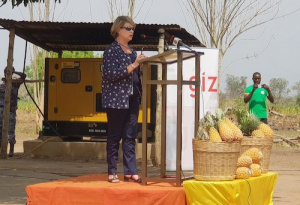
In Togo, the pineapple sector just received from the European Union a support facility of about CFA4 billion.
The financing is provided in the framework of a project to boost the pineapple industry’s competitiveness. The latter, which is co-financed by the European Fund for Development (EDF) and the German cooperation, was launched this Thursday at Afrik Excel, a pineapple-processing facility located in Adangbé (46km North-East of Lomé), by Togo’s minister of industry, Yaovi Ihou, and Cristina Martins Barreira, head of the EU delegation in Togo.
In effect, the project will help reduce production and commercialization costs in the pineapple sector, thus making it more competitive. This would in parallel ease small farmers’ access to the various sales chains, in the country and outside.
There are nearly 400,000 pineapple growers in Togo and the recent financing is not the first captured by the sector. Indeed, in 2018, the World Bank and some private investors like the Moringa Fund which specializes in agroforestry projects across sub-Saharan Africa and Latin America, injected monies into this sector, via the Agriculture Support Project (PASA).
Ayi Renaud Dossavi
Socio-political crisis must end for Togo’s economy to restart fully in 2019, AfDB says
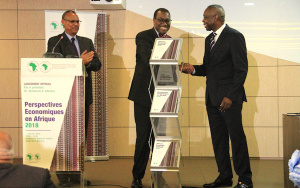
Togo’s “GDP growth should reach 5% in 2019 and 5.3% in 2020, given that the ongoing political crisis is solved and public and private investments improve”, says the African Development Bank (AfDB) in its 2019 Africa economic outlook report, released January 17.
Regarding the crisis mentioned by the report, it began mid-2017 opposing the actual government by the main opposition coalition which announces new protests on Jan 26. The crisis was marked by multiple socio-political protests paired with a contraction of public investment, of more than 40%. However, the pan-African bank expects Togo’s economy to get as dynamic as in 2016.
In detail, inflation, which was negative in 2017 and relatively low (0.4%) in 2018, “should stand at 1.2% in 2019 and 2% in 2020”, AfDB forecasts. Similarly, budget deficit should improve to 1.6% of GDP in 2019, after being at 9.6%, 2.1%, and 6.7% in 2016, 2017 and 2018 respectively.
As for current balance deficit, it also is expected to fall, from about 7.9% of GDP in 2018 to 6.8% in 2019, as a result of better clinker, cotton and phosphate exports.
Budget adjustment adopted in 2017 with the IMF should bring debt level below 70% of GDP this year, against 82% in 2016. This figure would align with standards set by the WAEMU commission.
Fiacre E. Kakpo
Togo : A single 18% tax rate to replace VAT

In Togo, companies that pay value added tax (VAT) must from now on pay a single 18% tax rate. This was disclosed by Ahmed Esso-Wavana Adoyi, Tax commissioner at the Tax Revenue Office (OTR).
The new measure was set under the new tax regime, in effect since Jan 1.
“We have been scolded by the WAEMU. Now, it is either the 18% or nothing,” claimed the commissioner.
As for VAT loans, an escrow account will be created to ensure their rapid reimbursement.
At the end of 2018, the OTR decreased VAT on basic commodities from 18% to 10%. Actually, the tax was suppressed for non-processed milk, rice (excluding first-class rice), mobile terminals and IT equipment, leasing transactions in transport and clean power production equipment.
Fiacre E. Kakpo
UMOA-Titres : Togo seeks CFA20bn via fungible treasury bonds issuance

Two weeks after a mitigated first bond issuance on the UMOA securities market, Togo announces for January 25, 2019, a second issuance of fungible treasury bonds on this market.
For the upcoming operation, the country has a target of CFA20 billion.
According to the UMOA-securities regional agency, nominal value for each security that will be issued under the operation is CFA10,000, with a maturity period of three years. Interest rate is 6.25% and the bills are repayable yearly, starting from the first year of maturity. This rate is more appealing than the one set for the issuance of fungible treasury bonds by Benin on Jan 24, knowingly 6.10%.
The securities issued on Jan 25 will come into value Jan 28, 2019, and thus mature Jan 28, 2022.
The bonds will be repaid the first working day following the maturity date.
Séna Akoda
Over 10 years, the UNDP spent about €2.3 million on environmental protection in Togo
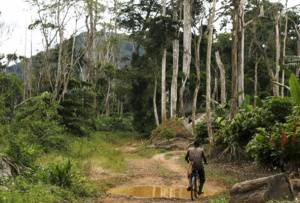
Recently, seven Togolese NGOs received around CFA145 million from the UNDP, under the Global Environment Facility’s Microfinance Program (PMF/FEM).
With this funding, the PNUD invested €2.3 million or CFA1.5 billion in environmental protection in Togo, over 10 years.
Projects backed by the institution cover the preservation of mountain ecosystems, preserving community forests, developing rural forests, promoting ecotourism, collecting and recycling plastic waste, as well as teaching about sustainable land management practices.
In the long run, these projects aim to reduce poverty and make populations more resilient to global warming effects.
Ayi Renaud Dossavi
Germain Méba re-elected as president of the CCIT
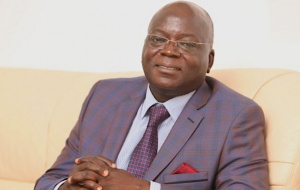
On Tuesday, January 15, 2019, Germain Essohouna Méba was re-elected as the head of the chamber of commerce and industry of Togo (CCIT).
His re-election happens at a time the private sector is expected to play a major role in the development of the national development plan (PND).
During his first mandate, the private sector’s activity grew with for example its participation in the Business Forum organized by Togo in Hangzhou, China, last September, the first international import fair of Shanghai, and also signing an agreement with the China Council for the Promotion of International Trade (CCPIT).
There were also various fairs organized in the country, including for example the Grande Quinzaine Commerciale de Lomé, which helped business owners get closer to their customers.
The CCIT's new office has seven members.
Octave A. Bruce