
Togo First
Tony Elumelu Foundation opens applications to its $100m Entrepreneurship Programme for young Africans
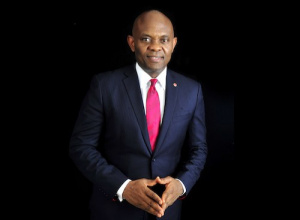
The Tony Elumelu Foundation recently opened applications to the new edition of its Entrepreneurship Programme. With a budget of $100 million, this program targets young Africans with business projects or entrepreneurs who have been in business for at least three years.
Selected participants will get a seed funding of $5,000 and will be provided training in business management, mentorship and networking to support their projects and give them visibility to achieve this.
According to Tony Elumelu, President of the eponymous foundation, the goal is to give young African entrepreneurs the chance to develop projects. “These may be the next UBAs (United Bank for Africa),” said the business mogul while referring to his professional path. “I am a beneficiary of luck, and I am passionate about sharing it across the continent, to all 54 countries,” he added.
Overall, 1260 spots are open starting January 1, 2019. Deadline for submission of applications is March 9, 2019.
Séna Akoda
Kennedy Round Project : Japan provides 4,787 tons of white rice to Togo
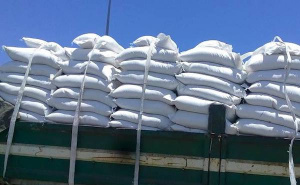
Last Friday, Togo officially received almost 5,000 tons of rice from the Japanese government. The shipment which arrived at the Port of Lomé on December 31, 2018, falls under bilateral cooperation between Japan and Togo, and specifically in line with the Kennedy Round project.
The latter enables developing nations that face food shortages to get agricultural input and supplies, namely cereals (rice and wheat) for the most disadvantaged populations.
Worth more than CFA9.5 billion, the rice sent by Japan, once sold, should enable Togolese authorities to have funds required for various socioeconomic development projects.
These projects according to Togo’s minister of agriculture, Ouro-Koura Agadazi, include opening up rural areas by rehabilitating 150km of rural roads, building basic social infrastructures, carrying out sanitization initiatives in Lomé, and ensuring the efficient management of urban waste.
Séna Akoda
Togo : Prime Minister steps down at the end of his tenure
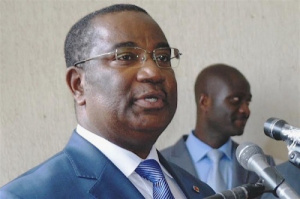
On January 4, 2019, Prime Minister Komi Selom Klassou, stepped down from office.
The move takes place, as constitution requires, after the legislative elections which were held last December 20 and whose final results were released December 31 by the constitutional court.
Pending the appointment of a new Prime Minister, Komi Selom Klassou will remain at his position as acting PM. Before he came into office on June 10, 2015, his predecessor was Arthème Ahoomey-Zunu.
Togo plans to raise CFA390 billion on the regional stock this year, 95 billion this quarter
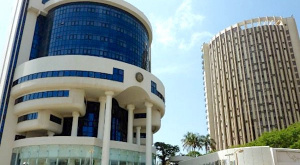
This year, Togo’s public treasury seeks CFA390 billion of the regional stock market. This is out of the 2,778 billion the stock plans to issue, according to a note released by the UMOA Securities Agency for its investors.
In detail, Togo should raise in the first quarter of the year CFA95 billion, up CFA5 billion compared to the previous year. Together, all WAEMU States should over the period raise CFA932 billion.
Breaking down the monies that should be raised during the current quarter, there is 55 billion of fungible treasury bonds and 40 billion of fungible treasury bills.
Regarding the latter, Togo will first issue 20 billion of fungible treasury bills, on January 10. The remaining 20 billion are to be raised through the same operation on February 8.
As for the fungible treasury bonds, the Togolese government should seek 20 billion respectively via two issuances, one on January 25 and another on March 8. The last 15 billion, the country will try to raise on February 22, 2019.
Séna Akoda
Internet: Teolis launches “Dream”, a broadband offer for homes and small enterprises

Ten months after starting activities in Togo, Teolis, the internet service provider, officially launched last Thursday its “Dream” offer in Lomé, the capital.
Launched earlier than announced, the new offer is dedicated mainly to households, startups and SMEs. It aims to provide access to broadband in line with the budget and demand of customers.
In detail, the ISP’s dream offer is divided into the Dream Basic module for homes or individuals, and the Dream Privilege module for SMEs and very small enterprises, “based on criteria like the number of users and required capacity”.
For the moment, the new offer is available only in Lomé and its surroundings. It costs CFA20000 per month (for 4Mb).
Teolis is Togo’s third internet service provider. Other ISPs are Togo Telecom and the Vivendi group.
Octave A. Bruce
CEET launches national tender to rehabilitate Kpimé’s hydropower plant
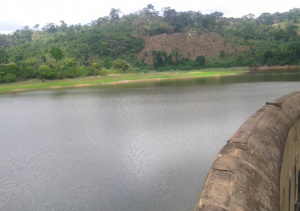
Using its own funds, Togo’s power utility, Compagnie Energie Electrique du Togo (CEET), will rehabilitate Kpimé’s hydropower plant. This infrastructure has an installed capacity of 1.6MW which is 1% of the country’s demand.
A national tender was launched to recruit a firm to carry out the works. Firms applying must have carried out a similar task, both in size and complexity, in the past five years.
According to the CEET, firms with access to public procurements that have an execution rate of less than 70% cannot participate in the tender.
In addition to the Kpimé dam, the government plans to develop, under its national development plan (PND), an energy program that will help “tap into the country’s hydropower potential through the construction of the dams of Tététou (50MW), Danyi-Konda (10 MW), Baghan (6 MW), Landa-Pozanda (4 MW)”.
According to the authorities, focusing on developing renewable energies should enable access to more reliable and affordable power services.
Regarding the current tender, deadline for the submission of applications is January 31, 2019.
Fiacre E. Kakpo
Togo and four other African countries join Asian Infrastructure Investment Bank
Togo is now a member of the Asian Infrastructure Investment Bank (AIIB), a multilateral institution created in 2015 by China. On the same date, Algeria, Ghana, Lybia, Morocco and Serbia also became members of the institution.
Approving these countries’ adhesion aligns with a decision taken by the bank’s board of governors to reduce the significant western authority on the governance of existing multilateral lenders, namely the World Bank and IMF.
As a result, Washington and Tokyo are somehow wary of the institution. Indeed, they suspect that China wants to use it to serve its geopolitical interests. China holds 30% of the AIIB’s capital and 26% of voting rights.
By joining the Asian investment institution, Togo wants to take advantage of the best conditions possible to finance its infrastructure projects.
Counting the new members, the AIIB now has 93 members. Within three years only, 36 States joined the institution, adding to the 57 founding members. “This shows our members’ commitment for multilateral cooperation and it reinforces the AIIB’s role across the international financial community,” said AIIB’s vice president and secretary general, Danny Alexander.
Séna Akoda
Togo : Contour Global now uses only natural gas for its operations
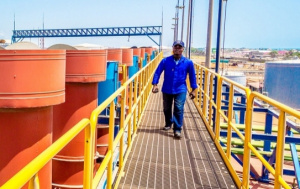
In Togo, Contour Global’s power plant now runs only on natural gas. This was recently disclosed by the country’s power utility, Compagnie Energie Electrique du Togo (CEET).
This happens a few weeks after the firm switched to gas to fuel half of its operations.
Now, the full switch will help optimize CEET’s energy mix and gradually invert the back-up regime to a continuous one.
Also, it should significantly reduce greenhouse gas effects and Togo’s dependency on power import. CEET is still looking for ways to fuel its engines with natural gas.
Séna Akoda
ECOWAS growth forecast for 2018 reduced to 3%, from 3.2% initially
Growth rate across the Economic Community of West African States (ECOWAS) should stand at 3% this year, a slight reduction compared to an initial forecast of 3.2%. This was announced during the ECOWAS’ 54th ordinary session last Saturday.
While lower than the figure announced at the 53rd session, the current forecast still exceeds those of 2017 (2.3%) and 2016 (0.2%).
The rise, according to the ECOWAS, is due to a rapid growth in many countries and especially to the consolidation of Nigeria’s economy. Regarding the latter, by the end of this year, it should grow by 2%.
Looking into Togo’s case, over the past three quarters, its growth rate was on the rise, going from 4.5% in the first quarter, to 4.7% in the second and 5% in the third. For the year, average growth is expected to stand at 4.9%.
The ECOWAS has urged the States to “pursue efforts to diversify their economies and implement specific policies to boost sectors that have a great impact on their growth”.
Ahlonko Octave BRUCE
BIDC approves financing of a new rural electrification project in Togo
On the sideline of its 60th board meeting, the ECOWAS investment and development bank (BIDC) has approved a $13 million financing for a Togolese power project.
While no other detail was disclosed about the project, based on information released after the bank’s 59th board meeting last October 25 it may be a rural development project.
For Togo, this project will be another step towards achieving its 2030 “universal power access” goal.
Besides approving projects during its latest board meeting, the BIDC reviewed its activity in 2018. In detail, this year, the lender approved 13 projects, 12 of which were successfully executed. The latter were implemented in the health, water and telecommunication sectors.
Next year, the BIDC intends to diversify its shareholding and raise more funds to expand its footprint across the region.
Séna Akoda / Rénaud Dossavi