

Togo First
This is how the CRRH-UEMOA distributes its resources to its member-States
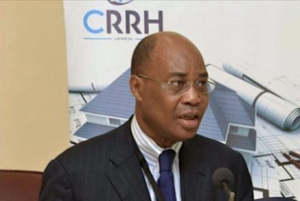
The WAEMU regional fund for mortgage refinancing (CRRH-UEMOA), in the framework of its support to housing, allocates 11% of the resources it raises on the regional financial market to Togo. This is three times more than what it allocates to Benin and Burkina Faso (4%).
However, this is a little lower than what Senegal perceives (12%) while Niger, Mali and Côte d’Ivoire respectively get 25% and 26%.
In terms of concessional loans, the financial institution allocates 12.7% of its resources to Togo, around three times what it allocates to Benin (3.81%). In this category, Senegal, Côte d’Ivoire, Mali and Niger get respectively 15.5%, 17.99%, 23.87% and 26.13%. Only Burkina Faso so far does not get these loans which support housing across the WAEMU.
Séna Akoda
This year, BOAD carried out 39 operations valued at CFA414 billion
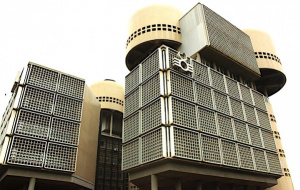
This year, the West African Development Bank (BOAD) approved 39 financing operations worth CFA414.5 billion for the public and private sectors.
This was disclosed on December 11, after the bank’s 111th board meeting. On this occasion, three new projects valued at CFA15.21 billion were approved.
The three commitments include partial financing for the extension of Bobo-Dioulasso dry port in Burkina Faso, with 3.7 billion, a 6.5 billion subordinated loan granted to NSIA Bank Benin (formerly Diamond Bank), and second refinancing line of 5 billion for BSIC Mali.
With these operations, the bank has carried out a total of 1,141 operations, valued at CFA5,308.71 billion, since its establishment.
Fiacre E. kakpo
Togo : Artisans to benefit from a CFA400 million loan facility
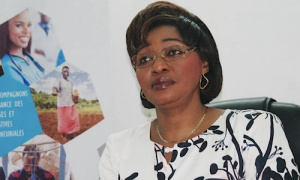
In Togo, the national agency promoting the guaranteeing and financing (ANPGF) of SMEs/SMIs signed last Dec 19, a CFA400 million financial agreement with the Artisans Savings and Loans Cooperative (CECA).
In effect, the agreement will lead to the creation of a microfinance credit line for artisans in need. It is the fourth of its kind between the two institutions.
When they initially entered into their partnership in 2013, the ANPGF provided CECA 150 million CFA. In September 2015, this figure rose to CFA200 million, then 300 million later on. Overall, CFA650 million helped 300 artisans finance their activities. Among these artisans, there is Logou Minsob, creator of Foufoumix, a yam-pounding machine.
The recent agreement increases to CFA30 million the cap for loans provided by microfinance. This is twice more than the sum of loans granted to SMEs and SMIs.
Naka Gnassingbé-De Souza (photo), Managing Director of the ANPGF said the institution’s purpose is to help SMEs and SMIs access bank loans. It also provides financial services and garantees and helps businesses boost their capacities.
Séna Akoda
Ethiopian Airlines now connects Lomé to Los Angeles, via its partner Asky Airlines

On December 17, 2018, Ethiopian Airlines commissioned a direct liaison between Lomé and Los Angeles, US. This new line is the second direct line connecting Togo to the USA.
According to reliable sources, Asky Airlines, Ethiopian Airlines’ partner, will serve the destination on Mondays, Wednesdays and Fridays following the Addis Ababa-Lomé-Los Angeles route.
With this new line, Ethiopian airlines will now provide seven flights on weekly-basis, against four currently.
“With Los Angeles included, Togo is now connected to two US destinations. Ethiopian Airlines already offers a Lomé-New York flight on Mondays, Wednesdays, Fridays and Saturdays,” newsaero indicates.
“The launch of a direct service between Lomé and Los Angeles is a major step in our efforts to connect Los Angeles to the world and the world to Los Angeles,” declared Herb Wesson, president of the Los Angeles city council.
Séna Akoda
Once approved, Oragroup’s listing will be the biggest ever in the history of the BRVM

Oragroup, the Pan-African banking group based in Lomé just announced that the public offering it launched last October was fully subscribed.
Through the operation which began on October 29 and closed November 22, the group opened 20% of its capital to the public. In detail, it issued 6,097,561 new shares through a capital increase, and sold 7,785,445 existing shares, at a unit price of CFA4100, on the secondary market.
The 20% of the shareholding will be floating and the remaining 80% will be kept by the group’s other shareholders, with Emerging Capital Partners (ECP) remaining the major shareholder (50%).
Once listed on the BRVM, Oragroup would have made the stock market’s biggest listing ever. According to Oragroup, the listing should occur during the first quarter of 2019, after it is approved by the regional board for public savings and financial markets (CREPMF) and the BRVM itself.
Fiacre E. Kakpo
By December 31, the CRRH-UEMOA and its partners would disburse CFA224 billion of housing loans

By December 31, 2018, WAEMU’s regional fund for mortgage refinancing (CRRH-UEMOA), would disburse CFA224 billion of housing loans, in line with its mission to improve access to housing across the sub-region.
This was disclosed by the institution’s regional head, Christian Agossa, during a two-day workshop recently held in Lomé. The workshop focused on asset/liability management and on management of housing loans portfolios.
In detail, the regional fund raised CFA165 billion on the regional financial market through eight bond issuances.
It disbursed in 2017 CFA12 billion and 26 billion in 2018 as concessional funds. Also, CFA14.636 billion was mobilized for technical support and CFA5.854 billion as financial resources for the CRRH-UEMOA and its partners.
The institution’s refinancing model relies on concessional funds and market capitals. Its goal in the long term is to expand its activities, efficiently.
Séna Akoda
Togo: CEET reduces connection fees by 50%, to improve business climate
Initially cut by 30%, fees for connection to medium-voltage distribution networks of the nation’s power utility, Compagnie Energie Electrique du Togo (CEET), have now been reduced by 50%, Togo First learnt.
“Fees for provision and installation, VAT excluded, and advances on consumption, in relation to connection to the medium tension (electric equipment and meters) which were initially reduced by 30% are now decreased by 50%,” reads a note from the power utility’s general directorate.
According to the public company, the new reduction aligns with the government’s will to improve Togo’s business climate, by enabling newly established firms to thrive.
Since November 28, 2018, the decrease has been effective and the fees payment can be made over six months. However, a first tranche has to be paid before connection begins.
Fiacre E. Kakpo
Togo: In 2019, the government plans to spend CFA35.4 billion to clear part of its arrears

Next year, the government plans to spend CFA35.4 billion to pay part of the arrears it owes local companies. This is after recently announcing that it had, by the end of November 2018, paid for the arrears of a total of CFA55 billion out of 64 billion it initially planned to pay under its yearly budget forecast.
By clearing part of the arrears, authorities wish to instill a new dynamic in the private sector which, in 2019, should play a major role in the effective launch of projects falling under the national development plan (PND).
Last October, the Togolese government, in line with the ECF had committed to gradually clear its arrears and take appropriate measures to avoid new ones from piling up again.
Fiacre E. Kakpo
Public investments to stand at CFA284 billion in 2019

Next year, the government intends to allocate CFA284.4 billion to public investments, down 9.5% compared to this year where it planned to set aside 314.7 billion for these investments.
Despite the decrease, capital expenditures which should cover the investments represent almost a third of budget expenses. The latter are expected to amount to CFA894 billion, down nearly 3% compared to the figure fixed in the initial law of finances for 2018. Meanwhile, operating expenses remained stable at CFA610 billion.
Let’s recall that the global budget for 2019 is fixed at CFA1,461 billion, as against CFA1,311 billion in 2018.
Fiacre E. Kakpo
NSCT to build cottonseed storage units for its plants in Dapaong and Blitta
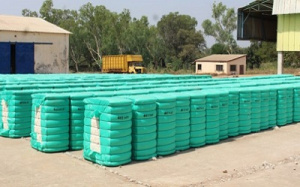
In Togo, Nouvelle Société Cotonnière du Togo (NSCT) plans to rehabilitate and build infrastructures under its 2019 budget. For example, in the Savannas region, the company wishes to build cottonseed storage facilities for its Dapaong plant.
In the Central region, in Blitta more precisely, the NSCT also intends to build similar facilities.
These, the firm hopes, would help it manage its outputs more efficiently, and produce 200,000 tons of cottonseed by 2022. During the 2017-2018 campaign, the NSCT’s production stood at 116,000 tons, thus 8,000 tons more than the previous year.
The increase is mostly to be attributed to various programs initiated to boost the profitability of the agricultural sector. According to data from the ministry of agriculture, husbandry and fishery, the sector contributes nearly 40% of Togo’s GDP and cotton generates almost 40% of the country’s exports revenues.
Séna Akoda