
Togo First
Backed by the World Bank, Togo will spend CFA500 million to develop its beekeeping industry in 2019

Next month, a major beekeeping project will be launched in Togo, leveraging a fund of CFA500 million.
The project which is an initiative of the government, with the World Bank’s support, aims to boost employment in the beekeeping sector. Overall, 500 jobs are to be created in its framework, 100 in each region of Togo.
This project mainly focuses on youth who will receive adequate training and equipment to deliver quality honey and beeswax.
In the long term, the country hopes to export its honey to other markets like Nigeria whose annual demand for honey stands at 380,000 tons.
The creation of this new fund aligns with Togo’s desire to modernize the beekeeping sector, exploiting innovative techniques that are more environment-friendly and ecologic, while boosting productivity.
With the support of India, the Fazao-Malfakassa national park is about to be recognized by the UNESCO as a “biosphere reserve”
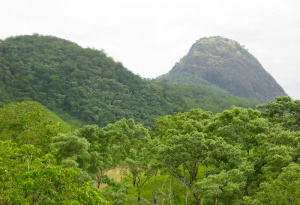
Recognized as a national park in 1975 and recommended, along seven other sites in Togo, to be listed on the UNESCO’s world’s cultural heritage in 2001, the Fazao-Malfakassa national park is about to be recognized as a biosphere reserve.
This title is given by the UNESCO to protected areas that contribute to reduction of biodiversity loss, improve local populations’ livelihood as well as easing social, economic and cultural conditions to make environments more sustainable.
According to the UN institution, the park’s efforts to improve livelihood, in a manner that respects biodiversity, and become a reference in terms of sustainable development were strengthened with a $1 million facility provided by the UN-India Fund in the framework of a development partnership.
Entitled : “Biodiversity actions in the Fazao-Malfakassa national park : a way to reduce poverty, preserve biodiversity and achieve sustainable development, this project which was submitted by the government and approved by the Fund, will be implemented by the UNESCO and Togo’s ministry of environment,” says Yao Ydo, regional director UNESCO. It will among others “foster small bee keeping activities, carbon sequestration in the biomass, protection of water basins, as well as bio-prospecting or ecotourism in Togo,” he added.
Spanning more than 192,000 ha, the Fazao-Malfakassa national park is located in Togo’s central region. It hosts beautiful gallery forests, fertile plains, large mammals, birds, reptiles and primates. It is towered by an eponymous chain of mountains.
The seven other sites on the tentative list submitted to the UNESCO in 2001 are: Lomé’s governor’s palace, Woold Home (Slavery site in Agbodrafo), the Kéran national park, the Oti and Alédjo fauna reserves, the Aného-Glidji agglomeration, the Nok and Mamproug cave dwellings and the traditional homes of the Batammariba in Tamberma.
Fiacre E. Kakpo
Togo: The 34th end-of-year's 2-week business fair is officially launched offering business opportunities at three different sites
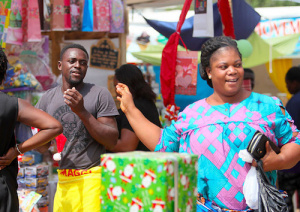
In Lomé, the end of year’s 2-week business fair was launched on December 15, 2018. This year, it is simultaneously being held on three different sites: at the Agbadahonou site and at two other decentralized sites; Baguida and Adéticopé namely.
The aim of this event is to help economic operators take advantage of the latest opportunities and get closer to consumers.
This event and the Lomé international fair that ended on December 10, 2018, are the two most promising end of year business opportunities in Togo.
On the three sites, 400 stands are planned to be deployed over 3,440 m2. On the agenda of this fair, there are sales exhibition and advertisement, catering, recreational areas, competitions as well as entertainment. As usual, the event should officially be completed on December 31, 2018.
Séna Akoda
Togo : Remittances expected to exceed $400 million in 2018, according to the World Bank
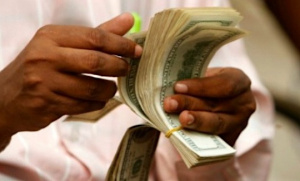
This year, just like the previous one, the Togolese diaspora was one of the most dynamic in Africa, in terms of remittances. This was disclosed in a recent study of the World Bank on migration and development.
Aligning with a growth trend in other diasporas from the region, remittances from Togolese migrants to their home country should exceed $400 million (CFA232 billion) in 2018.
As a result Togo enters the Top 10 nations that get the most money from their diaspora, behind Nigeria ($25 billion), Ghana ($3.8 billion), Senegal ($2.7 billion), Kenya ($2.1 billion), Zimbabwe ($1.9 billion), Mali ($1 billion), South Africa ($900 million), Uganda ($800 million) and Ethiopia ($500 million).
According to estimates calculated based on Togo’s economic activity, Togolese remittances contributed 8.2% of GDP in 2018. In this regard, Togo is also in the top 10 sub-Saharan African nations. It shares this ranking with countries like Gambia (20.5% of the GDP), Comoros (19.3%), Lesotho (14.8%), Senegal (13.6%), Liberia (13.1%), Cabo Verde (12.8%), Zimbabwe (9.6%), Ghana (7.4%) and Nigeria (6.1%).
Last year, the Togolese diaspora sent home $483 million. Most (53%) of the monies was sent to friends and families at home, according to the 2017 official development assistance (ODA). Other statistics from the ministry of foreign affairs put Togolese remittances in 2017 at more than $500 million.
Meanwhile, it is expected that remittances to sub-Saharan Africa will increase from $41 billion in 2017 to $45 billion this year, and $47 billion next year.
However, in terms of transfer fees, the continent is far behind. In the third quarter of this year, they slumped to 8.9%, their lowest level ever. Regardless, this level remains below the global average of 6.9%. According to World Bank’s experts, the continent has many efforts to make to achieve the SDG3 which aims at 3% rate.
Fiacre E. Kakpo
What is Togo’s rank in the African e-commerce sector?

Earlier this week, the UNCTAD published the 2018 UNCTAD B2C E-commerce Index, which determines the place of e-commerce in 151 economies. Four key indicators are considered in this index.
For Togo, this edition portrays a nascent and lagging e-commerce sector, following the same trend as in Africa that is clearly poorly prepared for e-commerce and taking less advantage of the digital opportunities than the rest of the world.
Only 12% of Togolese use internet; a percentage far below the average in Africa. However, according to the UNCTAD, 45% of the population over 15 years old have an account with a financial institution or a mobile money account making the west African country one of the countries with higher financial inclusion.
According to the report, as far as security is concerned, Togo has 19 secure internet servers per million of residents while Mauritius, Nigeria and South Africa, the three leaders in that regard in Africa have respectively 56, 52 and 83 secure servers per 1 million residents.
For the fourth indicator of that index, development of postal services, Togo scored 41 over 100.
The UNCTAD’s index also measures the percentage of individuals who make online purchases. No figure has been mentioned in that criteria for Togo.
Overall, Togo lost ten places to become the 21st in Africa. Within the Ecowas region, the country is outrun by Nigeria, Ghana and Senegal, which is the leader of e-commerce within WAEMU.
Côte d’Ivoire is 24th , Mali 28th , Burkina Faso 30th and Benin 33rd. The lower rank of the index in Africa are obtained by Guinea (42nd), Chad (43rd) and Niger (44th).
In the World index, Togo is 121st. In October 2018, in a report published in Ouagadougou, the UNCTAD, estimated that Togo still had to make efforts in the e-commerce sector. The institution estimated that limited online payments and difficult deliveries out of Lomé are the main roadblocks to the development of e-commerce in the country.
Fiacre E. Kakpo
Togo represented at the Inter-African Trade Fair, in Egypt

Togolese economic operators are taking part in the 1st Inter-African Trade Fair -IATF- currently being held in Cairo, Egypt. The 7-day show, jointly organized by the African Union, Afreximbank and the Egyptian government, opened doors December 11.
It aims to boost intra-African trade and support the implementation of the African Continental Free Trade Area (ZLECA), the agreement of which was signed in March this year by 44 African Heads of State and Government at the AU Extraordinary Summit in Kigali, Rwanda.
IATF provides a platform for sharing information on trade, investment and the market. The idea is to bring buyers, sellers, investors, all together to discuss and conclude business deals.
During the event, Togolese representatives will promote their country's new national development plan and seek substantial private funding for its implementation.
This trade fair, let’s note, will be organized every two years. It will provide information on the market, trade and serve as a contact point between the different players of African trade.
Séna Akoda
Togo’s outstanding public debt securities exceeded CFA1,000 billion at the end of September 2018
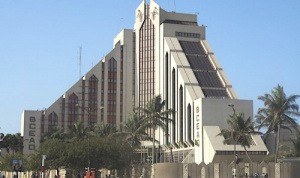
The amount remaining to be paid by Togo as public debt securities issued via the regional financial market of the West African Monetary Union (WAMU) has, for the first time, exceeded 1,000 billion CFA. Indeed, BCEAO indicates, the figure stood at 1,039.7 billion at the end of September 2018.
According to the Apex bank, the volume of outstanding public debt securities, which is included in the country’s internal debt, is up 7% compared to end-September 2017. Then, the figure stood at CFA968.3 billion.
Of the outstanding amount, 90% are bonds while remaining 10% are treasury bills. In detail, the bonds soared 20% over the period under review, standing at 936.8 billion, whereas bills tumbled 46% down to 102.9 billion.
Across the Union, overall outstanding public debt securities was estimated at 9,724.5 billion CFA at the end of September 2018, against 8,925.2 billion the year before.
Côtre d’Ivoire is, in the Union, the greatest issuer with an outstanding State debt securities of 3,295.1 billion. Right after it comes Benin, with an outstanding debt of 1,437.2 billion.
Togo to host its third national forum on internal audit next month

With support from the Francophone Union for Internal Audit (UFAI), The Institute of Internal Auditors (IIA-Togo) will organize from January 9 to 11, 2019, the third edition of Togo’s national forum for internal audit.
Themed “Internal audit for Concerned Parties”, the upcoming edition will take place in two sessions. The first which is to take place on Jan 9 will be dedicated to administrators and managing directors and focus on “business ethics, the assessment of an organization’s strategic performance”, among others. The second part which will take place on January 10 and 11 will include a forum, eight plenary meetings and 12 workshops.
Themes that will be discussed during the plenary sessions include : “the contribution of internal audit to the improvement of public governance”; “collaborating to resist crises”; “New challenges: blockchain, artificial intelligence, and cryptocurrencies”; “Elaborating a yearly audit plan in 2019: main traps to avoid”.
Séna Akoda
ABREC increases capital by CFA182 million to improve operations
Following deliberations last July 25, the African Biofuel and Renewable Energy Company (ABREC) recently increased its capital by CFA182 million.
In detail, Togo First learns, 182 new shares with a nominal value of one million were issued to this end. According to the document disclosing the information, the shares have been fully subscribed by legal entities with preferential subscription rights, proportionally to receivables they own in the company.
With the capital increase operation, ABREC’s capital is now valued at two billion and one million CFA. With this, the company should be able to better fulfill its goals.
Launched in 2009, ABREC is a Lomé-based Company that works to promote renewable energy and energy-efficient technologies, to help mitigate climate change in Africa near West African countries.
Séna Akoda
Togo: GDP exceeded 5% last quarter, a first since end-2016

For the first time since the end of 2016, economic growth (GDP) in Togo exceeded 5%, data from the BCEAO shows.
Indeed, the figure which stood at 4.4% in 2017, 4.5% in Q1 2018 and 4.7% in Q2 2018, passed 5% at the end of the past quarter. For the whole year, Togo’s average GDP is expected to stand at 4.9%.
Compared to other countries of the sub-region like Benin, Côte d’Ivoire, Senegal and Burkina Faso whose economic activity was spurred by a rise in production and prices of commodities, Togo’s GDP still lags behind.
However, in 2019, the country, leveraging its national development plan (PND) which aims at transforming, structurally, the economy, eyes a growth rate of more than 6%, and 7% by 2022.
These forecasts’ concretization greatly depend on the improvement of the socio-political context.
Fiacre E. Kakpo