

Togo First
Togo is the third African country most opened to African citizens, according to the AfDB

For an African citizen, Togo is the third country which is easiest to visit in Africa. This information was disclosed by AfDB’s 2018 Africa Visa Openness Index.
Like in all ECOWAS countries, West African citizens can visit Togo without a visa. Besides these countries, Togo provides visa-on-arrival to non-ECOWAS African citizens. This includes about 40 nations.
Topping the AfDB’s index are Seychelles and Benin, Togo’s neighbor. The latter receives all African citizens without any visa requirement.
Nipping at the heels of the two countries are Rwanda (3rd), Togo and Guinea Bissau (5th). Two other West African nations are part of the top 10 of the index; these are namely Ghana (7th) and Cabo Verde (8th).
In 2018, AfDB’s experts reveal, access to visa improved in African countries, with slightly more countries freely accessible. However, the number of countries with a visa-on-arrival policy remained the same. According to the report, Africans do not need a visa to visit 25% of the continent’s nations, against 20% in 2016. Meanwhile, Africans need a visa to visit 51% of African nations and the remaining 24% provide visa-on-arrival to African visitors.
Fiacre E. Kakpo
Société Togolaise d’Entreposage inaugurates two new fuel reservoirs
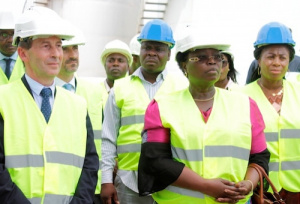
Yesterday, Nov 29, the minister of trade and private sector promotion, Bernadette Legzim-Balouki, inaugurated two new reservoirs of Société Togolaise d’Entreposage (Togo’s Storage Society).
The reservoirs (tank n°5 and tank n°1) which cost two billion CFA, and meet international safety and environmental standards, have a total capacity of 4,400 m3. “They will be used to store super unleaded, the most difficult oil product to handle in a warehouse,” according to STE’s president, Hervé Longé. “With these two tanks, STE takes a great step regarding the improvement of its services. Installing those falls under a 10-renovation plan,” he added.
The equipment will help Togo avoid shortage of oil products. In this regard, the minister believes that through the investment, STE aligns with the government’s goal to make businesses more competitive and boost employment.
Séna Akoda
Togo : Government asks Chinese mining firm Jun Hao Mining to cease all activities at Tchaoudjo
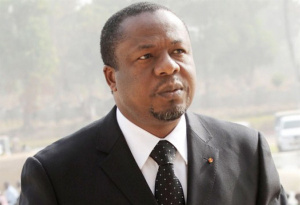
Jun Hao Mining, a mining firm holding a gold exploitation license in the Bouzalo-Alombé area, in the Tchaoudjo prefecture, in Togo’s Central region, was asked to stop all activities at the site until further notice.
Back in January 2018, the firm was allowed by decree to exploit the mine but “unfortunately, exploration works at the site sparked conflicts between your company and the people of Bouzalo who threaten to vandalize your infrastructures,” said Dèdèriwè Ably-Bidamon, Togo’s minister of mining, in a letter addressed to the Chinese firm on Nov 23, 2018.
Truly, people of Bouzalo often denounced the firm’s activities in the region, despite “local authorities having carried out a first sensitization campaign on October 2018”, to clear their concerns. However, as tensions continued, “a second campaign was carried out on November 21, 2018, led by the regional director of mining and geology in the plateaux and central region, under our instruction,” the minister added.
“To preserve peace and social cohesion in this zone”, the government thus asked the Chinese to “temporarily cease all exploration activities in the concerned area”.
Togo: In less than a year after launching, MIFA added 100,000 farmers to AgriPME users base

To date, AgriPME, the e-wallet for farmers, has 272,418 users. Considering that the platform was launched only two years ago, this is quite an impressive number. A feat that is the fruit of efficient sensitization campaigns carried out by firms all over the country.
Besides the campaigns, the government’s incentive mechanism for agricultural financing (MIFA), launched less than a year ago, also boosted registration to the e-wallet. Indeed, out the 272,418 farmers actually using AgriPME, 100,000 farmers were brought in through the MIFA.
“With the help of the ministry of digital economy and posts…, Mifa, Togo provided electronic chips to 100,000 farmers, enabling them to carry out transactions via AgriPME and even beyond,” reads a tweet from Noël Bataka, coordinator of MIFA.
“AgriPME is a mobile payment-based platform. It helped dematerialize subsidy payment to farmers and trace this transaction, via the identification of vulnerable farmers. This made the transaction more efficient and precise. By fostering data digitalization, this tool allows to know, in real time, the market’s state as well as availability of fertilizer stocks across the country,” reads a statement released on the official website of the ministry of digital economy.
Séna Akoda
Soon, more than 300 rural localities will be electrified in Togo
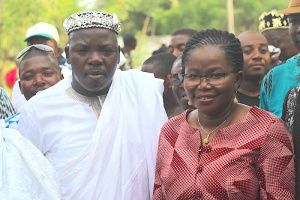
Soon, more than 300 localities in Togo will have access to electricity in the framework of the rural electrification project financed by India and the Islamic Development Bank.
On November 29, 2018, authorities assisted in the project’s launch in two villages situated in the Vo prefecture (about 80km north of Lomé).
According to the ministry of energy, the goal of this “huge and ambitious project is to significantly raise electrification rate in rural areas knowing that in 2015, it was estimated at 8%, as compared to 2% a decade earlier”.
In Zoti, a village of Vo, the project will lead to the construction of a 20kV medium tension power line, spanning 3km, paired with a 100KVA transformer. Also, about 50 public lighting poles will be installed.
“Our goal will be reached if all households in targeted villages have at least an electric meter,” said Ahamad Boukary, project director at CEET, Togo’s power utility.
The actual project falls under the government’s new five-year national development strategy. The latter aims, in regards to electricity, to achieve these three main goals: improving power sector’s management, boosting power production capacities and increasing access to affordable power for industries and households, especially in agro-food, industrial and mining zones.
Octave A. Bruce
Togo ranked 33rd world’s largest clean energy promoter (Bloomberg)
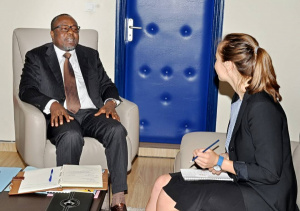
Togo was ranked 33rd on the 2018 Climatescope released by Bloomberg New Energy Finance (BNEF). This is the first time the West African nation is featured in the global clean energy promotion rankings.
In Africa, Togo closes the Top 10. In the WAEMU, only Senegal, 13th worldwide and second in Africa, is better ranked. In ECOWAS, Senegal and Nigeria (14th worldwide and 3rd in Africa) are ahead of Togo. Meanwhile Rwanda, 5th worldwide is the number one in Africa. Globally, China tops the rankings.
According to Bloomberg, Togo’s performance results from the fact that, last July, the country adopted its “first law promoting clean energy development,… aiming to bring renewables share in the national energy mix to 50, by 2030, against 15% now”. The new law reduced import duties, custom tariffs and fosters foreign investments, the BNEF lauds.
Other factors that got Togo on the ranking include its new electrification strategy, pave the way for encouraging perspectives in the clean energy sector, the organization said. “The government recently released a roadmap to achieve 100% of electrification rate by the same year (2030), from an average of 37% in 2017. This plan consists in adding 108 MW of solar and hydroelectric capacity to the grids, 315 mini-grids and distributing 550,000 solar kits, all under public-private partnerships”.
While this is an ambitious goal, it is the government’s will to be autonomous, in terms of power production, which will spur clean energy’s development. Climatescope is a yearly study that covers 4 major areas including renewable energy attractiveness, clean energy investments, climate financing, low-carbon energy value chain as well as greenhouse gas management.
The ranking is designed to keep investors, project developers, and regulators updated on policy frameworks across the country. It also helps direct Investment decisions.
Fiacre E. Kakpo
Digital: First stone of Carrier Hotel to be laid on December 3, in Lomé

Togo’s minister of digital economy and posts, Cina Lawson, announced this Wednesday that the first stone of the Carrier Hotel in Lomé will be laid on December 3, 2018.
The building aims to support the country’s ambitions regarding digital economy. It results from a public-partnership agreement (PPA) and will, according to the minister, be “a housing and co-rental space, neutral and open, integrating an internet exchange point and provide access to competitive broadband”.
The infrastructure is financed by the World Bank ($30 million) and falls under the West African Regional Communications Infrastructure Program.
According to Togolese authorities, the project is “a top challenge related to the securing and guarantee of digital sovereignty”, in Togo.
Octave A. Bruce
Togo: Electrification of Gblainvié cost the government about CFA48 million
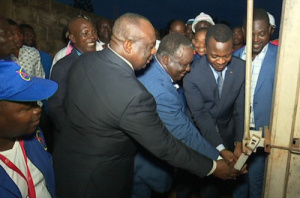
On Wednesday, Gblainvié, a community situated in the Zio prefecture, about 40 km from Lomé, was connected to the country’s power grid. This was done in the presence of the minister of energy.
Works to connect the locality cost the government nearly CFA48 million.
In detail, the project involved expanding the medium tension network by 2.1 km and the low tension network by 1.7 km. In addition, 20 lamp poles and a 161 Kva transformer were installed.
The locality’s connection to the grid aligns with the government’s goal to achieve universal access to electricity by 2030, under its new electrification strategy. It should boost creation of micro businesses and subsequently economic activity in the locality.
Séna Akoda
Cybersecurity and data centre management are promising sectors for the youth - Cina Lawson
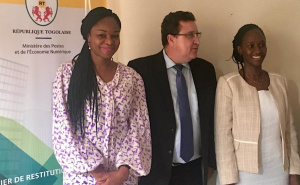
Just like many other West African nations, Togo deals with a mismatch between job opportunities and education provided to youth.
On the sidelines of a seminar started last Wednesday, Cina Lawson, minister of posts and digital economy declared: “There are great job opportunities in sectors such as cybersecurity, data center management or more related to multimedia for which companies hire”.
“Our youth must be provided with an education that is relevant to these opportunities so that they are hired in these sectors”, Lawson added.
The seminar which ends today included workshops and roundtables focused on themes such as Women and ICT jobs and Lifetime education in Togo: Which economic model for which type of education?
Its (the seminar) purpose is to present to firms and schools the various trainings that are more likely to promote insertion in ICTs.
The initiative aligns with the West African Regional Communications Infrastructure Project (WARCIP) which is backed by the World Bank.
Séna Akoda
Benin and Togo will now import electricity separately
Starting January 1, 2019, Benin and Togo will separately import electricity to meet their needs. This was decided during the inter-governmental summit held in Lomé, November 27, 2018, in the presence of the two countries’ respective leaders, Faure Gnassingbé and Patrice Talon.
Up till now, the Communauté Electrique du Bénin (CEB), develops electricity infrastructure in both Benin and Togo, purchasing power for the two States also as they both co-own the organization. Regarding the latter, both countries had agreed not to separately conclude any power importation agreement.
However, a final statement released yesterday indicates that “each State will directly import additional power it needs”, starting next year.
In effect, the CEB will be restructured for more efficiency and will from now only “manage power transport network and continue operating the Nangbéto dam as well as the two gas turbines installed in the two countries”.
Yesterday in Lomé, the organization was effectively (with an agreement signed) placed under provisional administration. As a result, “a transitional management will be put in place next January 1, 2019”, the two governments declared.
This management will, within six months, under the supervision of the High Inter-States Council (including eight ministers) have to initiate recruitment of a delegated manager who will launch the firm’s restructuring.
“Regarding the debt that the CEB owes its power suppliers (TCN, VRA, GRIDCo and CIE), a deal will be reached for its payment,” says the note released by the organization.
Fiacre E. Kakpo