

Togo First
Air Transport: Minister of Transport highlights importance of the Yamoussokro Decision

Last Wednesday, Togo’s National Civil Aviation Agency celebrated the Yamoussokro Decision.
Placed under the theme “Plead for Laws Regulating the Yamoussokro Decision, Tools Contributing to the Good Functioning of MUTAA”, this event according to Togo Presse, aims to inform various actors of the civil aviation, about advantages derived from implementing the Yamoussokro Decision and the Single African Air Transport Market (MUTAA).
According to Marc Sondou, Director of Cabinet, Ministry of Transport, the Decision is the most notable political measure ever implemented in terms of air transport reforms in Africa. It plans the liberalization of air transport services, both regular and non-regular, in Africa, knowingly by suppressing restrictions of traffic dues. This Decision is the legal platform that enabled heads of States and governments of the African Union to create the MUTAA last January.
“The Single African Air Transport Market falls under a holistic approach and reveals the Yamoussokro Decision’s true value and significance, in an extremely competitive environment. This single market is a real driver of development and growth of transport in Africa,” Marc Sondou declared.
Séna Akoda
Microsol-UEMOA project : Togo and Senegal picked for pilot phase
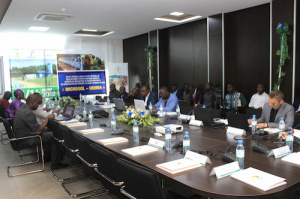
Developed by Schneider Electric and its partners, following an agreement with the WAEMU commission and the African Biofuel and Renewable Energy Company (ABREC), Microsol-UEMOA is a system that helps produce, simultaneously, power and heat for agricultural uses (irrigation, fish farming, drying, processing, pasteurization, etc.).
At the end of a two-day regional meeting to review the project’s implementation level, Togo and Senegal were selected to host its pilot phase.
“We are already at final stage of development which is this workshop,” said ABREC’s head, Adji Oteth during the meeting. “Equipment are already in and now Togo and Senegal have been picked as pilot nations. After the workshop, we will get more equipment which will be dispatched in other countries,” he added.
Under the pilot phase, mini thermal and electric plants will soon be established on sites capable of capturing solar energy and exploit it for agricultural projects.
Séna Akoda
Romuald Wadagni urges BOAD to focus on projects oriented towards skills transfer, research and development

The West African Development Bank (BOAD) and WAEMU States must prioritize projects focusing on skills transfer, research and development, in regards to clean energy financing. This was declared by Benin’s Minister of Finance, Romuald Wadagni, also Chairman of WAEMU’s ministers’ council, on November 14, on the sidelines of the 45th anniversary of the regional bank.
“I urge BOAD to focus on projects that leverage local content,” Wadagni said. He then encouraged “the region’s various member-States to make sure projects financed by the BOAD focus on skills transfer, research and development”.
These projects will, according to the Beninese minister, contribute to sustainability of production and distribution units, at low cost.
WAEMU must invest in research and develop to profit from various opportunities
According to Romuald Wadagni, the renewable energy sector grows even faster than new technologies.
“In 2016, when we came, there were many discussions on photovoltaic energy at the government. At the time, many experts said this type of power source was relatively unstable and could destabilize our grid during periods of low production. Now, almost three years later, this concern is almost solved since we have found ways to control and store PV energy injected in the grid.”
In regards to cost, which was thought to be too high a few years ago, the former Deloitte executive said: In its latest report, the International Renewable Energy Agency revealed that since 2010, cost of photovoltaic energy reduced by 73% and that by 2020, it could fall by another half.
Moreover, he mentioned the need for WAEMU countries to prioritize and invest in research and development, the only way to almost control the whole chain, from production to final consumption. “We have a constant access to the sun, the primary source (Ed.note: From which PV energy is derived). If we are not careful and leave those without constant access to the sun to lead research and development, it will be difficult for us to benefit from related impacts. This is true since it is those leading research and development who control commercialization of energy on the market. We must therefore focus on projects that are research and development oriented,” Wadagni warned.
Relying on innovative financial instruments to boost mobilization capacity at favorable conditions
While praising BOAD’s top management for good performances it recorded over the past five years, the head of WAEMU’s ministers’ council since last July pointed out some challenges to overcome over the next five years, making some recommendations even in this regard.
The latter includes improving BOAD’s lower medium investment grade (Baal for Moody’s and BBB for Fitch), in order to increase its capacity to raise more funds at favorable conditions.
He recommended for the Lomé-based institution, some innovative funding mechanisms such as the World Bank’s credit lines, knowingly regional IDA loans to secure from international institutions long-term financings with interest rates below 2%, just like Benin did. Indeed, the country recently got its first international commercial loan amounting to €260 million, using World Bank’s IDA loans rated triple A. The loan matures over 12 years and has a margin of less than 3.5%.
Fiacre E. Kakpo
University of Lomé to develop an incubator to foster entrepreneurship among students
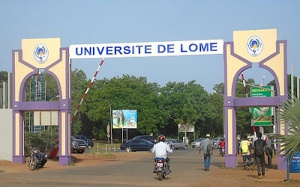
The University of Lomé, in line with its objective to become a home of innovation and technology transfer, will soon have an incubator for entrepreneurs with innovative projects.
These entrepreneurs will receive at the facility a tailored technical training, benefit from support of experts as well as from funds needed to bring their ideas to fruition.
The incubator, according to the source announcing its creation, will host “the best startups, based on their idea, technology, team and their advancement”. It should help meet specific needs of the local and regional markets.
Through its new incubator, the university wishes to shift its paradigm regarding its training-employment approach and push students towards entrepreneurship. A goal that aligns with the government’s to foster self-employment and support entrepreneurs.
Séna Akoda
Lomé to make Niamtougou airport a reference in terms of cargo traffic to hinterland countries
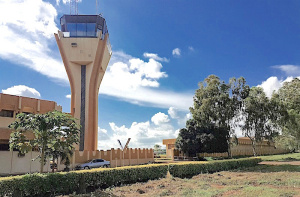
In line with its goal to become one of West Africa’s leading airport hubs, Togo’s government plans to make the country’s second airport, the Niamtougou airport, “a reference platform for airport logistics, especially for cargo traffic to hinterland countries”.
According to authorities, this will be achieved through the rehabilitation and modernization of facilities as well as upgrading the infrastructure’s standards to meet international standards.
As said earlier, the country aims to boost its passenger and freight traffic. For example, with Lomé’s new terminal, passengers’ traffic is expected to double from 750,000 in 2016 to 1,500,000 per year by 2022. As for freight, it is expected to grow from 12,000 tons to 24,000 tons per year.
To achieve this, the government plans to increase the number of destinations served from Lomé and services provided by the nation’s two airports, respectively the Gnassingbé Eyadema International Airport in the South and the Niamtougou Airport, in the North, around 450km from Lomé and not far from Kara.
Leveraging on Africa’s new open sky policy, Lomé intends to “pursue and reinforce efforts to sign agreements with international airlines to connect them to Lomé’s airport”.
According to the government, private sector will be the main driver of this process, in line with its 2018-2022 national development plan.
Fiacre E. Kakpo
Togo to spend CFA478 million to boost its phytosanitary control and certification system for vegetables and fruits
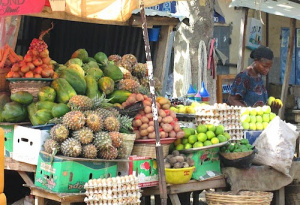
Yesterday, Togo’s minister of agriculture, Ouro-Koura Agadazi, officially launched in Lomé a project to improve the system for phytosanitary control and certification of fruits and vegetables in the country.
Valued at CFA478 million, this project boosts existing regulatory and institutional framework related to phytosanitary control and certification of fruits and vegetables in Togo, and aims also to encourage good practices in this area.
In detail, the project aims to improve the quality of fruits and vegetables produced locally by eliminating pests attacking these products, as well as boost access to markets.
According to Tchalla Kaziya who coordinates the project, “it will allow all actors of the sector to better understand standards in place for the products, and good practices to have in order to ensure their quality”.
The project will also “allow the authority in charge (ed’s note: Vegetables Protection Office) to level up phytosanitary control so that the products it certifies, show no shortcomings in targeted markets,” he added. The project will be carried out over three years.
Séna Akoda
The project to rehabilitate and valorize Agoè-Nyivé old landfill will cost about €6.9 million
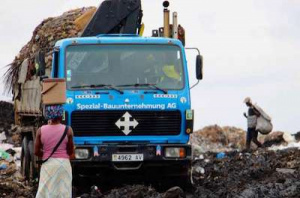
In Togo, under phase 3 of its development, the Lomé Urban Environment Project will rehabilitate and valorize the old landfill site of Agoè-Nyivé, in the periphery of the capital. According to a document released by the project’s carrier, a special delegation of Lomé's township, projected works will cost €6.9 million.
Overall, these will focus on ensuring environmental preservation, rehabilitation and valorization of the polluted site. In detail, the site will be fenced, remodeled and covered with a semi-permeable cover.
Also, under the project, ditches will be dug to collect rain water; waste leachate trenches also as well as biogas vents.
Beyond the environmental impact of this project, it also comprises an economic component involving production of biogas.
Séna Akoda
Revenue Office of Togo announces up to 45% tax reduction of customs value for specific goods, amid end-of-year promotion
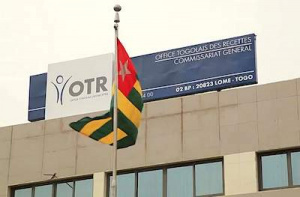
“In line with a tax relief measure,” Togo’s revenue office (OTR) will “offer special conditions at the end of this year”. This, the institution disclosed in a statement published last week.
In effect, OTR will allow reduction of up to 45% of customs value, in some cases, for used cars and clearance of goods.
This offer will be valid until December 31, 2018. Through this promotional offer, OTR wants to optimize conditions needed to achieve its goals for the end of the year. Most importantly, the institution wishes to encourage business operators to clear their goods and remove them from the port.
Let’s recall that a recent IMF mission in Togo revealed that while “collection of tax revenues improved over the first half of 2018, it slightly slowed in the third quarter”.
Séna Akoda
Togo : PAEIJ-SP to train hundreds of youths in agricultural entrepreneurship and business management

In Togo, the program which aims to boost youth employment and insertion in profitable sectors (PAEIJ-SP) plans to train 350 new entrepreneurs in business management and 250 others in agricultural entrepreneurship and business plan development.
The ministry in charge of the program plans through this training to spark in young people, the desire to take care of themselves via agricultural entrepreneurship, but also teach them to elaborate agricultural projects properly. Better even, it aims to insert them in the “value chains” format so that they can benefit from bank loans.
Consultants will be carrying out the training sessions. In this regard, the ministry of grassroot development, craftsmanship, youth and youth employment, through the PAEIJ-SP management unit, urges firms and cabinets to submit their offers. Once a consultant is selected, trainings should begin in June 2019.
The project will be financially supported via a grant from the African Development Fund (ADF) and African Development Bank (AfDB).
Séna Akoda
CRRH-UEMOA issues CFA30 billion bond to improve housing across WAEMU

CRRH just issued a CFA30 billion bond to refinance housing loans provided by its shareholder banks in WAEMU countries.
Valid until November 20, 2018, the bond, the eighth issued by CRRH-UEMOA, is divided into two tranches : “CRRH-UEMOA 5.95% 2018-2030”, valued at CFA25 billion, with a yearly interest rate of 5.95% and 12-year maturity period ; and the second, “CRRH-UEMOA 6.05% 2018-2033”, valued at CFA5 billion, with a yearly interest rate of 6.05%, free of tax and duty in all WAEMU States, and having a maturity period of 15 years.
Since July 2012, the institution raised a total of CFA132 billion for 34 shareholder banks in WAEMU States. Adding the present bond, this amount will reach CFA162 billion.
CRRH-UEMOA, let’s recall, is headed by Christian Agossa and is a regional initiative that aims to improve financing dedicated to housing in WAEMU countries.
Séna Akoda