
Togo First
Cotton: Export revenues up 27% in 2017

In 2017, cotton exports generated CFA57.9 billion, their highest level since 2012. This represents a 27% increase compared to the previous year.
It is mainly attributed to a rise in global prices paired with a surge in exported volumes. In detail, while prices grew 9% over the period reviewed, Togo exported 47,900 tons of cotton last year, thus 11 tons more than in 2016, according to data gathered by Togo First.
With such a free on board (transport fee, insurance and taxes excluded) export revenue, Togo was able to slightly mitigate the fall of its exports. The latter stood at CFA532 billion last year, thus corresponding to a 17% contraction compared to the year before.
During the 2017/2018 season, Togo produced 117,000 tons of cotton, up 8% against the previous season. For the current season, Nouvelle Société Cotonnière du Togo (NSCT) eyes an output of 140,000 tons.
Fiacre E. Kakpo
Togo: INSEED carries survey to assess impact of money transfers on households' living standards
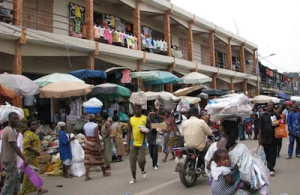
On November 19, 2018, Togo’s national statistics, economic and demographic institute (INSEED) will complete a survey, started last October 18, on living standards of households that benefit from the money transfer program launched by the ministry of grassroot development in 37 selected prefectures.
The survey falls under the Social Nets and Basic Services Project (FSB) launched by the National Agency for Support to Grassroot Development (ANADEB).
According to a statement released in relation to the study, its objective is to “collect data related to education, health, food consumption, housing, sustainable goods, activities and socio-demographic characteristics of targeted household members”.
The survey should also help gather general characteristics of the concerned localities, such as existence, functioning and accessibility of basic social services, and subsequently help proceed to community validation of households’ lists.
Initiated via ANADEB, the money transfer program is part of the social nets and community development project (PDC+). Backed by the World Bank, it aims to reduce poverty in the country’s most vulnerable areas.
Over the next three years, the number of people benefiting from this program should reach 120,000, according to President Faure Gnassingbé.
Séna Akoda
Togo adopts new tax code to attract investors and boost businesses

Last Friday, Togo’s parliament adopted a new general tax code. The new regulation replaces a 25-year old one which has been amended multiple times over the years, as new issues emerged, both in the country and worldwide.
Number of taxes imposed slightly reduced
The new code suppresses some taxes which used to make things harder for firms, harmonizes collection with neighboring countries, and encourages those operating in the informal sector to regularize. These aim to boost tax base which is still strongly dependent on consumption (consumption taxes contribute nearly 80% of tax earnings).
The new code not only draws “a distinct line separating tax base regulations and tax procedures, but also emphasizes on taxation guidelines,” said Sani Yaya, Minister of finance.
Among the new guidelines, there is the “rationalization of the tax system’s structure with new rules to determine earnings per category, reducing corporate tax rate from 28% to 27%, and progressively eyeing 25%, as required by WAEMU”. Around VAT, there is also an indirect tax introduced through “the implementation of a VAT loan reimbursement mechanism, in line with the best practices, and the introduction of a more open synthetic tax for the benefit of SMEs”.
The new code indeed is quite favorable to companies, SMEs especially, as it cuts down many taxes. The latter include taxes on wages, on official vehicles, and taxes complementary to tax on income and wage, surcharge levied on poorly exploited land properties and special tax on drinks manufacturing and sales.
Boosting tax revenues
Through this reform, the government aims to significantly increase tax revenues while developing one of the region’s most attractive business environments.
While tax revenues are still too weak to cover its budget expenses, Togo, by creating a tax revenue office, has succeeded in slightly raising its tax collection level, compared to 2014. According to an OECD study assessing 16 African nations, Togo is the nation that improved the most in terms of tax collection.
Fiacre E. Kakpo
Togolese entrepreneur Bemah Gado receives "Jeunesse francophone 3535" award under Environment category
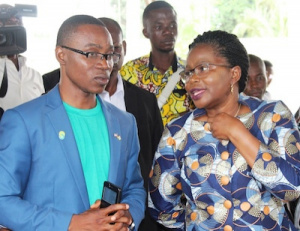
Togolese entrepreneur Bemah Gado was selected as one of 35 leaders impacting the Francophone environment. The youth, founder of Green Industry Plast Togo, received the related award, under the Environment category, last week in Abidjan.
With his firm which thrives to preserve the environment, the Togolese was the only one selected and rewarded under the category.
Gado’s company recycles plastic waste which he considers as “hard gold”. His long-term goal is to ensure efficient and cost-effective management of waste and sanitation in Lomé, by pushing “all households toward social management of waste by sorting them out and selling the recyclable pieces. That is how we will be able to handle our waste,” he declares. “If we all put our hands together, everyone will profit from it,” he adds.
The Prix Jeunesse Francophone 35<35 is an initiative of the 35<35 association. Each year, it rewards 35 inspiring youths aged between 18 and 35 who have, in the Francophone world, major prowesses in their respective communities.
Séna Akoda
WAEMU : Togo and Senegal were the countries that diversified their exports the most in 2016
Across the West African Economic and Monetary Union (WAEMU), Togo and Senegal are the countries that diversified their exports the most in 2016. This was disclosed in BCEO’s latest report on external trade.
“Looking at the diversification index for every country of the Union, the report shows…a greater improvement in Senegal and Togo than in the other countries,” the report released last week indicates.
However, since 2006, Benin, Burkina Faso and Mali are also doing well on the index. Their improvement is attributed to the fact that these nations mostly focus their exports on cotton and gold.
While in Côte d’Ivoire, the index was almost stable over the reviewed period, in Guinea Bissau it fell, as a result of the country’s tendency to focus its exports on cashew. Indeed, over the past five years, the crop contributed on average 95% of all its exports. In the Union, Guinea Bissau is the country with the least diversified exports, thus positioned behind Mali, Burkina and Benin.
It should be noted that in WAEMU, exports diversification is determined through the assessment of the Theil diversification index. This indicator takes into account the volume of goods exported by a given economy and concentration of these exports on a particular product. The lower the values, the more exports are diversified.
Togo’s index is one, just like Senegal’s. In Mali, it is 2.2; 2 in Burkina; 1.8 in Benin; 1.7 in Niger and 1.2 in Côte d’Ivoire.
Fiacre E. Kakpo
Togo records slump in exports in 2017, due to lower re-exports of goods and phosphate
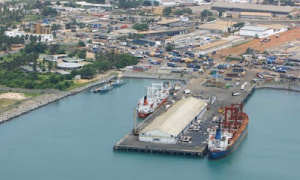
In 2017, the value of goods exported by Togo fell by CF112 billion after rising over the two previous consecutive years.
From CFA644.1 billion in 2016, exports value, excluding transportation, insurance and duty fees, slumped to CFA532.1 billion (-14%) in 2016.
The decrease was spurred by lower re-exportations (-81%) of phosphate (-17.5%), chemical products, clinker and cement, cocoa products, coffee, etc. However it was cushioned by exports of cotton, palm oil, oil products, gold and precious metals.
In parallel, imports reduced as well, just like in 2016, by 14.5%, standing at CFA946 billion. Here, the decrease was mainly due to a slump of equipment goods purchases, from CFA339.4 billion in 2016, to CFA202.1 billion in 2017 (-40%).
Fiacre E. Kakpo
Doing Business : President Gnassingbé urges his administration to implement more reforms to pass the 100th ranking
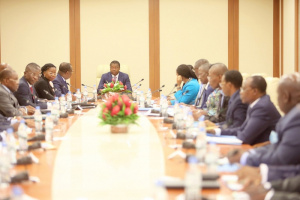
During the ministers council held November 8, 2018, President Faure Gnassingbé urged his administration to maintain its dynamic reforms to pass the 100th rank of the Doing Business. This is as the country, in this year’s edition of the global ranking, saw its ranking improve (from 156th last year to 137th).
In the long term, the country aims to have one of the best business environments, if not the best, of WAEMU, ECOWAS, Africa and if possible the world’s.
By setting such high goals, Togo hopes to be on par or overtake countries like Mauritius which is the most attractive country in Africa for business (20th worldwide with a score of 79.58) and Rwanda, first performer in Africa according to the 2019 Doing Business (29th worldwide) with a score of 77.88 out of 100.
Most importantly, Lomé first wants to attract as much external private investments as possible to finance its 2018-2022 national development plan. In this framework, Sandra Johnson, Advisor to the President of the Republic and Coordinator of the Business Climate Cell (CCA) mentioned during a workshop held last November 5 the need to keep up approved reforms, and efficiently work on remaining indicators, even if some, according to her, such as regulating insolvency befall OHADA. “…We are strongly committed to implementing reforms for greater successes in a context where our country is implementing its 2018-2022 national development plan which places business climate as one the major factors contributing to (economic) success,” she declared.
Séna Akoda
Cameroonian startup Paykap partners with Togolese microfinance actors to expand its activities to Togo
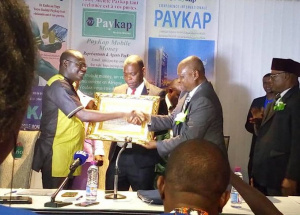
Last Tuesday, Paykap, mobile money transfer and e-payment solution behind Fricacoin, Africa’s first cryptocurrency, signed various partnership agreements with some ten local microfinance institutions, thus entering the Togolese market.
Under the agreements, the fintech which operates only in Cameroon, Côte d’Ivoire and Canada so far, will create decentralized financial systems (DFS) necessary for its money transfer platform.
In effect, Paykap’s new partners who will become “certified Paykap agents” will act as physical intermediates providing the fintech’s services to populations, against agreed commissions, up to 30% according to credible sources.
According the firm’s CEO, Dalvarice Ngoudjou, a seed fund of CFA3 million will be put in place to ensure the SFDs functionning. This fund will be replenished every time a set alert threshold is reached.
The arrival of the Cameroonian startup in Togo will surely boost financial inclusion and e-commerce in the West African nation. It will help foster fund transfers by the diaspora (valued at almost $500 million last year) as related costs are actually high worldwide.
PayKap Mobile Money is an e-wallet enabling its holder to operate various financial transactions with their bank accounts or other PayKap users, using mobile phones regardless of the networks.
Fiacre E. Kakpo
Togo : CEET launches tender to rehabilitate and improve its network
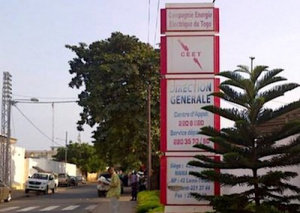
Togo’s power utility, CEET, has launched a tender to rehabilitate and improve its low-voltage and medium voltage distribution networks. The tender will close on December 13, 2018.
Related works are grouped into three distinct lots valued at $638,768 (about CFA366 million). They fall under the Energy Sector Investment and Reform Program (PRISET) which received a $35 million funding from World Bank.
PRISET aims at rehabilitating and improving high-voltage and medium-voltage lines in Lomé, as well as expanding network and installing new connections.
According to the World Bank, the program will help CEET cut its commercial and technical losses but also improve its management while its revenues and financial results as bill payments will increase.
In line with the tender, a preparatory meeting will be held on November 19, 2018 at CEET, after which a visit of various sites is planned.
Government to soon conduct study on management of Kara’s new market
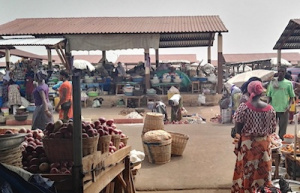
Togo’s government will order a study on the management of Kara’s new market. This will fall under the Project to Support Reconstruction of Markets and Sellers of Kara and Lomé (PARMCO) which is financed, through a loan and a grant, by the African Development Bank (AfDB).
The study aims to improve the market management and involves a review of how the old market was managed, suggesting necessary changes that can be adapted to the new market.
Moreover, it will assess the mode of allocation and renewal of spots ; admitted sale methods ; determination of technics to store stacked products as well as identification of goods handling methods ; management of sanitization issues, which includes collection and evacuation of waste ; collection of fees to use the market and lead to the revision of rental fees for a given period if needed.
The study will also look at provision of power services ; insurance fee for goods and people and how mobile sellers are handled.
Séna Akoda