
Togo First
ABREC increases capital by CFA182 million to improve operations

Following deliberations last July 25, the African Biofuel and Renewable Energy Company (ABREC) recently increased its capital by CFA182 million.
In detail, Togo First learns, 182 new shares with a nominal value of one million were issued to this end. According to the document disclosing the information, the shares have been fully subscribed by legal entities with preferential subscription rights, proportionally to receivables they own in the company.
With the capital increase operation, ABREC’s capital is now valued at two billion and one million CFA. With this, the company should be able to better fulfill its goals.
Launched in 2009, ABREC is a Lomé-based Company that works to promote renewable energy and energy-efficient technologies, to help mitigate climate change in Africa near West African countries.
Séna Akoda
Togo: GDP exceeded 5% last quarter, a first since end-2016

For the first time since the end of 2016, economic growth (GDP) in Togo exceeded 5%, data from the BCEAO shows.
Indeed, the figure which stood at 4.4% in 2017, 4.5% in Q1 2018 and 4.7% in Q2 2018, passed 5% at the end of the past quarter. For the whole year, Togo’s average GDP is expected to stand at 4.9%.
Compared to other countries of the sub-region like Benin, Côte d’Ivoire, Senegal and Burkina Faso whose economic activity was spurred by a rise in production and prices of commodities, Togo’s GDP still lags behind.
However, in 2019, the country, leveraging its national development plan (PND) which aims at transforming, structurally, the economy, eyes a growth rate of more than 6%, and 7% by 2022.
These forecasts’ concretization greatly depend on the improvement of the socio-political context.
Fiacre E. Kakpo
Gozem teams up with Ogar Insurance and Togo Assistance to cover its taxi and moto drivers, in Lomé

Gozem, Togo’s first taxi and moto-taxi reservation platform, has “signed two strategic partnership agreements with insurer Ogar Insurance and Togo Assistance to cover its partnering drivers in Lomé”.
“These partnerships aim to provide for all Gozem drivers an insurance contract with Ogar Insurance and affiliate them to Togo Assistance so they are taken care of in the event of an emergency,” reads the statement. This translates Gozem’s desire to help its drivers become more competitive in Togo’s urban transport and make its users safer.
“We are happy to provide our users and drivers with many insurances that will guarantee their safety while on the move,” said Farouk Tchabana, Head of Operations at Gozem. “These partnerships perfectly represent Gozem’s strategy to support its drivers by professionalizing their craft while protecting its customers,” he added.
“Ogar is proud to put its expertise at the service of Gozem which will become one of the major players of Togo’s urban transport sector,” said for his part Anouar Boukari, Technical and Commercial Director at Ogar Insurance. “Through this partnership, our goal is to improve our actions’ efficiency toward our drivers,” he then added.
Still in line with its goal to deliver a reliable and safe service, Gozem trains its drivers before the start of their partnership. The training which is based on the knowledge of the Highway Code and the utilization of the Gozem app teaches drivers this code and helps provide a service of quality to the app’s users.
All these initiatives fall under the start-up’s expansion strategy in Lomé.
Séna Akoda
Togo to host its first craft fair on Dec 14-16, 2018
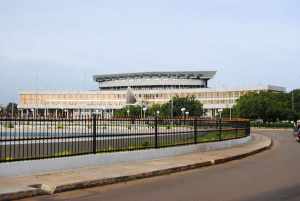
From December 14 to 16, 2018, Lomé will be hosting its first international craft fair. Initiated by two firms, one from Togo and another from Benin, the fair aims at improving education in Africa and gathering key actors of this sector in Togo.
Expected at the event are schools from Togo and the region, firms and entrepreneurs. These are to introduce students, parents and professionals to reconversion and to promising professions.
The fair which is to take place at the Palais des Congrès is open to the public, freely.
Activities planned on the occasion include conferences, workshops, exhibition to inform about careers and professions with enterprises, as well as B2B meetings.
Séna Akoda
BRVM reveals second batch of SMEs joining its Elite BRVM Lounge program
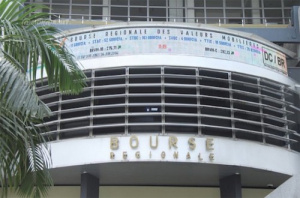
As announced last week, the Bourse Régionale des Valeurs Mobilières (BRVM), released on Monday the second batch of 10 enterprises, under its Elite BRVM Lounge program.
Developed by the London Stock Exchange Group (LSEG), this program is a “dynamic ecosystem revolving around the enterprise and aiming to support and foster innovation, entrepreneurship and growth”. Though their names are yet to be known, the 10 SMEs selected under this second batch come from Burkina Faso, Benin, Côte d’Ivoire, Mali and Senegal, sources indicate.
This second batch of firms selected to adhere to the Elite BRVM Lounge adds to another of 10 businesses also. Through this scheme, WAEMU’s stock market wants to “help boost capacities of firms that have a high-growth potential across the sub-region, thus enabling them to access a new source of financing via WAEMU’s regional financial market”.
Let’s recall that a Togolese firm, Sodigaz, was among the first ten companies selected to join the program. The other nine were ATC-IB (Benin ; wood industry) Bénin Petro, Isocel Télécoms (telecommunications-Internet), ASI BF (Burkina Faso), Général des assurances (Burkina Faso), ENSBTP (Côte d'Ivoire), Sodigaz Mali, Neurotech (Senegal; IT solutions) and Technologies Services (Senegal, medical equipment supplier).
Séna Akoda
Ghana-Togo Maritime Boundary Dispute : For the third time, negotiations fail
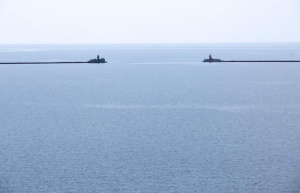
After three rounds of talks, Ghana and Togo failed to reach an agreement to end their maritime boundary delimitation dispute.
“Given the three rounds of negotiations so far, it is quite possible that we are not reaching consensus very soon,” said Lawrence Apaalse, Head of Ghana’s Technical team negotiating the maritime boundary delimitation with Togo.
In case the talks fail definitely, the Ghanaian official says a third party could help them settle the dispute.
However, before getting to that extent, Apaalse who is also the Chief Director of the Ministry of Energy said that beside meetings between the two countries’ technical team, their respective presidents had made some diplomatic commitments which should be activated to reach an amicable solution.
After Togo strongly opposed Ghana for its oil and gas activities near their shared border, it had to stop them in December last year.
Indeed, after claiming the zone of activity exploited by Ghana, Togolese authorities seized two seismic vessels from Ghana hence setting the disagreement and actual talks.
Now, as Ghana’s navy moved to the conflict area, Lomé is not pleased and demanded that measures are taken for the navy to exit the zone.
Fiacre E. Kakpo
From 2005 to 2013, France injected more than €160 mln of budget aid under the WAEMU Regional Economic Program
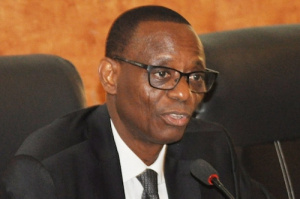
From 2005 to 2013, French budget aid for the WAEMU, under the financing of the Regional Economic Program (PER), exceeded more than €160 million or CFA118 billion. This was disclosed on December 10, 2018, by Badanam Patoki, representative of Togo’s minister of economy and finance, at the opening of a workshop to validate the provisional report on the aid’s evaluation. The workshop is to end on December 14, 2018.
According to Badanam, the aid was used to finance projects that impacted populations across the Union, in social and development sectors. The latter include hydraulics, combating coastal erosion, establishing adjacent control posts, weighing stations and road studies.
Through all these actions, the minister’s representative says, the French aid highly contributed to the PER’s realization.
The current assessment, it should be noted, takes place a decade after the implementation of the global budget aid which was born of the desire of WAEMU’s commission to anchor the culture of results-based management, efficiency and effectiveness into its mode of governance and accountability to the people.
Séna Akoda
Togo: IMF to disburse a fourth financing of $35M under ECF-backed program
On Monday, the International Monetary Fund (IMF), pleased with Togo’s macroeconomic framework, approved during a board meeting the disbursement of a fourth financing tranche of $34.9 million for the country.
“The program’s return is very satisfying. All quantitative return criteria and three of the five structural benchmarks were met. The assessment’s completion enables the disbursement of 25.17 million SDR (around $34.9 million), thus bringing total sum disbursed since the agreement’s beginning to 100.68 million SDR (around $139.5 million),” World Bank indicates.
Approved in May 2017, the three-year ECF-backed program valued at $241.5 million has strengthened Togo’s economy which was suffocating in 2016 due to a rampant public debt; a debt that became unbearable for authorities
More than a year after the program started, IMF estimates that the Togolese economy shows signs of stabilization, despite a “difficult environment” sustained by socio-political protests. According to the Fund, growth should quicken while inflation aligns with WAEMU standards.
The Bretton Woods institution lauds Lomé’s efforts in bringing public debt to viable levels and advance budget reforms. It did the same for the projected debt-reprofiling operation. However, IMF urges Togolese authorities to stand by their macroeconomic adjustment and reforms program, in order to remain on the right path.
Regarding the move to privatize UTB and BTCI (public banks), the Washington-based institution says it is convinced that “implementing safeguard measures agreed on will be an important step toward ensuring that the lenders’ privatization align with the best international standards”.
Fiacre E. Kakpo
Nigerian Axxela, formerly Oando, to start supplying Togo with gas via the West African Gas Pipeline
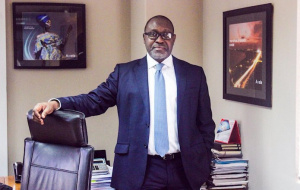
Nigerian natural gas supplier Axxela, formerly Oando Gas and Power, will supply Togo via the West African Gas Pipeline (WAGP). The related agreement was recently signed in Accra, Ghana, with the pipeline’s operator, West African Gas Pipeline Company (WAGPCO).
Under the new partnership, Axxela will deliver 15 million standard cubic feet or 425,000 cubic meters of natural gas to Lomé, every day, via the WAGP.
Once the gas reaches Togo’s capital, it will first be used to increase the number of gas-fired generators powering the ContourGlobal thermal plant. Already, last June 8, Togo’s power utility CEET inked with Axxela a supply deal under which the Nigerian firm supplied the plant’s generators with natural gas. According to reliable sources, the Kékéli power plant that is expected to come online end-2020 will also run on Nigerian natural gas.
In January 2018, after it got the green-light to distribute gas via the West African Gas Pipeline, Axxela revealed its plans to expand its footprint across the West African sub-region.
Leveraging its new supplier status, Axxela wants to supply more than 100 million standard cubic feet of natural gas per day to thermal plants, businesses and others, in West Africa. “This is a significant achievement in the vista of our operations and speaks to our position as pioneers in the industry. As WAGP shippers, we expect to monetize gas resources in the West African region, increase the throughput on the WAGP, and thereby reduce the applicable unit transportation tariff. Axxela is committed to providing cleaner and cost-effective fuel for power generation to spur industrial growth and economic empowerment across the sub-region”, said Axxela’s CEO, Bolaji Osunsanya.
Fiacre E. Kakpo
EAMAU to get ultra-modern training campus for architects and urbanists
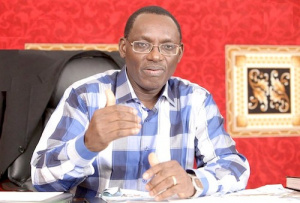
At the 36th session of administrators of the African School of Architecture and Urbanism (EAMAU) held in Lomé, it was decided that the regional academy would become a specialized integrated institution and a reference across the African Union.
In line with this objective, the centre will get a 12 ha field to build an ultra-modern campus. “We wish to help this institution shine by giving the means to expand,” said Octave Nicoué-Broohm, Togo’s minister of higher education and research.
According to EAMAU’s chairperson, Bruno Jean-Richard Itoua, “the necessary measures are being taken to boost value of professions in this sector, that will receive new infrastructures in the near future, for our common benefit”.
Séna Akoda