

Togo First
Togo : Government to spend CFA1.5 billion in 2019 on fertilizer subsidies
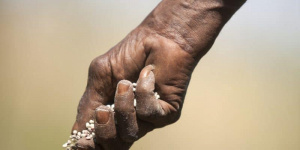
Under its 2019 State budget, Togo’s government will spend CFA1.5 billion on fertilizer subsidies for farmers, Togo First learnt.
The sum will in effect be managed by the agricultural input management and supply center (CAGIA) and be used to purchase 35,400 tons of fertilizers.
The move should benefit 125,000 vulnerable farmers, authorities promised.
In Africa, Togo is one of the countries which subsidize fertilizers the most. Indeed, each year, the State subsidizes more than 30% of the price of 50kg fertilizer bags. The subsidized bag is sold at CFA9,000, against CFA13,000 non-subsidized.
Fiacre E. Kakpo
Government to build three bridges in Anié, Kara and Mango under Lomé-Cinkassé-Ouagadougou rehabilitation project
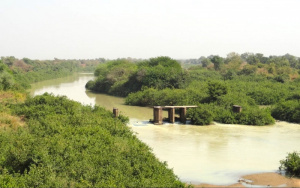
Togo’s government will rehabilitate the Lomé-Cinkassé-Ouagadougou axis. The project which will ease traffic along the major axis is financed by the African Development Bank (AfDB).
According to a document released by the Togolese ministry of infrastructures and transport, the project involves the construction of three bridges along the corridor. The various bridges will be located in Anié (Plateaux region), Kara (Kara region) and Mango on the Oti River (Savanes region). Respective lenghts of the infrastructures are 70m, 145m and 160m.
The ministry, in the project’s framework, plans to conduct exhaustive technical and economic studies, among others. It also intends to prepare the tender document for projected works.
On Thursday, December 6, it will launch the tender and assess bids of applicants interested in the project.
Séna Akoda
Togo: Youth employment director pleads for extension of PAIEJ-SP to transport, logistics and mechanization
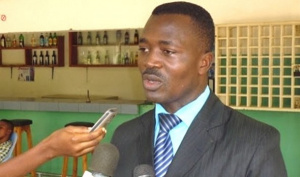
In Togo, the youth employment director, Anala Telata, pled for the extension of the Youth Insertion and Employment Support Project in Promising Sectors (PAIEJ-SP) to transports, logistics and mechanization.
Doing so will, according to Telata, enable professional insertion of some youths and optimize conditions needed to achieve the goals of PAIEJ-SP in regards to job creation.
Actually, transport, logistics and agricultural mechanization are the missing links in various chains of value. Though developing these links will require massive investments, this would surely boost youth employment in the country. Additionally, it will help reduce charges for chains of value actors, as they are actually forced to order products and access services far from their activity sites, tens and even hundreds kilometers far.
Besides this challenge, actors of value chains, agricultural producers especially, complain about a high cost of transportation. This was during missions to assess the PAIEJ-SP.
At Gaougblé, a community of Eastern Mono, 48km from Atakpamé, Palouki Yeneke, a farmer who produces maize for the NSCPA, had to rent a tractor from Kara (about 500 km away) to clear its 10-ha land (PANAPASSA). This cost the farmer a lot. Integrating transport, logistics and agricultural mechanization to the PAIEJ-SP would help tackle this issue.
Séna Akoda
BCEAO works to provide 75% of WAEMU population access to financial services, in the next 5 years

In the WAEMU, 75% of adults should have access to appropriate and cheap financial services over the next five years. The region’s central bank, BCEAO, is doing everything to achieve this objective.
In Togo, on the sidelines of the financial inclusion week, Kossi Tenou, national director of the BCEAO, declared: “Our regional financial inclusion strategy mainly aims at ensuring, over the next five years, that 75% of WAEMU’s adult population has access to and uses a diversified range of affordable and appropriate financial services and products”.
Though the financial inclusion rate in ECOWAS remains modest, “over the past years, significant efforts have been made, in WAEMU especially”, BCEAO’s national director said.
In Togo, access to financial services recorded a recent boom. According to relevant sources, about more than 2/3 of population of more than 15 years old benefit from the services.
Séna Akoda
Carrier Hotel: Togo lays first stone for its first data center in Lomé
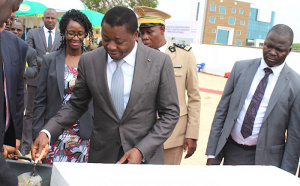
Last Monday in Lomé, the construction of Togo’s first data processing and business incubation center began.
Carrier Hotel is a data center that provides businesses (both big and SMEs) a space with access to electricity and a cooling system where they can store their network equipment and servers. According to Togolese authorities, the infrastructure is a tool that perfectly responds to the need to improve cybersecurity and digital sovereignty.
“In terms of reliability, security and quality, technological choices made by carrier hotel make it one of the most performant in West Africa,” said Cina Lawson, Togo’s minister of digital economy, during the ceremony for laying of the first stone of the hotel. The ceremony was chaired by Faure Gnassingbé.
Fully funded by the World Bank under the West Africa Regional Communications Infrastructure Project (WARCIP), construction works should last 15 months starting in January 2019.
About CFA12 billion (€15.3 million) will be spent in building works. They will be carried out by BTP Centro and CFAO Technologies & Energy. The French firm will handle the infrastructure, energy and environment aspects.
CFAO, let’s recall, took part in the construction of Central Africa’s biggest data center hub, inaugurated in Douala 2017, and also of West Africa’s leading data processing center based in Senegal and owned by Sonatel. About a year ago, the French company which is present in ten African countries set up in Togo, the country’s first internet exchange point (IXP), an infrastructure through which internet service providers (ISPs) exchange traffic network between their networks.
Carrier Hotel will allow businesses to house data in Togo. It is located on a 1 ha site at Lomé 2.
Fiacre E. Kakpo
Government paid more than CFA55bn of arrears on internal debt between January and November 2018
Over the past 11 months, Togo’s government paid back to private firms CFA55 billion of arrears it owed them. According to the authorities, this aligns with a huge domestic debt clearance program.
The program’s primary goal is to increase private sector’s investment capacity as the sector is the driver of the national development plan (PND). Indeed, private sector should contribute 65% of investments projected under the five-year plan.
Its second goal is to develop an appropriate macroeconomic framework by improving public finances, in line with specifications set by the IMF.
To achieve these goals, Lomé intends to reprofile its debt. The country plans to negotiate an external loan with a long maturity period to repay its internal debt. While the move mainly aims to cut refinancing risk over the next five years (since internal debt usually has short maturity periods), it should also help local businesses gain more investment margin and trust the State more.
At end-December 2017, Togo’s internal debt was estimated at CFA1688 billion, thus 58.8% of the GDP, the IMF said at its second review of the Extended Credit Facility (ECF).
Fiacre E. Kakpo
Togo joins Africa Finance Corporation to better develop its infrastructures
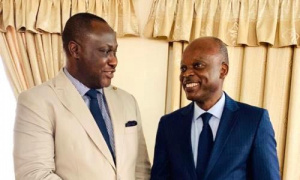
On Monday, December 3, Togo officially joined the Africa Finance Corporation (AFC), a multilateral institution that finances infrastructure development in Africa.
The nation is the twentieth across the whole continent to join the organization. In West Africa however, it is the twelfth and comes after Nigeria, Guinea Bissau, Ghana, Sierra Leone, Gambia, Liberia, Guinea, Chad, Cabo Verde, Benin and Côte d’Ivoire.
“We are glad to have become a member of AFC,” said Robert Dussey, minister of foreign affairs. “Being one of the biggest organizations financing and developing infrastructures in Africa, AFC is well-positioned to help Togo achieve its investment goals, improve the quality of infrastructures and allow it to accelerate its economic growth via regional integration, for the benefit of the people,” he added.
Sharing the same opinion, Sani Yaya, minister of finances declared: “It is vital that we make infrastructure development a priority of our 2018-2022 national development plan (PND). We are aware of technical challenges and restrictions that we must overcome with the help of international partners such as the AFC, to successfully implement the PND.”
Adopted last August, the new national development plan whose implementation is expected to cost more than CFA4,000 billion ($5.4 billion) greatly focuses on the development of extractive, logistics, road, energy and telecommunications infrastructures. AFC, which invests in these various sectors said it is ready to provide the West African nation with technical and financial support to implement “this ambitious program which aims to modernize the economy, infrastructures especially”. “As a leading investor in this sector in Africa, we are ready to help Togo finance and develop its infrastructures,” promised AFC’s CEO, Samaila Zubairu.
Fiacre E. Kakpo
Togo’s government launches open data website, togo.tg
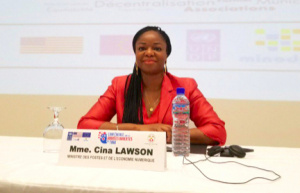
Togo.tg is the new open data website launched by the Togolese government.
The portal should enable free access to data related to public institutions, ministries, public services, etc.
Commenting on the launch, Cina Lawson, minister of posts and digital economy said: “Towards its modernization, Togo proceeded to the remodeling of its digital ecosystem and developed a single institutional portal – www.togo.tg”.
“We must put in place mechanisms and measures to provide citizens access to information while making sure to set up an appropriate legal and regulatory framework,” she added.
The website was launched on the sidelines of the first open data conference ever hosted in Togo. The event was organized by the government, the US embassy, the European embassy and the UNDP.
According to the event’s organizers, open data fosters development by improving real time access to information and data needed by citizens for useful purposes.
Séna Akoda
Togo exported 15,000 Mt cashew nuts during 2018 agricultural campaign
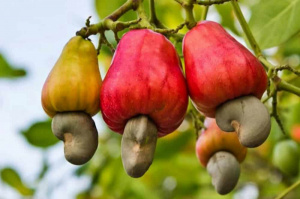
Togo exported 15,000 metric tons (Mt) of cashew nuts during the 2018 agricultural campaign. This was disclosed by Robert Sedjro, head of cashew exporters. Compared to the previous season’s output (12,000 Mt), this year’s exports are up by about 3,000 Mt.
While the current output meets forecast announced by the N’kalo magazine, it should not hide the fact that “Togo is the least cashew producer in West Africa”. According to Sedjro, “it comes after Côte d’Ivoire (750,000 Mt), Benin (200,000 Mt), Ghana (200,000 Mt), Guinea (150,000 Mt) and Burkina (120,000 Mt)”. The official hence urged all interested in agribusiness to invest in the cashew sector.
Let’s recall that after Benin, Burkina Faso and Côte d’Ivoire, Togo has adopted a tax on cashew export which it baptized “Levy on Cashew Nut” (Prélèvement sur les noix de cajou – PNC). The tax is CFA40 per Kg on raw nuts and CFA5 on processed nuts. Its proceeds should be transferred to a special account at the Public Treasury. The account’s name is “cashew management fund in Togo”.
Séna Akoda
Togo’s energy minister appointed as new head of ministers committee steering West African Gas Pipeline Project
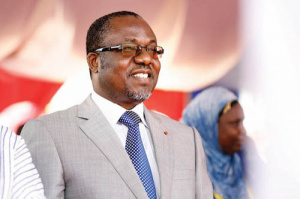
Marc Ably-Bidamon, Togo’s minister of energy, is the new president of the ministers’ committee steering the West African Gas Pipeline Project. The official was appointed the position last week, on the sidelines of the 18th meeting of the committee, for a one-year mandate.
Over the period, Togo should, with its neighbors, launch initiatives to protect subsea gas pipelines and conclude talks with WAPCo regarding natural gas transportation tariffs. The talks aim to increase natural gas import for States’ benefit.
The West African Gas Pipeline Project’s purpose is to transport natural gas from Nigeria to Benin, Ghana and Togo, for power production and other industrial needs also. In fine, the project would help boost gas interconnection in West Africa.
Let it be recalled that during the committee’s recent meeting, participants reviewed the issue of gas supply and the status of the interconnection project as well as issues concerning tariff of the third tariff period that will open in January 2019 and close December 2023. Moreover, the tariff and regulation report was presented.
On the occasion, Marc Ably-Bidamon and his Beninese counterpart discussed with Ghana’s minister of energy about urgent measures to implement relating to CEB’s reforms, in line with the instructions of Benin and Togo’s president.
Séna Akoda