

Togo First
Mifa to create an agricultural insurance firm to cover over 6,000 farmers

For the last three months of its pilot stage, MIFA wants to speed up the creation of an agricultural insurance firm that will cover 6,000 farmers.
This mechanism, initially launched to push banks to lend more to agricultural value chains, intends to enroll three thousand additional farmers. In the same vein, it plans to boost capacities of all players in the agriculture value chain.
Launched six months ago, the Mifa which works on a risk-sharing basis, has gathered so far more than 3,500 farmers and 122 cooperatives.
The cooperatives, divised across 7 pilot phases sought out about two billion CFA of loans from financial institutions over the period. CFA105 million were granted at a rate of 8% while the remaining 1.2 billion is still being released.
In Sadori (Oti prefecture), Tagnamboul (Dankpen prefecture), Blitta, Notsè, Kovié and Aglomeglozou, farmers got nearly CFA75 million of fertilizers pre-delivered under the mechanism. Moreover, still under MIFA, about 10 partnership agreements were signed by around 50 players of the value chains; this goes along the creation of business relations with these players.
Regarding the contracts, there are mostly deals to purchase 10,000 tons of rice and cassava, and 3,500 tons of maize from aggregators.
Fiacre E. Kakpo
Government fixes property transfer fee at CFA35000

In Togo, property transfer fee is now fixed at CFA35000 in line with a ministerial decree dated November 20, 2018.
“A flat fee of CFA35000 will be paid for registration, stamp fees and land conservation fees in the event of complete transfers (of property),” said a note released by the ministry of economy and finances.
Previously, the fixed fee were proportional to the property’s value. Truly, under the 2018 finance bill, in which various incentives were introduced, it represented 6.3% of the property’s value whereas in 2017, it was set at 9.3%.
Setting a fixed tariff aims at simplifying procedures by merging fees requested for file submission, liquidation and registration into a single fee, Togo First was told by Sandra Johnson, Head of Togo’s Business Climate Cell and Counselor to the President. She indicates that the initiative perfectly aligns with the government’s efforts to boost land access in Togo.
Johnson then urged notaries to also update their rates in accordance to the new tax and procedural relief measure.
Let’s recall that since last year, Togo started implementing a battery of reforms aimed at improving its business climate. The reforms have actually helped authorities dematerialize almost all available land titles at the end of 2017, and created this year a single desk for property transfer (hence shortening associated delays).
Spurred by the various incentives, Togo gained 19 places in the latest Doing Business index. Under the latter, the property transfer indicator soared 55 places, driving the nation’s overall rise.
Fiacre E. Kakpo
Togo : Parliament greenlights creation of commercial courts to reassure investors

A few weeks after adopting the bill for creating commercial courts, Togo’s parliament just greenlit their establishment.
The courts’ upcoming establishment is much wished by Sandra Ablamba Johnson, counselor to the President of the Republic and head of the business climate. Indeed, the measure should align with the government’s efforts to improve the country’s business environment. It will also help improve commercial contract management, a key index under the Doing Business.
Concretely, conflicts that may arise between businessmen while executing or interpreting contracts, will be solved at the root by commercial courts.
Hence, Togo will offer judicial security requested by economic operators, in addition to legal security provided by the OHADA law. This is an important step toward building a favorable legal framework for businesses.
Séna Akoda
Strategic partner selected for TogoCom’s capital opening should be known end-March 2019
On December 6, 2018, a ministers’ council was held to launch an international tender for capital opening of Togocom. The latter results from the merger between Togo’s landline and mobile telephony leader, TogoCel and Togo Telecom.
Togolese authorities are actually looking for a strategic partner who can meet expectations of the public firm. These include rapidly boosting access to broadband internet by 2020 by developing 4G and optical fiber. This will allow the group to consolidate its investment capacity and benefit from latest ICT, to develop new growth segments, the authorities said.
In effect, Togocom intends to, in the coming years, become one of the leading telecom operators of the region, sharing the podium with actual leaders such as MTN, Maroc Telecom (which operates in Togo via Moov), Orange or Vodacom. “For the government, this move will accelerate development and boost investments in telecommunications, hence providing a service of better quality and competitive prices, for the benefit of the people and businesses, while supporting the country’s development strategy”.
The strategic partner selected in the tender should be known at the end of March 2019, the ministers’ council indicated.
Fiacre E. Kakpo
Togo ratifies law to create African Continental Free Trade Area
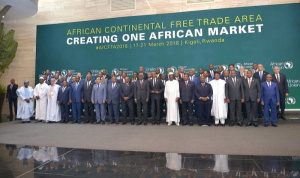
Yesterday, Dec 6, Togo’s parliament adopted a law ratifying the creation of the African Continental Free Trade Area (AfCFTA).
Signed in Kigali, Rwanda, during the African Union Heads of State extraordinary summit, the agreement translates the will of 44 African States to “end their balkanization and create a single market that spans from Algiers to Cape Town, and Praia to Djibouti”, according to Mahamadou Issoufou, President of Niger who chaired the talks.
The African Union wishes through the agreement to progressively suppress custom duties and subsequently increase intra-Africa trade by around 60%, by 2022, as it currently is very weak (16%).
“Ratifying the law will enable Togo to leverage opportunities available in this huge trade area, in terms of investments and trade liberalization,” emphasized Legzim-Balouki, Togo’s minister of trade and private sector promotion.
Let’s recall that the agreement was to come into effect in September 2018, provided that 22 nations ratified it. So far, the number is yet to be reached and Togo is the 13th country to ratify the document.
Séna Akoda
Togo : Parliament passes law fostering cybersecurity and fighting cybercrime

Last October 12, the government of Togo adopted a cybersecurity bill in a ministers’ council. This bill was passed in parliament yesterday.
In effect, the bill actualizes Togo’s national penal system, by modernizing incrimination under traditional penal rule and restructuring legal tools in line with digital environment standards. The law will “efficiently and effectively take into consideration cybersecurity across the country”.
Moreover, it should translate into the creation of the national cybersecurity agency and the cybersecurity support fund. A Computer Emergency Response Team (CERT) and a Security Operating Center (SOC) should also be established.
According to Cina Lawson, Minister of digital economy, voting the law falls in line with the fourth axis of the Togo digital economy strategy which focuses on “ensuring national digital sovereignty including cybersecurity and citizen protection”.
The vote intervenes in a global environment where “cyber threats are rapidly expanding endangering both the humanity and governance mechanisms,” the official said.
Séna Akoda
WAEMU plans to create regional label for its oleaginous sector
Last Wednesday in Lomé, the 18th general assembly of the association of industrial players of oleaginous sector across the West African Economic and Monetary Union (AIFO-Uemoa) was held. On this occasion, participants discussed new challenges rising due to the “Asian unfair competition” in the regional market.
To tackle this issue, the association’s first vice-chairman also MD of Palmci (Côte d’Ivoire), Christophe Koreki, recommends the creation of a regional label. This would according to him help deal with the issues of commodity unavailability, competitiveness, low local output, or importation of Asian oil.
Thierry Awesso, second vice-chairman of the association and MD of the Nouvelle Industrie des Oléagineux du Togo (NIOTO), said that while Togo’s demand is estimated at around 40,000 tons, its output barely reaches 5,000 tons. Therefore, most of the demand is met with Asian imports. Awesso indicats that the imports do not respect tax, customs, health and quality standards.
He thus urged competent authorities to respond accordingly. “To improve our trade environment, we must urgently take necessary actions,” he declared.
Fiacre E. kakpo
BRVM to reveal next Monday the list of 10 new firms joining Elite BRVM Lounge
In the framework of its Elite BRVM Lounge, the West African stock market will add a second batch of 10 SMEs to the project, after a first batch of 10 firms, including Togolese firm Sodigaz, selected previously.
Presentation ceremony will be held on December 10, in Abidjan, Côte d’Ivoire.
The second batch’s addition is subsequent to a deal signed by BRVM, London Stock Exchange and the Casablanca Stock market, on November 9, 2017, in Abidjan relating to the implementation of the ELITE programme in the WAEMU.
Developed by the London Stock Exchange Group (LSEG), the ELITE program aims to build a “dynamic ecosystem, revolving around private sector, to support and foster innovation, entrepreneurship and growth”.
Through this program, BRVM wishes to “boost capacities of firms in the region that has a high potential for growth, in order to give them access to a new source of funding via the WAEMU Regional Financial Market, its third compartment created on December 19, 2017”.
Fiacre E. Kakpo
Togo to proceed to financial and accounting audit of Mining Governance and Development Project

In Togo, mid-term financial and accounting audit of the 2016-2020 Mining Governance and Development Project (PDGM) will be carried out.
In its notice disclosing the information, the ministry of mining and energy said the audit should consist in getting professional advice relating to PDGM’s financial status at the end of every fiscal year.
The audit will also analyze the project’s financial statements, in line with International Standards on Auditing (ISA).
Moreover, it would ensure that all resources of the World Bank (which finances the project) were used as agreed under financing accords, efficiently and cost-effectively.
Another goal of the audit is to verify if acquisition of financed goods and services was done via procurement as imposed by the terms of financing agreements, and in line with the World Bank’s procurement procedures.
Séna Akoda
OTR teams up with Ecobank for pilot phase of E-filling by big firms
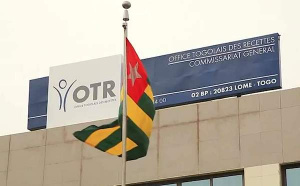
Two years after electronic filling was launched by the Togolese Revenue Office (OTR), the tax institution partnered with Ecobank on December 5, 2018, to initiate pilot phase of online tax payment by big companies. This is a major step towards OTR’s digitalization since electronic filling without online payment is inefficient.
“Electronic tax payment contributes to the modernization of tax management and fiscal administration development strategy in our country,” said the tax commissioner.
E-filling aligns with OTR’s vision to raise public funds in Togo and “provide a service of quality to economic operators”, the commissioner said.
Business players interested in using the new media will have to connect via the electronic Ecobank account. According to the commissioner, other banks should soon provide the same service.
Séna Akoda