

Togo First
Togo: Government to renovate Lomé and Kara’s Congress Centers
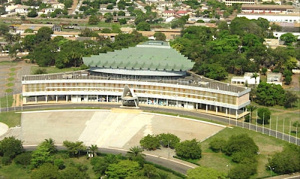
Togolese government, via the ministry of infrastructure and transports, plans rehabilitation works at the congress centers in Lomé and Kara, a document consulted by Togo First indicates.
Under this project, the ministry launched a tender following which the selected bidder will first have to undertake technical studies covering the maintenance, rehabilitation or repair of the building and equipment, as well as any additional equipment. These should follow the development of the service order for the commencement of study services, the drafting of the preliminary study report, the Preliminary (APS) and Detailed (APD) project designs.
Secondly, the consultant will prepare the bidding documents. The cost works are included in the 2019 State budget.
Séna Akoda
Soya sector : with a yield of 3 tons per hectare, Togo’s expertise in this sector is attracting producers of the sub-region to learn from them
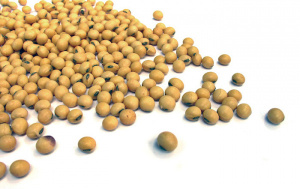
With a production that increased from 24,000 tons to 35,000 tons within three years and an average yield of 3 tons per hectare, the Soya sector has good results in Togo so much that producers from neighbouring countries come to learn from the local experience.
This is the case of the delegation of Benin’s Soya producers’ union (Union Nationale des Producteurs de Soja du Bénin-UNPS) that visited Lomé on January 9, 2019. They met Togolese agronomists to learn from Togo’s expertise in terms of equipment and Soya seeds management.
"We have come to see how our Togolese brothers produce soya, about the management mechanisms of equipment, the inputs and machines that is. We have learnt that Togo is already more advanced as far as those equipment are concerned”, one of the members of the visiting delegation explained.
For instance, for a yield of 3 tons per hectare in Togo, Benin produces a bit above 800 kg.
This seems to explain why producers in the sub-region have an interest in Togo’s production technics. Before Benin, there were Guinean and Ivorian producers who came to learn from the country’s know-how in terms of soya production.
BRVM and IFC sign a cooperation agreement on corporate governance code
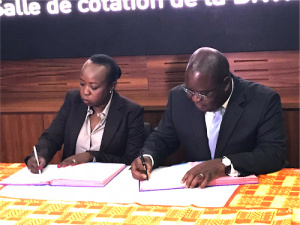
The Regional Stock Exchange (BRVM) signed January 10, 2019, with the International Finance Corporation (IFC), World Bank’s private sector arm, a cooperation agreement on the corporate governance code.
The goal is to “enable BRVM-listed companies to be more efficient, competitive and productive to ensure a climate of trust vis-à-vis investors,” Dr Edoh Kossi Amenounve, BRVM’s Managing Director, said during the signing ceremony.
While Charlotte N'daw, Senior Operations Manager at IFC Africa, said “this cooperation agreement between the BRVM and the IFC is part of the promotion of the governance code's practices within companies”, Edoh Kossi Amenounve added that “the corporate governance code aims to prevent and manage conflicts that may arise among company managers”.
IFC, let’s note, is the world's largest development assistance institution whose activities focus exclusively on the private sector in developing countries.
Séna Akoda
Djanta TechHub is calling for Togolese startups!

Are you a startup or holder of an IT or digital project? Do you seek an adequate environment to develop and materialize your ideas, stimulate your creativity, boost your productivity and exchange daily with actors in your sector? Do you seek competitiveness? Djanta TechHub is calling for you. Make yourself known and express your support and financial needs by registering via this online form.
But, what is Djanta TechHub?
Djanta TechHub is a 3,000 m2 campus built for the valorization and promotion of entrepreneurship, creativity and economic development via the digital, innovation and research.
It also hosts a co-working space, an incubator, a business accelerator as well as conference and meeting rooms. It will also host a coding school, and a FabLab to initiate the use of computer-controlled machine tools.
It also dedicates space to the promotion of women in the digital sector with its dedicated space Nana Tech.
Join Togolese innovators in this new adventure!
Link of the registration form: http://k6.re/hWyil
Togo secures XOF13.625 billion to fund its 2019 budget

Initially aiming at raising XOF20 billion to fund the 2019 state budget, Togo’s Treasury ended up mobilizing XOF18.625 billion, the results of its first operation on the regional financial market showed January 10, 2019. Of this amount the government will however only collect XOF13.625 billion.
The poor performance, though the market seems favorable, comes just after the country closed the year 2018 on good performances. At the beginning of this year, investors were interested in fundraising operations from ECOWAS countries. Benin, for example, on 9 January 2019, succeeded in raising nearly XOF22 billion while it was initially seeking XAF20 billion, in treasury bills with similar characterizes as that of Togo. The day before, it was Niger which, with an initial target of XOF25 billion, ended up mobilizing XOF25.313 billion.
It should however be recalled that 2018 also started off on a smaller performance for Togo, before the country gradually increased to become one of the best issuers on the market.
This year, Togo targets XOF390 billion, including XOF95 billion during the first quarter, to finance the budget.
In six months only, MIFA generated 15,000 jobs, and provided CFA1 billion of loans, among others
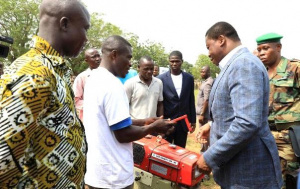
Six months only after it was launched, the agricultural financing incentive mechanism (MIFA) provided a little over CFA1 billion worth of loans to a total of 5,062 farmers, including 916 women. This is 84% of the number (6,000 farmers) initially aimed at, for the period.
Besides, nearly 12,000 producers were impacted via direct loans and others from aggregators. Also, 4,948 producers, of which 999 women, were given access to insurance, under the scheme.
The MIFA backed more than 120 farmers’ cooperatives, facilitating their access to financings and loans.
Last, over the period reviewed, a total of 15,055 jobs ; 5,363 direct and 9,702 indirect, were created through the MIFA.
The MIFA, let’s recall, is a scheme based on risk-sharing. It was launched on June 25, 2018, to encourage banks to lend more to agricultural value chains. Over the next three years, this mechanism plans to support a million farmers and agricultural players.
Togo’s new fishing port will be delivered next month

Construction works for Togo’s new fishing port are 93% complete. This was disclosed on the sidelines of a field visit to the project’s site last Tuesday by a delegation led by ministers of infrastructures and fishery, Ninsao Gnofam and Ouro-Koura Agadazi.
The port whose construction began in August 2017 is expected to be delivered next month. It was co-financed by the Japan International Cooperation Agency (JICA) and the Togolese government. Both respectively injected 14.4 billion CFA and 2.2 billion CFA in the project.
The two ministers were satisfied with the work’s progress. The next step is to train around 22,000 players operating in this sub-sector to the good management of the new infrastructure.
In the long term, the new port which is located in Gbetsogbe-Baguida (30km from Lomé) will have a capacity of 300 pirogues. It palliates a 30% reduction of the basin of Lomé’s old fishing port and also the reduction of pirogues stationing area at this port, subsequent to works to boost capacities of Lomé’s main port.
The new port will also help increase the country’s annual fishery output. The sector, let’s emphasize, presently contributes 4% of Togo’s agricultural GDP and 1% of its overall GDP.
WAEMU celebrates its 25th anniversary this Thursday
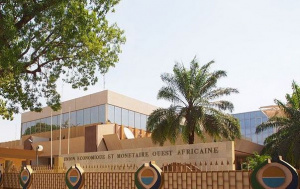
On Thursday, January 10, 2019, the West African Economic and Monetary Union (WAEMU) will celebrate its 25th anniversary at its headquarters, in Ouagadougou.
The official celebration ceremony will take place at the Centre International de Conférences de Ouaga 2000, in the presence of Ivorian president, Alassane Dramane Ouattara, also president of the WAEMU’s Heads of State and Governments Conference. Burkina Faso’s president, Roch Marc Christian Kaboré, will also attend the ceremony.
The event’s theme is “Achieving free movement of goods and people together”.
The anniversary will be the opportunity to review progress made towards achieving this objective and overcoming challenges that impede its realization. On the ceremony’s sidelines, officials present will inaugurate the new administrative complex of the institution in the Burkinabe capital.
The WAEMU regroups the eight West African countries that have in common the CFA. These are Benin, Burkina Faso, Côte d’Ivoire, Guinea Bissau (since May 2, 1997), Mali, Niger, Senegal and Togo.
Séna Akoda
CFPJ hosts a workshop on ways to fight money laundering and terrorism financing

On Monday 7th January, a five-day training workshop on ways to fight money laundering and terrorism financing commenced. The session is taking place at the Centre de formation des professions de Justice (CFPJ) in Lomé.
Gathered at the meeting are magistrates as well as top members of the police and army. They will be taught how to better fight money laundering and terrorism financing by improving their knowledge and practices relating to these issues.
In effect, the workshop’s goal is to teach “how to appropriately conduct a financial investigation and obtaining tangible results, how to interrogate criminals, how to record minutes,” said Suzanne Soukoudé Fiawonou, head of CFPJ.
The ongoing workshop is one of a series started last December. It falls under a project to strengthen capacities to tackle money laundering and terrorism financing in West Africa (SAMOUA). This project is carried out in partnership with the Inter-governmental Action Group against Money Laundering in West Africa (GIABA).
The next workshop, a more advanced one, will be held in February 2019.
Asky Airlines lands its first flight on the new terminal of the Abuja international airport
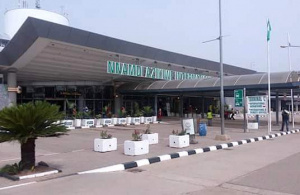
On Sunday, January 6, a new terminal opened at the Abuja Nnamdi Azikiwe international airport. Asky, the Lomé-based pan-African airlines was one of the first airlines to use the terminal.
The airlines transported from Lomé 91 passengers who landed at the terminal, according to a tweet from the Federal Airports Authority of Nigeria (FAAN), Nigeria’s airports management authority.
The presence of Asky on what is Nigeria’s second most important airport after Lagos’ once again is proof of Asky’s growing presence across the African sky.
Asky, in line with its growth objectives and with the support of its partner Ethiopian Airlines, is gradually increasing its fleet.
Séna Akoda