

Togo First
Togo’s President to present implementation assessment relating to SAATM this month in Addis Ababa
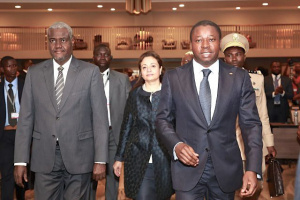
Addis Ababa, Ethiopia’s capital, will host this month the 32nd ordinary session of the Africa Union’s Heads of State and Governments Conference. On this occasion, Togo’s President, Faure Gnassingbé, will present an assessment report on immediate measures implemented to ensure the effective functioning of the Single African Air Transport Market (SAATM).
The document contains results of the second meeting of parties concerned by the single market, at the end of the past month in Dakar. These include the African Union (AU), OACI, AfDB, World Bank, UN’s economic commission for Africa (UNECA), regional economic communities.
This meeting had two goals:
First, reviewing progress made on the single market project and second, accelerate institutional procedures that will enable the African Civil Aviation Commission (AFCAC) to fully act as the AU’s special agency for aviation, and also as the agency executing the Yamoussoukro decision and SAATM’s also.
This meeting follows another held back in March 7th 2017, in Abidjan. The latter led to the adoption of a joint plan of action for 2018-2019 for the SAATM’s establishment.
Séna Akoda
Coris Bank becomes the first bank in Togo to get ISO certification

Coris Bank International Togo (CBI-Togo) just got an ISO-9001-2015 certification under the serial number FS 703571. This certification, the first obtained by a bank in the country, rewards Coris for the good quality of its management.
Delivered by London-based British Standard Institution (BSI), the certification “attests of the commitment of CBI-Togo to improving its processes and services in order to satisfy its customers and other relevant parties”, CBI-Togo’s management reveals.
Before the banking sector, in the telecom sector, Togocel, public mobile operator secured end-2016 two certifications for promoting eco-friendly solutions: ISO 9001-2015 and ISO 14001-2015.
Other entities also include the High School of Business (ESA), a tertiary education institute which got the ISO 9001-2015 certification, and the national civil aviation (ANAC-Togo). The latter is the first African agency to secure an ISO 9001-2015 certification from Bureau Veritas.
Séna Akoda
Togo Telecom will have its license renewed

Togo Telecom will get its license renewed. The decision was approved during the recent council of ministers held last Wednesday, under its second decree. Approbation decree for the license’s renewal will be signed by the ministers of posts and digital economy.
This decision (license renewal) falls under the “opening of capital of Togocom Group” (product of the merger between Togo Telecom and Togocel), which is fully owned by the State. The goal is to improve the group’s visibility, in order to “boost trust of the strategic investor selected during the tender”, the council’s statement indicates.
Ayi Renaud Dossavi
AfDB urges Togo and other countries to use its clean power financing tools
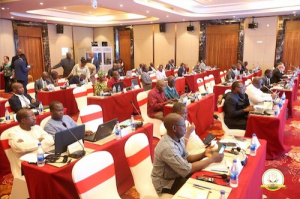
From January 28 to 30, 2019, Guinea Conakry hosted the West Africa regional meeting of the Africa Renewable Energy Initiative (AREI). Abass Aboulaye, Togo’s director of energy, represented his country at the event.
At this occasion, the AfDB which organized the meeting presented to participants available financing tools revolving around climate or energy, especially in regards to access to sustainable energy for all.
The pan-African bank reaffirmed its support to actors involved in the various African initiatives aiming at ensuring the continent’s energetic transition. In line with the meeting’s goals, the bank urges concerned actors to strive towards an even development of renewables and better access to sustainable energy for all.
In the related communiqué, the Togolese representative mentioned progress made by his nation in terms of renewable energy. He also presented the country’s energy policy, highlighting strong points of its electrification strategy.
Besides Togo, representatives of 14 other West African nations, AREI’s institutional partners (IRENA, ECOWAS, ENDA), and West Africa’s regional entities attended the event. There were also representatives of multilateral organizations and initiatives operating in the clean power sector, representatives of the private sector, etc.
Let’s note that the AREI received from international partners a €10 billion financing covering the 2015-2020 period, in addition to a €1.5 billion subsidy.
Séna Akoda
Togo adopts new legal framework to regulate clean power production, distribution and commercialization
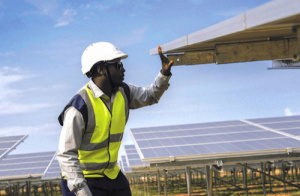
Togo has adopted a new legal framework for its clean power sector. This was during the recent council of ministers held last Wednesday.
In effect, under the third and fourth decrees passed at the council, Togo wants to “tackle the various challenges related to power insufficiency”, increase power supply and reduce power dependency by diversifying sources of energy. These require an “appropriate legal framework”.
Therefore, “production, transport, distribution and commercialization of power generated from renewable sources”, will now be “subjected to a concession agreement”. Similarly, production thresholds will be set under the “various legal regimes regulating clean power projects”.
According to the ministry of mines and energy, Togo’s electrification rate rose to 45% in 2018, spurred by new connections by Compagnie Energie Electrique du Togo (CEET), and BBOXX operations which led to the electrification (with domestic solar units) of close to 10,000 homes.
Ayi Renaud Dossavi
Togo: FNFI provided more than CFA81 billion worth of loans since its creation, in 2014
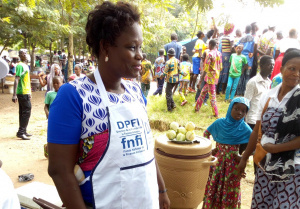
Since it was established in 2014, the National Fund for Inclusive Finance (FNFI) disbursed CFA80.847 billion worth of loans. In detail, more than 1,553,201 loans were provided by the entity, including 626,849 renewals.
According to the institution, 95% of the loans have been repaid. This is about 2% more compared to end-June 2018.
Danyi, in the Plateaux region, is the prefecture to have repaid the most loans but the Savanes region distinguished itself as the most performant. Indeed, the northern region regroups three prefectures out the four best loan payers. At end-June last year, the region’s repayment rate stood at a staggering 100%.
Actually, in the coming months, the FNFI plans to launch five new products to improve its offers and performances.
Fiacre E. Kakpo
Togo gets CFA12 billion from Kuwait Fund KFAED, for a drinking water project in Kara
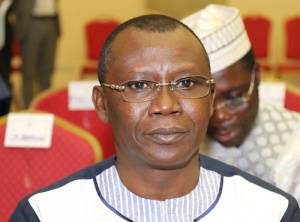
The Kuwait Fund for Arab Economic Development (KFAED) just provided Togo a CFA12 billion financing for its drinking water supply project in Kara (414km north of Lomé) and its surroundings.
The related signing ceremony took place on January 31, 2019, in the presence of Sani Yaya, Togo’s minister of economy and finances, and Nedhal A. Al-Olayan, Managing Director of KFAED.
The concerned project aims at meeting the needs of the people of Kara and improving their living standards. In the long run, it should help mobilize 10,000 m3/day from close sources and bring daily supply capacity from 7,500 m3 to 17,500 m3, the minister indicated.
The project should thus have a “positive impact on water supply level”, which currently stands at 47%. In effect, “80% of the population in the project area should have access to drinking water by 2030”.
The minister then recalled that the project is part of “a set of key programs initiated by the government under its national development plan (PND)”.
Ayi Renaud Dossavi
Togo’s 2018-2022 PND plans to make women 28% of business owners, by 2022

Togo aims to have 28% of business owners operating in the country by 2022 to be women, in line with its gender equity promotion strategy.
Compared to 2015, this would represent a 6% increase and a 3% increase compared to 2018 where this percentage was 25%.
In terms of access to loans for women, this rate is forecast at 60% by 2022, against around 45% in 2015.
The various financial inclusion mechanisms put in place, for example the FNFI which targets youths and women, should play a significant role in this process. Over the same period, womens’ access to land should also improve.
According to a recent report of Afrobaromètre, Togo is on the right path in regards to gender equity.
Séna Akoda
Moov-Togo to soon begin users identification and re-identification campaign
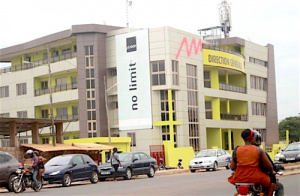
Moov-Togo will soon carry out an identification/re-identification campaign targeting its users.
While the campaign’s period is yet to be revealed, documents needed in its framework include : a national ID card, a driving license, a passport or a voter’s ID card.
For foreign residents, they will need a resident permit. Any person lacking these documents will have to visit a Moov agency, with any ID document accompanied by his or her referrer.
The new campaign which follows a similar one carried out some years ago aims to make more reliable ID data of users and update Moov’s subscriber database.
For users to know if they are already registered or not, they can access related information via the following USSD code: *202#. Doing so, the user will not only know his or her status but also know if the registered profile is actually his or her own.
Séna Akoda
Togo: PND to help create 4,200 artisanal businesses by 2022
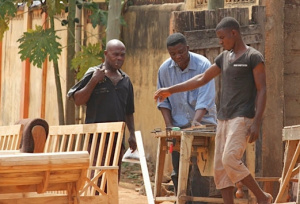
Support the creation of 4,200 artisanal businesses by 2022, and make them competitive as well as wealth and job generators. That is Togo’s ambition for the craftsmanship sector, in the framework of the 2018-2022 national development plan (PND 2018-2022).
Leveraging the sector’s performance – it employs nearly a million people and contributes 18% of GDP – the State wishes to turn its artisans into professionals, by establishing a social protection system that will cover them, and reinforcing resource centres in all prefectures.
In addition, fairs and similar events will be organized yearly across the country’s five regions which may turn into artisanal hubs. Finally, an adequate financing mechanism will be put in place to this end.
In this framework, Togo intends to improve both the institutional and organizational framework related to the promotion of artisanal businesses, reinforce the system of learning, training and perfecting craftsmen, and lastly reinforce the system supporting craftsmanship.
Let it be recalled that all these ambitions fall under the second axis of the PND which aims at developing agro-processing, manufacturing and mining poles in the country.
Ayi Renaud Dossavi