

Togo First
Togo among top 5 African countries attracting international firms the most on the continent (CIAN)

With a score of 2.8 over 5, same as Tunisia, Togo’s business climate is getting more attractive according to the 2019 Annual Rankings of the French Investors Council in Africa (CIAN).
The country owes this performance to its modernized port and air networks, its position of trade hub, tax incentives, security level, and right to employment, among others. Due to these advantages many multinationals have decided to settle in Togo.
65% of heads of firms questionned in the framework of the rankings’ elaboration expect their turnover in Togo to rise this year. In 2018, this figure stood at 44%. Meanwhile, 22% of the firms expect no change in their turnover and 11% expect it to decrease.
Commenting on the positive expectations of most chiefs of multinationals present in Togo, Sandra Johnson, Advisor to the President, and Head of Togo’s Business Climate Cell, declared: “This assessment confirms the good performance of Togo in the 2019 Doing Business”.
In 2018, let’s recall, intentions to invest had slumped by 11%, due to concerns spurred by sociopolitical protests. This year however, the country should attract more investments according to CIAN’s barometer.
In detail, 34% of firms surveyed say they are ready to increase their investment in Togo, whereas 44% of the surveyed plan on maintaining their current investment expenses at the same level as in 2018. The remaining 22% for their part intend to invest less in the country.
The CIAN survey was carried out between June and September 2018, taking as sample population 1244 heads of companies.
Fiacre E. Kakpo
Togo: Government plans to build a dry port in Cinkassé to serve hinterland neighbors
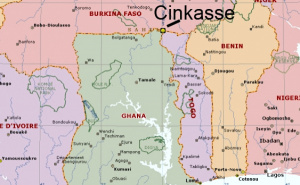
The government wants to build in Cinkassé, near the border with Burkina Faso, a dry port.
The infrastructure which will develop under a public-private partnership will cover 100 ha and help reinforce transport between the port of Lomé and Cinkassé.
The dry port project is steered by Togo Invest. It will have customs facilities where goods from Burkina Faso, Ghana and Niger will be processed. In addition, there will be warehouses to ensure freight de-containerization and distribution; a single desk and offices in charge of logistics procedures and processes. Also planned are modern facilities and equipment for cargo transfers between trucks.
According to studies, the flow of goods to the hinterland should stand at 10,230,000 tons per year by 2040, against 3,786,000 tons in 2015.
Fiacre E. Kakpo
After Taxi-bikes, Gozem now puts taxi-cars at the disposal of its users

In Togo, Gozem users will have access to taxis (cars), in addition to zemidjans (local taxi-bikes).
“Gozem is glad to add this new string to its bow, in the framework of its expansion in Lomé, while offering an innovation service, one of quality with a mile-based fee”, said Gozem CEO, Emeka Ajene.
Concerning security issues, Gozem assured that “before partnering with Gozem, all drivers are trained on the highway-code and on how to provide a service of quality to the app’s users. Both our vehicles and drivers are insured by Ogar Assurances and Togo Assistance”.
Only two months after starting operations in Togo, the Gozem app has already been downloaded more than 50,000 times on the Play store and the App store. This year, the startup plans to expand its activities to Benin, Cameroon, Burkina Faso and Mali.
Fiacre E. Kakpo
Two out of Three Togolese think the CFA should be replaced - Afrobaromètre (Report)

Two out of three Togolese (66%) think the CFA should be replaced, according to the latest survey of Afrobaromètre. According to them, “the currency profits France more than members of the Franc zone such as Togo”.
On the other side, 23% of the surveyed believe that the CFA is a “tool for development and should be maintained”.
Going deeper, the survey shows that the richest and most educated among the surveyed are the most hostile to the currency (73%).
Another outcome of the survey is that those who believe Togo is “on the right path”, economically, are less inclined to abandoning the CFA.
In opposition, the less favored are more open to switching currencies. Indeed, “the more the surveyed believe economic conditions to be bad, the more they are inclined to abandoning the CFA”, the report indicates.
Let’s emphasize that the project for a single West African (ECOWAS) currency which has been on the table since the 80s is now gaining more attention. Actually, a task force has been set in this regard, and the project is expected to be concretized by 2020.
Ayi Renaud Dossavi
US embassy’s Self-Help Program grants XOF11mln to support small community projects

The Self-Help Program of the US embassy in Togo is making new beneficiaries at the beginning of February. The scheme is granting a total of XOF11 million to support about 10 small community projects in the country.
Self-Help is a community assistance program, launched in 1964, which aims to finance micro-development projects of local communities. The main selection criterion is self-handling. Indeed, once a project carrier benefits from the program, they become self-sufficient.
Particular focus is on projects with the potential to generate income, create employment and produce marketable skills (sewing, livestock breeding, etc.). The maximum amount awarded for each project is $5,000.
Ayi Renaud Dossavi
Togo to build a multiservice logistics park to unblock Lomé port
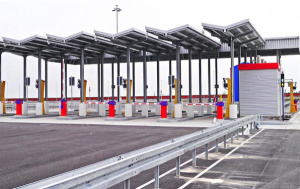
A more than 50-ha multiservice logistics park will be built at Adakpamé, in Lomé, Togo, to unblock Lomé Port, which has become the leading port in West Africa, Togo First learned.
Currently, geotechnical studies are being conducted on the site, close to the port, authorities confirmed estimating that construction works should start in the coming months.
"This project is led by Togo Invest and currently, we can confirm that geotechnical studies are being conducted on the site with the financial support of France and, in the coming months, the construction works can start", Kanka-Malik Natchaba, coordinator of the presidential cabinet for the implementation and monitoring of priority projects (Cellule Présidentielle d'Exécution et de Suivi des Projets prioritaires-CPES), said to Togo First in an interview.
According to Togo Invest, the state holding that leads the project, “the infrastructure will comprise of a dedicated road with access to the port, a secured guard house facility at the edge of the port, a truck parking lot, basic facilities and other appropriate installations (logistics and control center, offices, housings and restaurants).”
This logistics park that will require between $40 million and $60 million is a solution to uncontrolled parking.
According to local authorities, the project "perfectly fits with the first line of the national development plan," which is aimed at the creation of an excellence logistics hub and a first-class business centre in the sub-region.
Though there is no information about the number of trucks awaited or the modalities of the financing for this infrastructure, data shows a net progression of the truck traffic. In H1, 2018, it reached 72,630 trucks while for the whole 2017, it was 111,636.
Fiacre E. Kakpo
Togo raises CFA28 billion for its latest title issuance on regional market

CFA28 billion. That is the amount raised by Togo for its treasury bills issuance on the regional market last Friday.
Considering that the country initially aimed to raise CFA20 billion, the final proceeds are up by CFA8 billion, representing an oversubscription rate of 139%. However, as planned initially, CFA20 billion will be spent on the 2019 budget.
Overall, 34 subscriptions from all WAEMU countries, excluding Niger and Guinea Bissau, were recorded. Value date for the securities is set on February 11, 2019, and date of maturity is February 11, 2022.
This operation, in terms of yield, is the second of its kind this year, after that of January 25. Repayment will take place in fine, the first day after the maturity date, according to UMOA-TITRES agency.
Next February 22, Togo should carry out another securities issuance on the regional market.
Togo : OTR acquaints notaries with the new general tax code
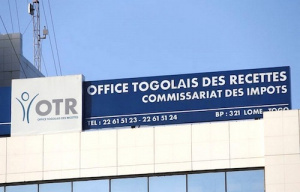
Last Thursday, Togo’s Revenue Office (OTR) carried out a meeting with the country’s notaries to get them acquainted with the new general tax code of fiscal procedures in force.
The new code includes new initiatives such as a single land desk, a single land transfer fee set at CFA35,000, new modalities for property transfers, among others. These innovations, according to the tax commissioner, Adoyi Esso-Wavana, “profit the people, applicants, and most importantly youths interested in starting a business”.
Taking land for example, the tax commissioner indicated that under the best conditions and with respect to the government’s instructions, the new measures should allow an applicant to get a land title within six months.
Ayi Renaud Dossavi
Togo and Ghana are working to resolve telecom interference issues at their border

Togo and Ghana plan on collaborating to define a framework to use a spectrum of telecom frequencies at their common border.
Since last Thursday, a delegation from the Togolese telecommunications and post regulatory authority (ARTP) has been in Ghana to meet with officials of the National Communications Authority of Ghana (NCA).
This meeting aims at overcoming issues related to interferences in the radio spectrum along the Togo-Ghana border. This would help resolve problems like accidental roaming which generates additional costs for users living in the area.
Ghanaian operators, let’s recall, are losing users living near the border to Togolese operators, as network signal of the latter appears to be stronger in the area.
At the meeting, besides the two regulators, telecom services providers from both nations were also present.
Ayi Renaud Dossavi
Togo: Corn, rice, vegetables and poultry are now MIFA’s top-priority sectors
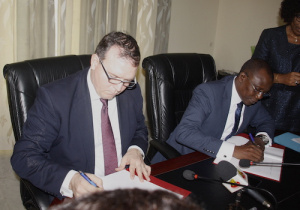
Togo’s mechanism promoting agricultural financing (MIFA) will, starting this year, focus primarily on the sectors of corn, rice, vegetables and poultry production.
This was revealed last Thursday, on the sidelines of a ceremony for the signing of a financing convention for the mechanism, between Togo and the International Fund for Agricultural Development (IFAD).
On this occasion, Togo was represented by its ministers of finance and agriculture, respectively Sani Yaya and Noel Koutéra Bataka. The IFAD was for its part represented by its regional director for West and Central Africa, Martin Lisandro.
The IFAD’s financing “will first focus on structuring” the four key sectors mentionned above, says Martin Lisandro. These sectors, according to him, have a “great potential in terms of job creation for women and youths, wealth creation, improvement of food safety and nutrition, in addition to contributing to adaptation to climate change”.
In this regard, Togo’s minister of economy and finance added that the MIFA would “cover all regions of the country”, both in the four sectors concerned and others, such as sesame and cassava.
Let’s recall that the pilot stage of the scheme lasted six months and produced encouraging results, according to authorities. Hence, the MIFA has been institutionalized to get more results.
Ayi Renaud Dossavi