

Togo First
Togo: German firm Hansen Korbwaren partners with Chamber of Commerce and Industry to professionalize basketry industry
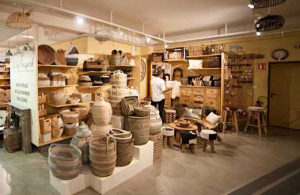
German basketry firm Hansen Korbwaren, will help Togo professionalize and improve its skills in this sector. This, it will do under a partnership reached with Togo’s chamber of commerce and industry (CCIT).
“We will provide the Togolese people basketry trainings in order for them to perform this work more professionally,” said Johannes Hansen, who led a delegation from the German company to Lomé. Besides the trainings, the 85 year old European firm will introduce new seeds adapted to basketry.
In fact, five varieties of such seeds were planted on the sideline of the partnership’s announcement.
In detail, six Togolese will initially receive the trainings in Germany.
Commenting on the partnership, Germain Meba, head of CCIT said that it should in the long-run provide Togo with both raw material and expertise needed for basketry to emerge and thrive on the regional market.
Ayi Renaud Dossavi
Togo: In 2018, women and young entrepreneurs secured CFA10bn worth of public procurements
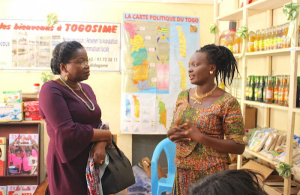
Last year, women and young entrepreneurs captured CFA10 billion worth of public procurements. This results from a presidential measure announced in 2018 to provide 20% of all public procurements to this group of individuals.
The figure was disclosed by Victoire Tomégah-Dogbé, who heads the task force in charge of public procurements in Togo.
The amount captured, though substantial, is far below initial expectations, knowingly CFA40 billion. However, women obtained CFA3.3 billion worth of contracts out of CFA10 billion secured.
According to Tomégah-Dogbé, women entrepreneurs must make more efforts this year and in the coming years to secure at least 50% of revenues derived from public procurements.
Séna Akoda
Togo partners with Ecobank to fund its 2018-2022 national development plan
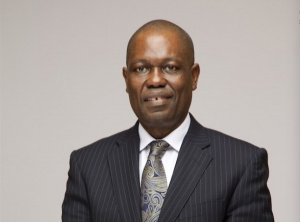
To raise funds needed for its 2018-2022 National Development Plan’s implementation, Togo signed with Ecobank a partnership agreement.
The agreements were signed by Sani Yaya, Togolese minister of economy and finances, and Ade Ayeyemi, Head of Ecobank Group. Present at the signing were important African financial and diplomatic figures. These include IFAD’s Director General, Gilbert Houngbo, economists Samuel Mathey and Patrick Sevaistre, and Lionel Zinsou, former Prime Minister of Benin.
So far, no additional details relating to the agreements have been disclosed.
Let’s recall that back in September, Ade Ayeyemi accompanied Togolese officials in Hangzhou, China, for the first-ever Togo-China Business forum. At the time, Togolese authorities showcased the national development plan to Chinese investors.
Ayi Renaud Dossavi
President Faure Gnassingbé officially launches PND
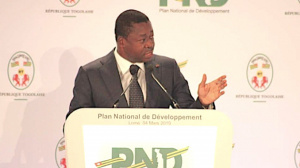
Today, President Faure Gnassingbé officially launched the 2018-2022 National Development Plan. Present at the launching ceremony were eminent figures such as IFAD’s President, Gilbert Fossoun Houngbo, Benin’s former Prime Minister, Lionel Zinsou, ETI group’s Managing Director, Ade Ayeyemi, Togolese Economist behind the “Entreprendre à Zéro Franc” concept, Samuel Mathey, and French economist, Patrick Sevaistre.
While lauding the many efforts made by his government, reflected in better economic indicators, the leader indicated that with the PND, the goal is “to preserve this progress and consolidate its foundation to advance even further and at the same time focus on redistributing wealth to the sons and daughters of Togo. This, because growth, according to President Gnassingbé, is valuable only when inclusive; and development is worthy only if it reaches the country’s most remote communities and all its homes.”
To ensure shared prosperity, “we must remain lucid and well assess the way ahead,” the President said.
“While external aid will act as catalysts in the process, contribution of citizens will also increase, because tax compliance is a main component in the realization of our PND,” he added. However, to engage taxpayers, authorities must show accountability in the process.
Actually, talking on behalf of PND beneficiaries, Komi Dovi Koudou, promoter of Natuthé Kinkeliba, requested accountability and transparency in the plan’s implementation.
The PND aims at creating 500,000 jobs by 2022 and achieving an annual growth of 6.6% over the period, peaking at 7.6% in 2022. Togo should raise CFA4,622 billion for its implementation. The private sector is expected to contribute 65% of this amount, about CFA3,000 billion.
Séna Akoda
Togo : German cooperation KfW provides CFA4.6bn to improve youths’ training and professional insertion
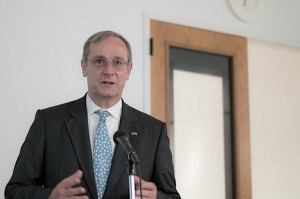
Togo recently received from the German cooperation (KfW) seven million euros (CFA4.6 billion) to improve technical education, as well as youths’ professional training and insertion. The facility aligns with stage III of the Program for Technical and Professional Training, and Youth Employment (PAFPE).
In effect, the monies will be used to modernize many technical and professional training centers across the country.
Related financing and execution agreement were made last Friday, by Togo’s minister of economy and finances, Sani Yaya, and Germany’s ambassador to Togo, Christoph Sander.
On this occasion, Yaya welcomed the financing and recalled that PAFPE falls in the framework of “reforms implemented in the Togolese education system,” to ensure a better professional insertion of citizens and provide skills training.
During the first two stages of this program, 12 training centers were rehabilitated and modernized.
Ayi Renaud Dossavi
Togo’s Revenue Office expects to collect CFA669 billion in tax and customs revenues in 2019
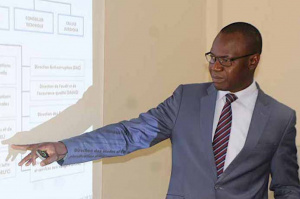
This year, Togo’s Revenue Office (OTR) should collect XAF669 billion of tax and customs revenues.
According to Philippe Kokou Tchodié (photo), new general commissioner of the institution, who disclosed the information, major decisions are being taken to this end. Among these are measures to improve OTR’s governance, and better tackle corruption and fraud. Also, tax base will be broadened in line with land reform which is to lead to property taxation.
Commenting on OTR’s performance in 2018, Koukou Tchodié declared : “Overall, performances in 2018 were satisfactory as we were able to meet budget demands set by the government."
Séna Akoda
More Togolese prefer trusting their savings to friends and relatives than to traditional financial institutions

Togolese are more inclined to trust their savings to a friend or relative, than to traditional financial institutions. This was revealed in the World Bank’s Little Data Book on Financial Inclusion 2018.
According to the report, almost half of Togo’s adult population (45.2%) regularly save on their earnings. However, only 11.8% of these people save at traditional financial institutions whereas about half of them (23.1%) prefer trusting their money to their relatives and friends.
Similarly, regarding loans, 9.1% of the adult population, went to financial institutions to get one in 2017, against 22% who preferred asking friends and relatives.
Another source of concern is the fact that one out of 10 adults working (8.4%) saves for old age.
While many still are reluctant to trust their savings to banks and other traditional financial institutions, the truth is the number of those who save with financial institutions is increasing. Indeed, back in 2014, only 6.4% of adults in Togo used to save in such institutions. This is due among others to new policies implemented to boost financial inclusion. These include various products and mechanisms such as the national financial inclusion fund (FNFI).
Ayi Renaud Dossavi
Togo : Rural areas receive five mobile clinics for a better access to health
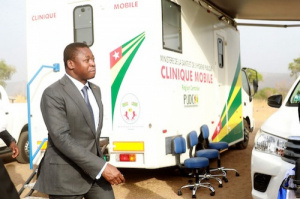
Togo got five, fully equipped, mobile clinics to improve access to health services for the most vulnerable and isolated populations. The clinics will be deployed across the country’s five regions, one clinic per region.
Respectively, each clinic comes with 4x4 support cars, a lab and a pharmacy, and costs about CFA30 million. They should serve nearly 2,700 villages in the country’s most remote areas, benefitting 2.5 million potential patients. Overall, the mobile clinics should carry out 276,000 visits, yearly.
The clinics were delivered last Wednesday in Kantè, northern region, in the presence of President Faure Gnassingbé himself. They were offered, let’s emphasize, in the framework of the Community Development Emergency Program (PUDC). Two more sets of mobile clinics are expected to be delivered to meet populations’ dental and eye care especially.
Ayi Renaud Dossavi
CIZO: SOLEVA to begin activities in Q2 2019
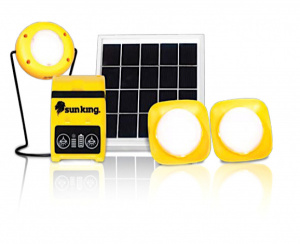
In Togo, SOLEVA, the firm in charge of the CIZO project with BBOXX, will start its activities in the country in Q2 2019, thus initiating its 12-month pilot phase on the project.
In line with its specifications for the contract, SOLEVA and its US partner Greenlight Planet should “sell and distribute at least 300,000 of Greenlight’s Sun King® solar systems in the next five years, providing electricity to more than two million people living mostly in Togo’s rural areas."
It should be noted that since it was launched about a year ago, nearly 10,000 households got solar kits through the CIZO project. The latter aims at making households rely more on solar power and boost electrification in rural areas.
Séna Akoda
WAEMU urges students across the union to apply for the excellence training support program
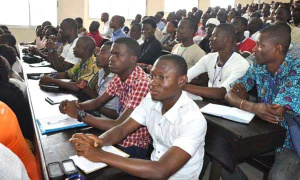
The WAEMU has developed a program supporting top-class training and research within the community, in line with its human resources development objectives.
For the 2019-2020 edition of this program, WAEMU launched a call for applications to preselect those who will benefit from the support which lasts 12 months. The latter can neither be prolonged, postponed nor renewed.
This year, the union’s commission will prioritize the following fields: Engineering, accounting, public health, education, sciences, and ICT.
The support includes CFA200,000 for installation fees, the same amount for insurance, and CFA150,000 per month, over the 12 months it covers.
Interested candidates should look up WAEMU’s website for more information and fill the application form. Deadline for application is April 30, 2019.
Séna Akoda