

Togo First
Togo : In 2018, cashew exports to the EU grew by 128%

In N’Kâlo’s latest report on the cashew market, it was revealed that Togo exported 267 tons of cashew nuts to the European Union in 2018. This is against 118 tons in 2017 (+128%).
Going further back, Togo had exported 190 tons of the nuts to the Union, the report indicates.
While volumes sent to the Old Continent are on the rise, those headed to the US have fallen. From 2017 to 2018, they were slashed by 50%, from 246 tons to 122 tons.
However, total cashew exports from Togo to the two regions increased by 7% from 364 tons to 389 tons, between 2017 and 2018. This reflects a similar trend in West Africa which produces around 45% of the global output.
Ayi Renaud Dossavi
Togo: BOAD backs Kekeli thermal plant project with XOF25bn financing
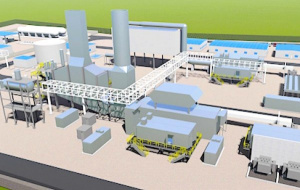
The West African Development Bank (BOAD) will invest XOF25 billion in the construction of the Kekeli Efficient Power thermal plant.
Indeed, the institution’s board during a recent meeting in Dakar approved the investment for this project which has been trusted to Eranove under a 25-year concession agreement.
The plant, the second after Lomé’s which was built by Contour Global, will cost XOF64 billion. It will be financed with no sovereign guarantee, by Oragroup and the BOAD and be built by Lomé-based firm Kekeli Efficient Power (KEP) SA.
With a production capacity of 65MW, the combined cycle power station will run on natural gas.
While Spanish group TSK is expected to also take part in the infrastructure’s construction, it is Siemens that will provide its gas and steam turbines, as well as technology and maintenance services, whereas Eranove which designed the project and raised necessary funding, will operate the plant.
Mercer 2019 ranking of cities with highest quality of living : Lomé ahead of Abidjan, Lagos, Abuja and Addis-Ababa
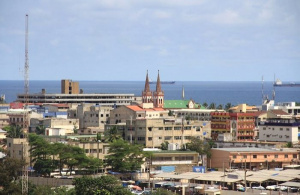
Once again, Togo’s capital maintains its rank of the 29th city with highest quality of life in Africa in Mercer’s 2019 index. In the index, Lomé is thus ahead of Abidjan, Addis-Ababa, Lagos, Abuja and Antananarivo.
Within the WAEMU, it is the third town behind Dakar and Cotonou that are respectively the 12th and 19th in Africa.
In the index, both at the African and global level, there is no noticeable change.
As exactly as it was in the 2018 edition, in the top 5 are Port Louis, Durban, Cape Town, Johannesburg and Victoria (in Seychelles).
At the bottom of the ranking in Africa are Conakry (41st), Kinshasa (42nd), Brazzaville (43rd), N’djamena (44th), Khartoum (45th) and Bangui (46th).
Let’s note that the quality of living ranking was based on criteria like socio-cultural, political and social environment, education, public services, transports, urban infrastructures, leisure, consumer goods, housing and the environment.
Séna Akoda
Togo sets new Business Climate Improvement Reforms

Togo’s Business Climate Unit (CCA) met the media on March 15 to present new reforms set up to improve the country’s business environment and give participants tools to better inform the public as well. “This series of reforms requires more commitment from sector players and more media monitoring by you (media professionals) to enable our citizens to benefit from the reforms,” said Sandra Johnson, Minister-Adviser to the President of the Republic, in charge of the business climate, who led the meeting.
Step up efforts to stay on course
“This meeting falls within the common dynamic and commitment to stay on track towards creating a business frame suitable for investment for a successful implementation of the National Growth Plan (PND 2018-19), kicked off last year,” said the minister hailing her country’s performance in the 2018 Doing Business. That year, Togo, thanks to various business-friendly reforms initiated by the government, jumped 19 places in the ranking, occupying the 137th place worldwide.
In 2019, Togo aims to be in the Top 100. “Backed by the World Bank, we reviewed the action plan and carried out knowledge-sharing missions to Rwanda to strengthen the monitoring mechanism put in place to date,” explains Sandra Johnson.
According to her, the new reforms mainly cover job creation, ownership transfer, building permits, electricity connections, tax payments, contract performance and indirectly access to credit. Same areas were touched with reforms last year.
Business-facilitating reforms target OTR, CNSS and CEET
According to the presentations of Togo’s Revenue Office -OTR- services, on the transfer of ownership, there has been a merger of formalities and a significant reduction in the cost of land registration and conservation fees. Previously, these costs were calculated based on 4% of the market value of the property but they are now fixed at XOF35,000.
Reforms related to tax payments mainly concern the effectiveness and strengthening of electronic declaration and payment with OTR, as well as the extension of the mechanisms to companies with a turnover ranging between XOF300 million and XOF1 billion. Previously, they only concerned large companies.
Adoyi Assowavana, the Tax Commissioner, said about ten taxes have been removed in the new code, that came into force January 1 this year, in order to loosen pressure on SMEs.
As at February 28, 2019, more than 1,700 companies had used electronic declaration for the nominal remuneration of their employees at the National Social Security Fund (CNSS), it is reported.
On the electricity connection indicator, costs for electricity connection, Medium Voltage (MV), which were reduced by 30% last year, have been further dropped by 50%, the CEET (power utility) delegation announced.
With regard to building permits, as indicated by representatives of the Ministry of Urban Planning, there has been a strengthening of the reform relating to procedural dematerialization, but above all of the regulatory framework of technical check provisions.
Private signing is on the rise in LLCs’ creation
Over the last twelve months, the creation of limited liability companies through a private agreement has been on the rise (from 75 to 85% of total LLC companies). That is more than 2,200 companies set up without notaries out of a total of 2587 LLCs created. The President of the Chamber of Notaries, David Tsolenyanu, who also attended the workshop, acknowledged his cabinet is less and less sought after for business formalization.
Samuel Sanwogou, Director of the Business Formalities Center, announced that business creation is now done in 8 hours and it is even possible to manage a large part of the procedure online by paying via Flooz and T-money.
Facilitating trade conflict settlement and access to credit
Regarding the contract execution indicator, reforms improved the automation of procedures relating to commercial disputes. The online platform now enables attorneys to submit their cases to the court, pay registration fees online, and follow files up.
The online update of the Trade and Personal Property Credit Register (RCCM), under the reform, will help establish a digitalized database at the national level, of 96,614 files, that will provide sufficient information on the state of businesses.
With the Bureau of Credit Information (BIC) database, currently being implemented, the Trade and Personal Property Credit Register RCCM should improve access to credit, in a context where interest rates remain high due to a lack of reliable information on the borrower.
Togo: Government aims for 4 million Agri-Pme beneficiaries by 2030
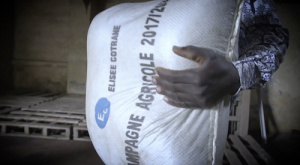
Togolese government plans to reach up to 4 million vulnerable farmers and users with its Agri-Pme scheme by 2030, sources at the digital economy department said.
Seen as an ‘e-wallet’, this system launched in 2016 enables any vulnerable farmer to directly get subsidized fertilizers without any middleman. “The initiative focuses on supporting farmers and integrating them into the (country’s) economic life,” said Cina Lawson, minister of posts, digital economy and technological innovations. The implementation of this program, the official said, ‘gradually establishes a farmer data base.’
Since it was launched, Agri-Pme has well expanded reaching more than 250,000 farmers to date. It gathers both distributors and farmers via an e-wallet system to facilitate agricultural input purchase. Overall, 180,000 vulnerable producers have already received subsidies under this project and the line ministry aims to double this number this year.
Séna Akoda
Togo launches water infrastructure counting operation to identify regions with no clean water access
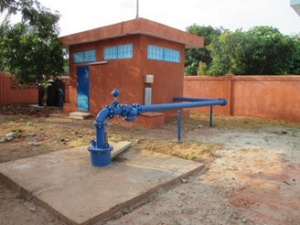
Togo is currently conducting a stocktaking operation to count the water wells and the mini-water supply pipelines in rural and semi-urban areas, an official statement reveals.
In the framework of that operation, the water ministry’s agents will be sent to all the prefectures for work meetings with the authorities of those areas.
Launched on March 4, 2019, by the ministry of water and rural infrastructures, this stocktaking is aimed at improving clean water access in Togo by providing trustworthy data on the state of the various water infrastructures in the said regions. It will therefore help identify regions with no clean water access for their inclusion in future water projects.
Ayi Renaud Dossavi
Togo: Pump prices for oil products slightly on the rise
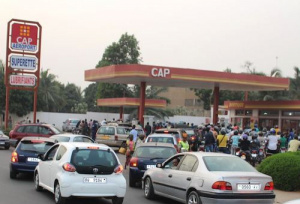
In Togo, fuel prices at pumps have slightly risen in the wake of rising prices of oil barrels on the eve of a crucial OPEC meeting in Bakou, Azerbaïdjan.
On average, these pump prices rose by 2-3% (15 to 18 CFA Francs).
As of today March 19, 2019, the price of super unleaded rose by 16 FCFA to be 564 FCFA. Kerosene is now 505 FCFA and the two-stroke oil mixture is 661 FCFA. For gasoline, it costs 567 FCFA.
Providers of Sustainable Development Innovative Solutions invited to take part in the Zayed Sustainability Prize 2020
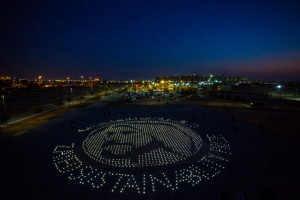
Providers of innovative solutions for sustainable development are invited to apply for the Zayed Sustainability Prize edition 2020. This competition, designed to reward innovative achievements for sustainable development, comprises five categories which are Health, Food, Energy, Water and Global High Schools.
Applications are open until May 30, 2019. According to the United Nations reports on Zayed Sustainability Prize, the African continent has the highest growth rate of women-owned businesses. And the organizing committee is encouraging them to apply and hopes they win this award, which could accelerate the implementation of their projects.
To date, 76 winners have been awarded the prize, the committee said. This had a positive impact, directly and indirectly, on the lives of more than 318 million people worldwide.
The Zayed Sustainability Prize is a tribute from Sheikh Mohamed bin Zayed Al Nahyan, Crown Prince of Abu Dhabi, to his deceased father, Sheikh Zayed bin Sultan Al Nahyan and his legacy for sustainable development.
Séna Akoda
Togo: Companies can now be created within 7 hours

In Togo, it is now possible to create a company within seven hours. This was revealed by Samuel Sanwogou, director of the business start-up centre (Centre des formalités des Entreprises-CFE), last Friday at the exchange workshop organized by the business council (Cellule Climat des affaires-CCA) to present the new reforms initiated this year.
According to the official, since February 28, 2019, company creators could submit their files for company creation between 7 :30 AM and 2 PM and retrieve their business creation cards between 2 :30 PM and 6 PM.
Samuel Sanwogou also announced a partial dematerialisation of the process. Consequently, the company creator can submit the company creation request online and pay the application fees via Flooz and T-money.
Let’s note that last year, the reduction of the company creation time to 24 hours, combined with the simplification of the procedures allowed for the creation of 10,545 new entities; a 27.5% rise compared to the number of companies created in 2017. It also helped Togo gain 19 places in the Doing Business 2019 to be the world’s 137th.
Authorities want to take it to the Top100 in the Doing Business 2020.
Togo : Project to digitalize land titles completed

In Togo, almost all land titles have been digitalized, with only one percent left. The remaining titles are those that date back to German colonization which are yet to be found. This was revealed in the latest report on progress made with structural reforms agreed with IMF, under its extended credit facility (ECF).
At the end of 2018, 95% of the titles had been digitalized (43,880 titles out of 46,183).
This project is part of many to improve Togo’s land sector. Related works include attending to 500 cases, mostly land-related, pending at the Supreme Court ; new laws regulating transfers of land to foreigners ; or the recently introduced measures forcing those owning private agricultural lands in rural areas to valorize them, in order to avoid speculation.
Ayi Renaud Dossavi