

Togo First
After Ecobank and UTB, BTCI will also start offering tax e-payment services, under a partnership with OTR
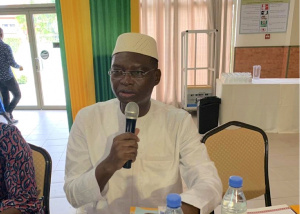
Banque togolaise pour le commerce et l'industrie (BTCI) will also soon start offering services to enable taxpayers pay their taxes and duties online. The Togolese Revenue Office made the announcement this Friday, during talks on reforms initiated to improve the local business climate.
The bank will thus become OTR’s third partner in this regard, after Ecobank and more recently Union Togolaise de Banque (UTB).
The good news aligns with various steps taken by the OTR in the past months to dematerialize its processes, in order to improve business climate and ease collaboration with business owners.
Ayi Renaud Dossavi
Togo exported 30,265 tons of fruits and vegetables in 2017
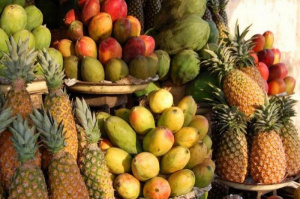
In 2017, Togo exported 30,265 tons of fruits and vegetables, according to the national institute of statistics, economic and demographic studies (INSEED). This volume was valued at CFA4.5 billion.
Over the same period, the country imported 8,385 tons of fruits and vegetables, valued at 1.5 billion CFA.
To date, Togo produces 60,000 tons of fruits and 40,000 tons of vegetables every year. These volumes meet only a quarter of local demand; that is if Togo consumed the products in line with standards.
Ayi Renaud Dossavi
Bilateral cooperation : Germany grants €66.5 million to Togo
Germany recently decided to provide Togo €66.5 million, under their bilateral cooperation.
“Germany is ready to inject an additional €66.5 million to support the Togo-Germany cooperation,” said Brigitte Pickel, head of a German delegation which came to Togo at the beginning of the week to discuss furthering cooperation between the two countries.
Parts of the funds will be used in sectors like sustainable economic development, professional training and agriculture. Another part will be used to improve governance, decentralization, health and energy.
All these areas are key to the national development plan, according to the minister of cooperation, Demba Tignokpa, at the start of the talks with the German delegation.
Ayi Renaud Dossavi
Togo inks deals with Emirati firms Al Dahra Holding and AMEA Power
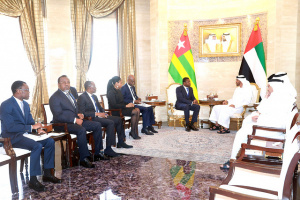
On the second day of President Gnassingbé’s trip in the United Arab Emirates, two major Emirati groups committed to invest in Togo’s agriculture and energy sectors respectively.
On March 12, Faure Gnassingbé met with the vice president and co-founder of Al Dahra Holding to talk about Togo’s goals in the agro-food industry. On that occasion, Al Dahra’s co-founder declared : “I discussed with the President, mainly about opportunities that Togo has to offer in terms of agriculture and agricultural outputs. We invest in farms and large plantations that span 200 hectares and above.”
AMEA Power commits to buid a 30MW solar power station
Under Togo’s new electrification plan, Togo will build four solar plants by 2025. The first of these facilities will cost $40 million and is already partially financed ($15 million).
During President Gnassingbé’s visit, Togo and AMEA Power inked a memorandum of understanding (MoU) to speed the construction of this first facility.
According to the Togolese Presidency, “with this MoU, this project is becoming a reality. The operator will take the necessary steps to get the rest of the funds needed and quickly complete it.” The agreement was signed by Togo’s minister of mining and energy, Marc Ably-Bidamon Dèdèriwè.
Séna Akoda
After Ecobank, UTB partners with OTR for its e-payment solution
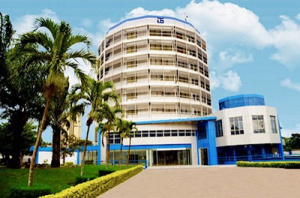
Togo’s revenue office (OTR) signed last Tuesday a deal with Union Togolaise de Banque (UTB) to simplify and ease online payment of taxes and duties.
With this, UTB becomes the second bank to partner with OTR in the framework of e-payment’s implementation. The first bank was Ecobank transnational incorporated (ETI).
For the OTR, this partnership falls in line with its strategy to dematerialize fiscal operations. Indeed, by enabling taxpayers pay their dues online, the institution wants to save time for all involved parties.
The recent partnership should be extended to more banks in Togo.
Ayi Renaud Dossavi
PND 2018-2022: A delegation of Abu Dhabi Fund to soon visit Lomé
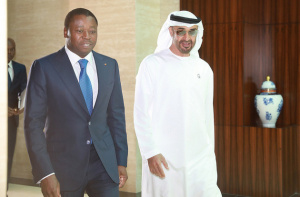
A delegation of the Abu Dhabi Fund should soon visit Lomé, according to the communication division of the Togolese presidency.
This visit falls under the fund’s desire to support Togo’s 2018-2022 national development plan (PND 2018-2022). It was decided during talks between President Gnassingbé and Mohamed Saïf Al Suwaidi, director of the Abu Dhabi Fund.
The talks concerned improving cooperation between Togo and the Fund, in the sectors of infrastructures and energy.
Still seeking support for the PND, the Togolese President who is currently in the United Arab Emirates met the Prince of Abu Dhabi, on March 11.
As for the Abu Dhabi Fund, let’s note, it provided a $15 million loan for the construction of a 30MW solar power plant. It also partially finances the Sokodé-Bassar road.
Séna Akoda
Togo: 11th Notaries forum ongoing in Lomé
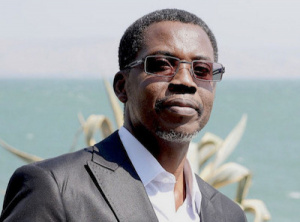
The eleventh edition of the notaries forum opened in Lomé, last Monday, March 12.
During the event, notaries will be updated on the new land code, their roles and responsibilities.
The three-day forum will help notaries better do their work, amid a changing regulation.
“The notaries’ forum is a real chance, an opportunity to boost skills,” Pius Agbetomey (photo), minister of justice told notaries.
For his part, David Tsolenyanu, chairman of Togo’s chamber of notaries said notaries must always “be updated to provide useful services to Togolese citizens.”
Let’s also emphasize that the notaries will have to prepare for the coming local elections this year.
Ayi Renaud Dossavi
Togo seeks CFA115 billion on regional financial market next quarter
In Q2 2019, Togo will try to raise CFA115 billion on the regional financial market. Broken down, the country’s public treasury should seek CFA40 billion as fungible treasury bonds and 75 billion as fungible treasury bills.
The figure was released in a statement issued by the West African Regional Debt Planning Agency. Provisional calendar for the fundraisings is however yet to be known.
Throughout the year, the country plans to raise on this market CFA390 billion, while the whole region eyes the sum of CFA2,778 billion. For the closing quarter, Togo raised CFA91 billion on the regional financial market.
Séna Akoda
BTCI commits CFA5 billion to MIFA
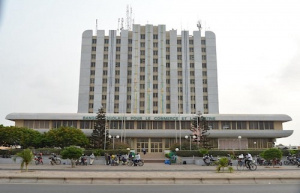
Togo’s Trade and Industry Bank (Banque togolaise pour le commerce et l’industrie – BTCI) has just committed five billion CFA to the agricultural financing promotion mechanism, MIFA. The facility, yielded after talks between the two parties involved, will support agricultural value chains in Togo.
Launched last June, the MIFA’s purpose is to encourage financial institutions to fund agriculture in the country. Over a 6-month pilot phase, the public scheme directly benefited 5,062 farmers, of which 916 are women, against an initial target of 6,000 farmers. This phase cost CFA1.082 billion.
The performances helped attract more investors, knowingly the International Fund for Agricultural Development (IFAD). Indeed, last month, this institution invested CFA20 billion in the MIFA ; a sum that will be mainly used to develop the following four sectors: maize, rice, gardening and poultry. This should in parallel help create more than 40,000 jobs by 2025.
Ayi Renaud Dossavi
Odalys plans to expand to Togo, among others, by 2022
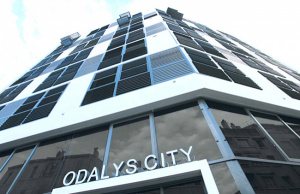
Odalys, Europe’s second largest tourist accommodation group, plans to set shop in Togo by 2022, in line with its expansion strategy in sub-Saharan Africa (SSA).
Besides the Togolese capital, the French group, which has already started operating in Douala, also intends to extend its footprint to Abidjan, Côte d’Ivoire by 2022. More than 10 projects are also being studied in markets such as Ethiopia, Senegal and Chad.
The company will eventually enter these markets via its high standing aparthotel brand, Odalys City. A move aligning with its global diversification strategy.
In 2017, Odalys’ turnover exceeded €240 million and the French company had more than 400 residences, hotels, and aparthotels over the world.
Ayi Renaud Dossavi