

Togo First
Agbewonou Darwin Yawovi wins Total’s Startupper of the Year contest

Agbewonou Darwin Yawovi recently won the 2019 Total Startupper of the Year contest, landing a prize of CFA8.2 million. The youth owes his victory to his project, SOS System which is a rescue app that manages disasters. The app has a geolocalization and alert system.
The second winner is Clifford Plastid Hoglonou whose project is Alcoford Corporation, specialized in bioethanol production. Kodjo Sitsofé Labou is the third winner with the project Navig Map, a geolocalization and mapping system. Both contestants respectively received CFA5 million and CFA3.2 million.
Beside the monies, the winners will be helped to perfect their projects, and benefit from a publicity campaign.
Prizes were given Thursday Feb 28, in the presence of Total’s management, various officials and actors of the entrepreneurship segment in Togo. Among the latter was Sahouda Gbadamassi-Mivedor, Director General of the Youth Economic Initiative Support Fund (FAIEJ).
This year’s edition of the Total Startupper of the Year Contest is the second. In Togo alone, it recorded 600 applications, thus 10% more than the previous edition.
Ayi Renaud Dossavi
Togo: Private owners of rural arable lands must valorize these lands, new decree imposes
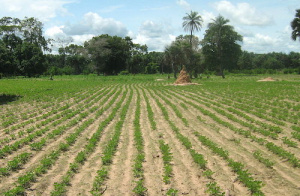
All rural arable land owned by private entities or individuals must be valorized or they will be trusted to any investor who legally requests to do so.
Last Wednesday, this decision was adopted in a decree passed by the council of ministers held that day. According to the decree, “in the event a land is passed from one owner to another that requested to valorize it, the new owner must use the land in line with leasing conditions.”
The new decree, it should be noted, falls under the country’s new private and public land code, adopted last June. This regulation aims at ensuring the good implementation of Togo’s national agricultural strategy, preserving environment, and making the economy more attractive.
Ayi Renaud Dossavi
Alibaba to train Togolese officials on digital economy next April

Invited by Chinese e-trade giant Alibaba, 12 officials from Togo’s ministries and institutions will be in Hangzhou in April for a 3-day workshop on digital economy.
Organized by Alibaba Business School, this workshop is part of the tech behemoth’s “New economy workshop” programme. The latter aims to create a global ecosystem enabling populations to fully tap into opportunities available online.
Togo is the new beneficiary of this program, after Indonesia, Philippines, and Rwanda. It will help Togolese partakers learn more about the transformative impact and opportunities of the digital economy, in addition to mechanisms that must be implemented to spur economic growth through digital finance, smart logistics, e-agriculture, e-learning, e-trade, smart cities and big data.
For its part, Togo’s government believes the workshop will help “it get closer to one of the biggest Chinese groups and explore opportunities to land commercial deals with some Asian firms”.
The Togolese delegation was invited following a visit by President Gnassingbé on Sept. 7, 2018, in Xixi Park, at the Alibaba campus. On that occasion, the Togolese leader met with Jack Ma, Alibaba’s founder, a few hours before the Chinese mogul announced his retirement.
Togo’s 100 most dynamic firms will be revealed next March 16

Togo’s top 100 most dynamic companies will be revealed next March 16, in Lomé. This will be during the “Gala des 100 entreprises les plus dynamiques du Togo” which will be attended by the country’s best businessmen and women.
The event is organized by Eco Finance Entreprises and the top 100 firms were selected based on four criteria used to conduct a performance assessment.
The criteria are expertise (based on how many years the firm has been active in the country), innovation capacity, market penetration capacity (based on the firm’s positioning in the market) and economic impact (based on how many jobs the firm created and how it impacted other sectors).
Senegal, Benin and Guinea Conakry have already hosted the event in the past. In Togo, it should be chaired by the State summit. Back in 2016 let’s recall, this event listed Togo’s Graduate School of Business, RODIS and Brasserie BB Lomé, among others, as the most dynamic and innovative firms operating in the respective fields.
Séna Akoda
Updated version of RCCM expected online by end-March

In Togo, a new version of commerce registry and mobile credit database (RCCM) will be released online by the end of March 2019. This was revealed at a workshop on the platform’s update last January.
The database should help the public freely access reliable information relating to their commercial partners’ legal and financial situation, but also their prior commitments.
In effect, the RCCM contains data such as firms’ balance sheets, details on their management, financial commitments, privileges and legal actions affecting them such as bankruptcy, sales, dissolution…
Adopted as it is now in 2016, the RCCM got OHADA’s support in 2017, with the launch of an integrated software to manage national registries and files.
Six WAEMU nations, Togo included, will get €100M to boost their clean power utilization

On Feb 27, 2019, the board of Green Climate Fund (GCF) approved a €100 million financing for the BOAD to boost clean power utilization across the WAEMU, sources close to the regional bank revealed.
In effect, the monies will be used to implement the FP105 project in WAEMU’s six countries. The latter aim at de-carbonizing their energy mix and improving access to clean energy.
Through this project, the BOAD plans to provide least advanced francophone countries in West Africa (Togo, Benin, Burkina-Faso, Guinea Bissau, Mali, Niger), funds to reinforce their actions relating to the transition from fossil energy to renewables.
For Togo which aims for renewables to contribute 50% of its energy mix by 2030, it should present multiple projects to capture a substantial portion of the GCF facility.
Séna Akoda
Togo : Soon, a renewable energy development program will be created
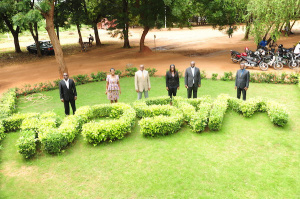
The West African Service Center on Climate Change and Adapted Land Use (WASCAL) submitted for validation a feasibility study for the creation of clean power development program in Togo. This was during a meeting held on Feb 27, which pooled academics, experts, and administrative authorities.
The end of the validation session comes a year after the process itself began. Dr Kokou Kouami, Head of Research, WASCAL-Togo declared : “There will be three main stages which are scaling, research and training.”
This process will involve assessing Togo’s resources in terms of clean energy, better handling, storage and distribution, and developing an appropriate economic model.
Trainings projected in the program’s framework concern not only academics, but the public also in order to better equip them to manage renewables more efficiently.
Let’s recall that this program is backed by Germany and should be discussed during bilateral talks between the two countries.
Ayi Renaud Dossavi
Refering to commercial courts and paying enrolment fees is now possible online
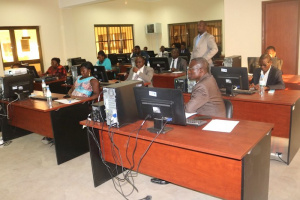
It is now possible to refer to commercial courts via lawyers and bailiffs, as well as pay enrolment fees online via Flooz and Tmoney. This was disclosed by Kossi Kutuhun, President of Lomé’s Court of Instance, in an ordinance dated January 31, 2019.
“The concerned fees can now be paid online on the platform handling commercial disputes, legally,” the judge said. Launched in 2015, this platform was recently updated and introduced to lawyers and bailiffs. Soon, payment via banking cards will be possible as announced last January by the firm in charge of developing and launching the platform.
The new functionalities integrated were to improve Togo’s business climate. In effect, they help better manage registration of commercial conflicts, speed up related procedures and efficiently solve them in commercial courts.
Tag: Recent reforms
Ecobank Foundation sponsors “Sembène Ousmane” award at FESPACO in Ouagadougou
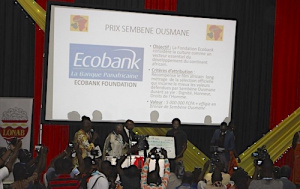
The Ecobank foundation is sponsoring the “Sembène Ousmane” award, valued at CFA5 billion, at the Pan-African Film and Television Festival of Ouagadougou (FESPACO) which will end next March 2.
The foundation of the Lomé-based banking group, through the move, supports African film industry as it tries to emerge.
Carl Manlan, Director of Operations of the institution commented on the initiative saying : “It is a real honor for the Ecobank Foundation to sponsor such an important award.”
“The African film industry is getting more attention and renowned worldwide, and we give great attention to this event which portrays the best of Africa’s image. The Sembène Ousmane award will be awarded to the movie that best reflects Ecobank’s dignity, honor and good governance values.”
This year is the 50th anniversary of the FESPACO.
Séna Akoda
Roads rehabilitated and market built in Kara, under PUDC, at a cost of CFA3 billion
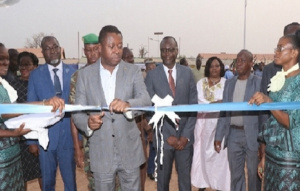
The Dankpen and Doufelgou prefectures, located in the Kara region (more than 450km north of Lomé) now have 79km of rehabilitated rural roads and a new prefectural market.
The infrastructures built under the Community Development Emergency Program (PUDC) were delivered last Wednesday, in the presence of President Faure Gnassingbé.
Financed by Japan (CFA470 million), the new market has modern infrastructures, hangars and slaughterhouses, as well as electric poles.
Merchants’ representatives welcome the infrastructures which will improve their businesses and boost their profits.
Regarding rehabilitated roads, the works cost CFA2.5 billion and should ease movements between Alloun, Namon, Guérin-Kouka, Kidjaboum, and Katchamba.
Séna Akoda