

Togo First
Togo : Mobile money transactions almost doubled between 2016 and 2017

In 2017, there were 38.13 million mobile money transactions in Togo. This figure which is almost twice that recorded in 2016 corresponded to an amount of XOF394.3 billion in 2017, against XOF263.1 billion the year before.
The data was disclosed in the BCEAO’s latest annual report on digital financial services across the WAEMU.
The rise in the number of transactions translates an increase in the number of mobile money subscribers, from 1.44 million in 2016 to 2.98 million in 2017.
Compared to 2014, the surge is even more substantial since that year the transactions amounted to only XOF5 billion.
In the WAEMU, Côte d’Ivoire has the highest rate of mobile money transactions, capturing 37.9% of all transactions recorded in the union, against a 5.92% share only for Togo.
Ayi Renaud Dossavi
AGRA delegation to be present at the coming National Togolese Farmer Forum
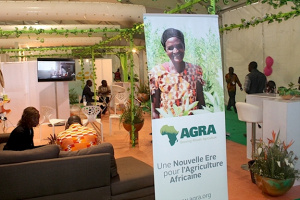
A delegation of the African Green Revolution Alliance (AGRA) will attend the 11th National Togolese Farmer Forum of the (FNPT) which will start next April 11, in Kara.
This was reported by the minister of agriculture, animal production and fishery, after a recent top-class meeting on food security in the Sahel and West Africa, held in Brussels. A meeting during which the AGRA itself made the declaration.
The presence of AGRA delegates at the forum should help with the structural transformation of the agricultural sector.
AGRA believes that investing in agriculture is the best way to fight poverty and hunger in Africa. This is in a context where Togo’s agricultural sector needs massive investments, for example for projects like the agricultural financing incentive mechanism (MIFA).
Séna Akoda
Togo: Public debt falls below 70% at end-March 2019
From over 80% at end-2016, Togo’s public debt was below 70% at the end of March 2019. This was declared by Sani Yaya, minister of economy and finances last Tuesday during a meeting to review a mission of the International Monetary Fund (IMF) under the fourth extended credit facility (ECF) review.
The decrease results from efforts made by the government to cut down public debt. Indeed, “the major budgetary effort started in 2017 was prolonged to September 2018,” the mission said, adding that while results lowered near the end of the year, this was due to “lower revenues than expected and higher expenses.” Beside this, “structural budgetary reforms and other reform programs are moving on well.”
Let it be however noted that between December 2017 and December 2018, Togo’s external debt rose slightly from 19.9% of its GDP to 20.5%. Meanwhile, internal debt slumped from 58.8% to 56.7% over the same period.
Ayi Renaud Dossavi
IMF scales up economic growth forecast for Togo
Togo’s growth rate could slightly exceed 5% in 2019. The figure was revealed during a press conference held April 2, 2019 and closing of the mission of the International Monetary Fund (IMF) present in Lomé since March 20, to review the Extended Credit Facility (ECF).
“After a strong slump in 2017 caused by sociopolitical tensions, economic growth hiked up to 4.9% in 2018,” said the mission chief, Ivohasina Razafimahefa.
The mission expects the country’s average economic annual growth rate to stand at 5.5%, spurred by a better business climate and good public infrastructures, added to a greater commitment of the private sector which drives this growth.
The IMF also lauded the “substantial budgetary effort initiated in 2017,” and extended in 2018. Togo has in these two years met WAEMU’s deficit criteria which is 3% of GDP.
Ayi Renaud Dossavi
Togo: The private sector promises its unfailing support for the Togo-EU economic forum’s success
Togo’s chamber of industry and commerce will take all the necessary steps for the seamless contribution of the country’s private sector to the success of Togo-EU economic forum. This major support from the private sector was announced by Germain Méba, president of the chamber.
To sensitize operators and explain the reasons economic operators should attend this event, the chamber recently organized meetings with the private sector all over the country.
100 economic operators from Togo and the same number from Europe are expected for this first edition of the forum. By the way, a call for proposals has been issued via the website togoforum-ue.tg dedicated to the event. This call is aimed at selecting 100 bankable projects that could capture investments during the forum, which should be hosted on June 13-14, 2019.
Togolese economic operators willing to take part in this economic meeting must register themselves via the event’s website: www.forumtogo-ue.tg .
Séna Akoda
Togo-EU economic forum website officially launched
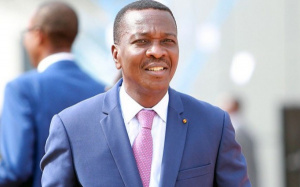
On Monday, the website dedicated to the EU-Togo economic forum was officially launched by the committee in charge of organizing the event.
The site was launched to, among others, promote the forum which aims at securing financing for the national development plan (2018-2022 PND).
According to Kodzo Adedze, minister of the private sector, this marks a “major step in the history of Togo.” An expert from the European Union added that the website is “not only a communication tool but also a tool to connect Togo with the rest of the world.”
The same expert declared, on behalf of the EU which partners with the Togolese State on the event : “Our goal is to help organize an event that will take place every two years.”
Séna Akoda
Togo: Government has implemented almost all the reforms it projected to improve public finances in 2018
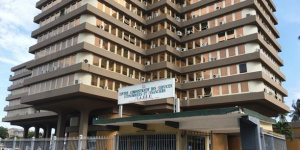
Almost all 97 reforms projected in relation to the country’s public finances have been carried out or are underway. This was revealed on Monday during a session to review the reforms.
“In 2018, we planned 97 reforms, out of which 54 have been effectively implemented, 34 are underway and 9 yet to be initiated,” said Dedji Affoh, Division Chief at the Permanent Secretary of the Ministry of Finance and Economy.
This represents a completion rate of 90.7% which is a clear improvement compared to the previous year where it stood at 83%, according to the official.
Beside assessing progress made with reforms initiated in 2018, the review session aims at identifying Togo’s strengths and weaknesses relating to public finances and finding new reforms to implement in 2019-2021.
Next month, a similar session will be held alongside another to validate a unified matrix for the 2019-2021 reforms, work plans and budgets.
Ayi Renaud Dossavi
University of Lomé hosts 10,000 Codeurs Togo, a meeting showcasing employment opportunities in the digital sector

The University of Lomé is currently hosting the “10,000 Codeurs Togo” meeting.
The event’s theme is “digital professions: a path leading to the empowerment of Togolese youth.” It is organized by 10,000 Codeurs, a network of individuals active in the digital industry who help young Africans get jobs in this sector.
The network in Togo hopes to be backed by the ministry of posts, digital economy and technological innovations.
10,000 Codeurs operates already in Senegal, Cameroon and Côte d’Ivoire.
Ayi Renaud Dossavi
MSC to invest €500 million in Lomé’s Container Terminal over the next decade
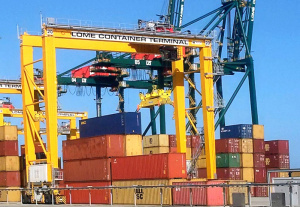
Mediterranean Shipping Company (MSC), world’s second largest shipowner, plans to invest €500 million in the Lomé Container Terminal in which it holds a stake, over the next decade. This was revealed to Jeune Afrique by MSC’s new managing director, Ammar Kanaan.
“The port is running very well. Our productivity on the docks keeps growing every year and has now made Lomé one of our most dynamic terminals,” says Kanaan.
With this investment, MSC aims at increasing the port’s annual container traffic to four million, in line with the first axis of the country’s national development plan.
Let’s recall that in 2017, the port of Lomé, which is the only deep water port in West Africa, became the region’s leading port, outpacing Lagos’ with a container traffic exceeding a million TEU (Dynamar).
Togo : Culture Promotion Fund to spend XOF600 million on 250 cultural projects

Out of 979 listed projects, 250 have been selected to be financed by the Culture Promotion Fund (FAC) this year. Just like last, the projects which were submitted by various cultural associations will benefit from a CFA600 million facility.
In detail, the performing arts projects will get CFA274 million or 46% of the planned budget. Next are film and audiovisual productions which will get CFA104.5 million, while the heritage and visual arts projects are to respectively be allocated CFA66.8 million and CFA59 million. Last are national and international events which will be attended by Togolese. Thirty million has been allocated to this group.
The funds provided by public authorities aim at helping Togo’s culture emerge, fully.
Séna Akoda