
Togo First
Togo: MIFA is now a public limited company
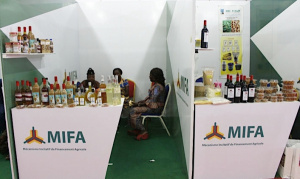
The Mechanism Promoting Agricultural Financing (MIFA) in Togo is now a public limited company. This was revealed February 7, 2019, following a council of ministers held the same day.
MIFA’s new structure is based on a private-public partnership and should better meet expectations of agricultural actors and its partners.
Refering to the decree making the MIFA a PLC, the council of ministers declared: “The present decree confirms the creation of an appropriate framework, promoting investment in the private sector”.
This decision comes a few weeks after a work session between the MIFA’s coordination team and the BOAD. On this occasion, the regional bank had agreed in principle to support the scheme.
Séna Akoda
Togo to reinforce regulations for land transfer from citizens to foreigners

Togo wants to reinforce regulations relating to land transfers from citizens to foreigners. Related leases will be extended for a period of more than nine years.
These decisions are found in the second decree assessed during the recent council of ministers held last Wednesday.
In effect, “transfers of property and constitution of property rights regarding a building located in the country, involving a Togolese citizen and a foreigner”, are subject to prior approval by relevant authorities.
The recent measures aligns with many others implemented by the government in the recent years to improve its land environment. These measures actually helped the country slightly reduce “time needed to transfer a property”, according to the 2019 Doing Business. They also helped boost “transparency by making data related to cadastral plans and land property free of access.”
Since the beginning of 2019, other reforms initiated include setting a tariff of CFA35,000 for property transfer operations ; combining inherent procedures to shorten delays ; putting in place a platform for submission of complaints, etc.
Ayi Renaud Dossavi
Togo plans to get a new investment framework to improve business climate
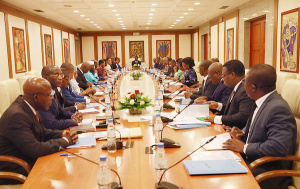
Togo wants to establish a new investment framework, in line with its development goals.
Indeed, during the recent council of ministers, Sani Yaya, minister of economy and finances, declared that the measure would involve reforming existing framework, “so it becomes more attractive for investors, while ensuring their contribution to public finances”.
Streamlining tax expenditures could boost economic activity and help reduce these expenditures while keeping business environment attractive enough for investors. This was revealed by the ministers of council, based on a detailed assessment report on the investment framework and relating regulatory texts.
In this vein, some parts of the investment and mining code should be amended. Also, public powers should develop a relevant ecosystem, governance, prospection and support initiatives.
In the long term, the Togolese government wishes to boost and simplify support to investors. This way, more revenues will be secured from private sector which is expected to contribute 65% of the country’s national development plan (PND).
Séna Akoda
Togo: Justice Support Programme reviewed
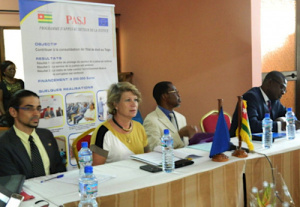
Yesterday, the Justice Support Programme was reviewed during the third meeting of its Steering Committee.
In detail, the program’s four axes of intervention were reviewed. These include the reinforcement of justice’s regulation framework, improving access to law and justice for the people, reinforcement of framework relating to fight against corruption and illicit enrichment. Last is the improvement of framework for cooperation between justice and police, leading to efficient processing of legal cases.
Regarding the axis relating to the justice’s regulation framework, workshops were organized to boost skills of the various actors of justice. One of these workshops focused on bettering the management of jurisdictions and training justice actors on the program budget.
Concerning the improvement of access to law and justice, a sensitization campaign about litigants’ rights and responsibilities and magistrate’s ethics and deontology was launched by the Higher Council of the Judiciary (CSM).
For the fight against corruption and illicit enrichment, control bodies were reinforced, both in terms of training as well as in regards to rolling and IT equipment.
Last, about the cooperation between justice and the judicial police, the work group including magistrates and police officers has standardized detention registries to the Luanda Guidelines. The latter aim at improving the treatment of persons subjected to arrest, police custody and pre-trial detention to ensure that the treatment complies with the relevant international norms.
Séna Akoda
Togo: In 2017, agricultural exports rose by 30% in value, standing at CFA88.5bn

In 2017, Togo exported CFA88.579 billion of agricultural products, up 29.9% compared to the previous year (CFA68.173 billion). This was revealed in the balance of payments and global external position of Togo released by the BCEAO.
The surge was mainly driven by a 39.9% rise in cotton fiber exports, as well as of other agricultural commodities and vegetal food products.
In detail, Togo exported CFA30.224 billion of cotton fiber in 2016, and CFA42.281 billion in 2017. Under the “other agricultural commodities” category, the country’s exports from 2016 to 2017, soared by 187%, from CFA1.641 billion to CFA4.711 billion.
The same trend was recorded for the exports of vegetal food products, over the same period.
In opposition, coffee and cocoa exports generated far less revenues, over the same period, as a result of unfavorable weather conditions, lower outputs and exports.
Séna Akoda
AfDB and EU inject $22.7 million in the construction of Abidjan-Lagos corridor
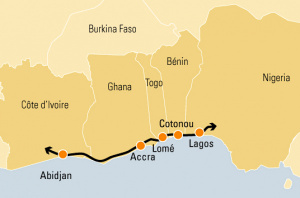
The African Development Bank (AfDB) and the European Union (EU) just decided to disburse $22.7 million for the construction of the Abidjan-Lagos corridor. The related financing agreement includes a $10 million grant from the European commission, and was signed last Monday.
The Abidjan-Lagos corridor which passes through Côte d’Ivoire, Ghana, Benin, Togo and Nigeria, will serve local maritime ports where respectively 90% and 60% of the region’s exports and imports transit.
The six-road highway, which spans more than 1,000km, should boost trade in the region. The latter was valued at about $15 billion in 2016, with a market opening up to more than 320 million consumers.
Actually, a feasibility study is now carried out five years after the signing of the agreement related to the infrastructure’s creation in 2014, by the presidents of Benin, Côte d’Ivoire, Ghana, Nigeria and Togo.
Let’s recall that the Abidjan-Lagos corridor connects the ECOWAS’ most active economic hubs, as well as the region’s most populated cities. Goods transiting via this axis represent nearly 75% of West Africa’s trade volume.
Ayi Renaud Dossavi
Togo: Orabank, first bank to begin transition to green energy

Whilst the banking sector in Togo is showing interest in promoting renewable energy and protecting the environment, the local subsidiary of Oragroup is the first to truly commit to a transition from fossil fuels to renewable energy.
The banking institution plans to deploy, at its Lomé-based headquarters, a PV system of 400 MW under a construction deal signed with Otamari. The project has a double-target which includes the implementation of a sun-powered autonomous energy production source and a gradual migration towards green energy.
Otamari group will be joined on this project by its German partner Solar3. Under its transition move, Orabank-Togo has already installed a 20 KW PV system at its Tsevie branch (36 km from Lomé via the national road 1).
Let’s note that Orabank’s migration to green power falls in line with the law promoting the production of energy based on renewable energies in Togo.
Séna Akoda
Togo: The Kpendjal bridge in Savanes region is 45% complete
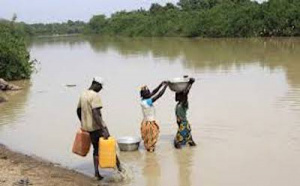
A delegation of Togolese ministers recently visited the site for the construction of the Kpendjal bridge in the Savanes region. The infrastructure which is 45% completed will help boost trade between Togo, its neighbors, Benin and Burkina Faso.
The bridge aims at opening up the Kpendjal community, whose inhabitants mostly live on commercial husbandry and farming, to the countries mentioned earlier.
With a length of 180 m, the infrastructure crosses the Kpendjal River and costs CFA17.5 billion.
Séna Akoda
Togo: BOAD trains economic actors to new procedures relating to public procurement provision
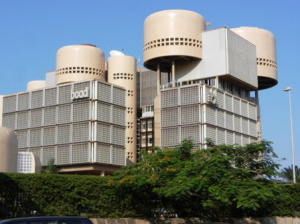
The West African Development Bank (BOAD) is organizing in Lomé a five-day workshop on new procedures relating to the provision of public procurements to economic actors in Togo.
The workshop aims at “helping actors concerned by public procurements to get more acquainted with these new tools”, says Christophe AGUESSY, special advisor at the BOAD. This would according to him “increase funds disbursed for projects financed by the BOAD in Togo”.
In detail, participants will be taught about instructions relative to procurement provision, related documentation, as well as policies preventing and tackling fraud and corruption.
Let’s recall that the BOAD invests in various sectors across its member states, especially in agriculture, telecommunications, road, port and airport infrastructures. In 2018, it provided Togo CFA682 billions worth of financing.
Ayi Renaud Dossavi
China will give Togolese students Masters and Phd scholarships for the 2019-2020 academic year

China will be giving Masters and Phd scholarships to Togolese students during the 2019-2020 period. The information was revealed by the country’s Office of Scholarships and Internships (DBS).
Eligible candidates must have a “six-semester bachelor's degree and a four-semester masters degree”. “Applicants interested in a masters degree must not be more than 25 years old while those interested in Phd must be 30 years old at most”.
Top priority areas are sciences and technology, health, IT, agriculture, management and economy.
Also, applicants who have already taken a Chinese course at the Confucius institute of the Lomé University, will be given priority.
Applications must, strictly, be submitted at the DBS, between February 4 and 8, 2019.
DBS is in charge of implementing foreign and local scholarships policies. It is under the authority of the ministry of higher education and research.
Ayi Renaud Dossavi