

Togo First
Togo: Revenue Office launches nation-wide campaign against corruption
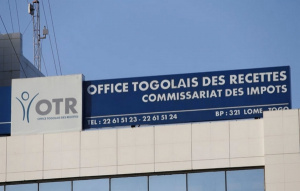
The Togolese Revenue Office (OTR) launched on May 7, a sensitization campaign to fight corruption within the institution.
The campaign is organized in partnership with the High Authority for the Fight against Corruption and Related Offenses (HAPLUCIA).
“We target associations, NGOs, our agents, and journalists who all have the duty to fight corruption,” said Mouhamed Nour-Dine Assindoh, head of OTR’s anti-corruption unit. The campaign, he adds, should in the next six months yield significant results.
Ayi Renaud Dossavi
Togo gets a new constitution

In Togo, the bill to revise the constitution was voted, unanimously, yesterday by the parliament.
The new bill restricts the presidential term to five years renewable once and for a president to be elected, he or she will be elected through uninominal suffrage, according to a majority, two rounds system.
Mandates of deputies and members of the constitutional court have also been limited. Both are elected for a period of six years but the first can renew their term twice while the second group can only do so once.
Let’s emphasize that “completed or ongoing terms at the date at which the present bill becomes effective will not be taken into account for the implementation of measures set by articles 52 and 59 relative to term limit.”
Togo : XOF38 billion secured so far for Kara’s agropole project
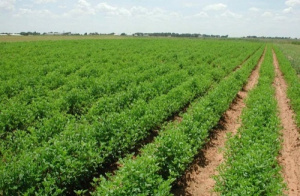
So far, XOF38 billion has been raised by Togo from its main partners for the Kara agropole which is being established in Northern Togo. These partners are the African Development Bank (AfDB), West African Development Bank (BOAD) and the Saemaul foundation from South Korea.
The figure was revealed to Togo First by Essowè Batana, chairman and managing director of the agency for the promotion and development of agropoles in Togo (APRODAT).
The whole project, it should be noted costs XOF65 billion. Monies raised so far served to prepare the annual budget and work plan (PTBA) and the procurement plan (PPM) and must be approved by the AfDB.
Part also served to start structuring value chains and initiate works related to legal regulations, and procurement for infrastructures that will be built.
Kara’s agropole should be completed by the end of 2022 or the beginning of 2023.
Séna Akoda
Between 2017 and 2018, the World Bank injected $92 million in Togo’s economic reform program
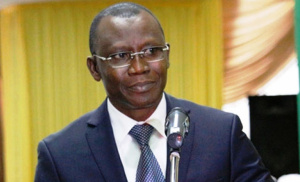
At end-March 2019, Togo’s debt stabilized at 67.3% of its GDP, according to Sani Yaya, minister of economy and finance.
The World Bank helped the country achieve this level by backing its economic reform program. Yesterday, the bank’s resident representative revealed that between 2017 and 2018 the institution injected $92 million in the program.
The program in effect aims at establishing a more stable macroeconomic context, one that participated to the development of the private sector and subsequently improve business climate. It is at the heart of Togo’s three-year agreement backed by the IMF’s extended credit facility (ECF) and the Togo-EU partnership.
In addition to the investment, the Bretton Woods institution said it is ready to align its 2019-2021 Partnership framework with Togo to the country’s 2018-2022 national development plan.
Séna Akoda
China will help Togo achieve food sufficiency
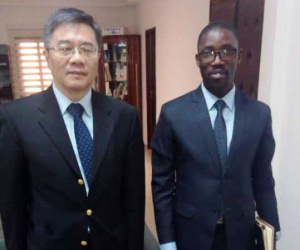
In line with its objective to achieve food sufficiency, Togo will be backed by China. This was revealed during a meeting between the Chinese ambassador to Togo, Chao Weidong, and Noël Bataka, minister of agriculture, yesterday.
The two officials lauded the construction of “major infrastructures in the agricultural sector,” resulting from cooperation between the two countries.
Among the infrastructures, there is the pilot center for agricultural techniques, in Zanguera, and the Akodésséwa agro-industrial park in Vo.
All these projects should boost Togo’s agriculure in a context where the country aims at exporting its outputs to Sahel countries, in order to fight food insecurity and hunger.
Séna Akoda
Togo : Agrokom and JCAT, two success stories of PAEIJ-SP
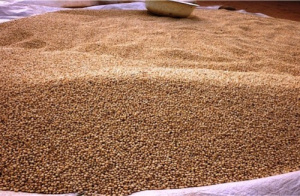
Launched in 2016, the program supporting youth employment and insertion into promising sectors (PAEIJ-SP) helped generate 35,000 jobs in agriculture so far, against an expectation of 20,000 jobs.
In detail, the program fostered the creation of 14,290 direct jobs and 20,940 temporary ones.
Agrokom and Jonction de croissance du Togo (JCAT) are two success stories that resulted from the PAEIJ-SP. Both produce, process and distribute soybeans and palm nuts. The firms benefited from a $3.4 million facility under the program and this helped them boost their annual production capacity.
Indeed, the first, Agrokom, which used to process 180 tons of soybeans before 2016, now processes up to 6,000 tons per year, thus creating 3,242 direct jobs and 8,505 temporary jobs in its value chain (supply, transformation and distribution).
JCAT for its part exports 10,920 tons of organic soybeans to the US, Germany or China, resulting in the creation of 3,203 direct jobs and 6,931 indirect ones. This is far from the 1,000 tons it exported in 2016, for about 10 jobs existing.
“The idea behind this project is to first identify small and medium agro-industrial firms or sectors with a high growth potential. Also, we wish to support the growth strategy of these SMEs, by building their capacities, financing them, and developing value chains around these businesses, thereby creating job opportunities for youths and women,” said the project’s manager at the African Development bank (which backs the project), Amouzouvi Kokou.
Togo seeks about $100 million for its new forest management plan
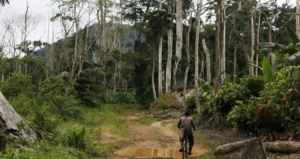
To foster a sustainable management of forests in the country, Togo’s government just developed and put in place the national forest investment plan (PNIF), valued at $101 million.
The 2018-2022 plan includes three main axes, namely: managing protected areas, managing forest ecosystems, and third sensitization and resource mobilization.
Regarding the last, fund mobilization, a meeting was held in Lomé on May 6, 2019, to discuss the matter. Togo’s technical and financial partners, actors of forest sector, representatives of the public sector and of the private sector also were present at this roundtable. The goal here was to explore opportunities for partnerships, as well as cooperation and financing mechanisms to back the PNIF.
Togo’s new plan, let’s indicate, aligns with a forest ecosystems convergence programme. The latter which involves coordinating the management of forest resources in West Africa was voted by ECOWAS member-States in Abidjan this year.
From 24.4%, Togo wants to increase its forest coverage to 30%.
Ayi Renaud Dossavi
West Africa’s mango exporters to soon be hit by new sanitary directive regulating exports to EU
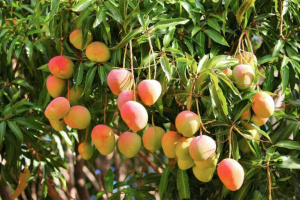
From next September 1, the European Union’s new directive on mango imports will be applied. This was disclosed by the Europe-Africa-Caribbean-Pacific Liaison Committee (COLEACP) in a release dated April 29, 2019.
According to the directive, mango exporters from West Africa, thus Togo, must verify that “the mango has been subjected to an effective treatment to ensure that is free from Tephritidae (ed. Note: fruit flies), and the treatment data must be included in the phytosanitary certificate.”
The move comes in response to high numbers of mangoes infected by the pest.
Another rule set by the COLEACP is that “the treatment method must be communicated (in written) to the European Commission by the exporting country’s national plant protection organization,” before the next mango season.
In West Africa, countries exporting mangoes to the EU are mainly Côte d’Ivoire, Senegal, Nigeria, Mali, Burkina Faso, Guinea, and Togo. They export the Kent variety which is the most sought after on the European market.
Regarding Togo, it produced 6,200 tons of mangoes in 2010, valued at €687,000 according to the ECOWAS. A very little output compared to neighbors like Nigeria, largest producer in the region, or Senegal which produced 18,395 tons in 2018.
Ayi Renaud Dossavi
National fund for inclusive finance urges youth and women entrepreneurs to manifest their interest for public procurements
The National fund for inclusive finance (FNFI) invites all young entrepreneurs, and businesswomen, to apply for a contract to make T-shirts and another relating to the purchase of hardware supplies.
For the first contract, the call to manifestation of interest targets youth and women entrepreneurs all over the country and registered on the website of the national directorate for public procurements monitoring (DNCMP). Overall, 42 people are concerned by this call while 43 are for the second call.
This move aligns with the government’s decision to set aside 25% of public procurements to youth and women entrepreneurs as announced by President Gnassingbé in a recent speech to the parliament. This figure let’s recall was set at 20% last year.
Séna Akoda
Horticulture: A Togolese delegation is currently in China for the 2019 Beijing Expo

A Togolese delegation, including Kueku-Banka, Director General of the Togolese Center or Fairs and Exhibitions (CETEF), is currently in Beijing attending the 2019 Beijing International Horticultural Exhibition (Beijing Expo).
Placed under the theme “Live Green, Live Better,” the 2019 Beijing Expo will include many educative and interactive exhibitions as well as thousands of public activities and events, fora and cultural shows.
Started last week, the exhibition will last six months. It aims at revealing the importance of horticulture to improve life quality and preserve the future for coming generations.
Séna Akoda