

Togo First
So far, AfDB has invested XOF199.780 billion in Togo
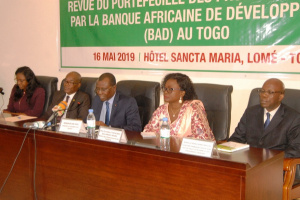
The African Development Bank (AfDB) has invested so far XOF199.780 billion in Togo, according to data updated this month. This was revealed May 16 by Togo’s finance minister, Sani Yaya during a session to review the institution’s portfolio in Togo.
In effect, the funds were spent on 12 projects revolving around economic reforms, agro-food processing (agropoles), road rehabilitation and coast preservation, etc. Completion rate of these projects is at 58.1% at the moment.
The pan-African lender also targets the environment, social and power sectors. In the latter, AfDB supports Togolese authorities’ ambition to achieve 40% electrification rate by 2022, covering 300,000 households.
The recent assessment helped pinpoint some weaknesses according to AfDB’s resident representative in Togo. These concern for example procurement provision, failure to meet deadlines set to complete projects, and failure to justify on time how funds are used.
Séna Akoda
South African Diges Group to help Togo put in place clean water infrastructures

South African Diges Group, which designs, makes and manages hydraulic infrastructures will help Togo with its clean water project.
Recently the firm inked with the country’s minister of water, Antoine Lekpa Gbegbeni, a memorandum of understanding in this regard.
Let’s note that under the third axis of Togo’s 2018-2022 national development plan, authorities want to provide access to drinking water to more than 80% of the population.
The recent signature takes place two months after President Gnassingbé visited South Africa. There, he met local business operators to discuss potential investments in his country, among others.
Ayi Renaud Dossavi
Asky launches mobile App
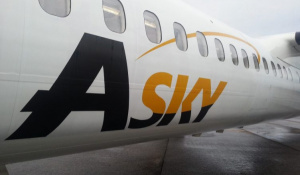
Lomé-based airlines Asky has launched its mobile app which is available on Android and iOS.
In a recent statement, the carrier said the app can be downloaded on its website or directly on the iOS AppStore and Google Play Store. On the mobile platform, Asky’s customers can purchase flight tickets, make reservations, check tariffs and services, join the company’s “ASKY Club” fidelity program, and even rate services.
The new platform aims at saving time for Asky’s customers and meeting their growing needs.
Asky currently serves 22 cities in 20 countries, in West and Central Africa.
Ayi Renaud Dossavi
AFD grants €14 mln to Lomé to better manage its waste

The Lomé municipality just received €14 million, a grant from the French Development Agency (AFD), to improve its waste management. The financing is part of the third stage of the Lomé Urban Environment Project (PEUL III).
Related agreement was inked May 16 by Sani Yaya, Togo’s minister of economy and finance, Marc Vizy, France’s ambassador to Togo, and François Jacquier-Pélissier, president of AFD Togo.
“67% of the grant will be used to improve environmental and social safety at the Agoé Nyivé landfill,” indicates Minister Yaya. “23% will be used to foster governance within the Lomé municipality and remaining 10% will focus on sports and development as well as help manage the project,” the official added.
He noted further that the facility will, beyond helping Lomé better manage its waste, help the capital improve revenues needed to finance public services.
Ayi Renaud Dossavi
Togo will ratify protocol 1988 on load lines in order to boost maritime trade and security
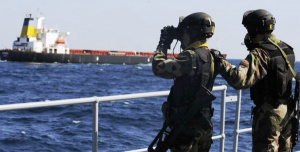
In order to ensure ships’ safety, by preventing overloading, Togo has decided to ratify the protocol of 1988 relating to the international convention on load lines, 1966.
Ratifying the 1988 protocol will in effect introduce a new harmonized visit and certification system, hence raising the reputation of Togo, in regards to international maritime institutions. Doing so will make the country more attractive and contribute to the first axis of Lomé’s national development plan. The latter is to make the nation a logistics hub and first-class business center in West Africa.
Regarding the London convention, its goal is to ease and simplify all procedures related to arrival, stay and departure of ships, in the framework of international trips.
Ayi Renaud Dossavi
Togo: Second edition of telecom forum begins
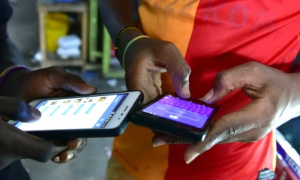
The second edition of the telecommunications forum opened May 17, 2019 in Lomé. The event is organized by Afrique IT and CENTECH and its theme this year is: Reducing the standardization gap.
This theme is directly tied to the recent creation of the international telecommunications union (ITU).
Two panels will take place at the event. The first theme is: “Reducing the standardization gap, reviewing the state of our institutions,” and the second is: “Mobile Money, telephony actors and financial institutions meet civil society, financial institutions, ministries, SMEs, large companies, schools.”
Besides these panels, workshops and exhibitions will be held and they will enable participants better understand current challenges in the telecommunications sector.
Séna Akoda
Togo adheres to London international maritime transport convention
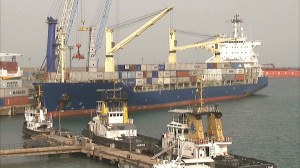
During the ministers’ council last May 15, the government of Togo approved the country’s adhesion to the London convention signed April 9, 1965 aimed at easing international maritime traffic.
In effect, the convention’s goal is to make maritime transport more accessible by simplifying related formalities for international travels.
Thus, Togo adhering to the convention should simplify administrative procedures in the sector of maritime transport and make the country more attractive. It should also help it get more partners to implement its 2018-2022 national development plan (PND).
Indeed, under the first strategic axis of the PND, Togo aims to become a logistics hub and first-class business center in West Africa. A goal that leverages the country’s good geographical situation and its deep-water port.
Séna Akoda
Togo puts in place an inter-ministerial committee to prevent and fight terrorism

Lomé has put in place an inter-ministerial team to fight terrorism. This is as the terrorist threat rises and after France marked ‘red’ part of north of Togo and Benin, which shares a border with Burkina Faso where about ten jihadi groups operate.
“The inter-ministerial committee for prevention and fight against violent extremism (CIPLEV) mainly aims at eliminating or considerably reducing the propagation of violent extremism by giving grassroots communities the tools and support they need to fight this plague,” indicates the statement of the ministers’ council held Wednesday.
The new unit will also help “boost cooperation and collaboration between the administration and defense forces, for effective prevention and fight.” It regroups representatives of the concerned ministry’s departments, opinion leaders and the civil society.
Besides the committee, the bill on internal security announced by President Gnassigbé last April 26 was adopted May 15.
“The present bill on internal security is an ordinary law aimed at giving executive power tools needed to counter new threats to security, while at the same time ensuring balance between public freedoms and preservation of public security and constitutional order,” the government said.
While Togo is so far spared by terrorists, security was reinforced following an alert given by Burkinabe authorities and as a result, last month, twenty suspected armed terrorists coming from Burkina Faso were arrested.
Last year, young entrepreneurs and women secured 10% of public procurements

Young entrepreneurs and women secured 10% of all public procurements in 2018, the year in which the government decided to set aside for them 20% of these contracts.
In effect, at December 31, 2018, XOF12.638 billion worth of public contracts were attributed to this group of entrepreneurs. The figure was disclosed during the ministers’ council held May 15. According to the council, “it represents a coverage rate of 51.29% for the 20% procurement set aside.”
The measure’s implementation it should be noted is steered by a taskforce established for this purpose and placed under the authoritiy of the Presidential cabinet.
Also, the government has recently raised to 25% the share of public procurements reserved for young entrepreneurs and women; a decision spurred by performances recorded last year and at the beginning of 2019.
Séna Akoda
Togo sold 1,035 tons of cashew to India in Q1 2019

West African cashew exports to India have risen over the first quarter of this year, in a context where the Asian nation imported substantially less worldwide over the period.
According to N’Kalo cashew report, relayed by Commodafrica, Togo exported 1,035 tons of cashew to India in Q1 2019.
This volume makes Togo India’s seventh supplier in West Africa. It comes after Ghana, Côte d’Ivoire (its two main suppliers), Benin, Nigeria, Guinea and Burkina Faso.
India’s suppliers should brace for more orders considering that at the beginning of this month (harvest), the country’s eastern coast was hit by the Fani cyclone. The phenomenon destroyed many cashew trees in the area where production often reaches 100,000 tons.