
Togo First
Togo : Government officially bans import, sale and use of bromate
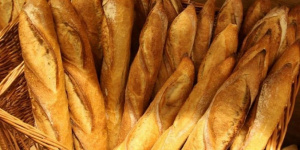
Togolese authorities have issued a decree forbidding the import, sale and use of bromate all over the country. This decision follows an alert given by the local development and food organization (OADEL) warning that the compound, which is often used by bakeries, has been linked to cancer.
Hence, any person found guilty of infringing the new decree is liable to a fine ranging between XOF10,000 and XOF500,000. Moreover, random inspections will be carried out to ensure compliance to the new rule.
Tata Ametonyenou, executive director of OADEL, lauding the initiative declared: “This could over time lead to compulsory inspection of bakeries, in order to protect consumers.”
Séna Akoda
Luxembourg-based Kara Fund eyes Togolese market

The Kara fund, a Luxembourg-based investment fund, is expected to send a delegation to Lomé next July 15th.
The move was spurred by the recently held Togo-EU economic forum which the firm attended. During the visit, the delegation should discuss with Togolese authorities about investment opportunities in the sectors of agriculture, infrastructures and clean power, in the West African country.
The Kara Fund has a capital of €10 million and has picked Morocco as its African hub. Togo, let’s emphasize, is one of the first sub-Saharan African countries where the firm plans investments.
Africa Global Recycling joins IFC’s Local Champion Programme
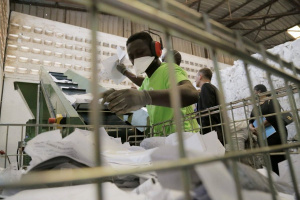
Local SME Africa Global Recycling has joined the IFC’s Local Champion programme. The decision comes after a visit to the firm by Sérgio Pimenta, IFC’s Vice President.
“During my visit in Togo, the IFC decided to integrate Africa Global Recycling which is headed by Eben d'Almeida, to its Local Champion Programme,” Pimenta declared. “This programme,” he adds, “provides technical support to high potential SMEs so that they can grow and attract partners and investors.”
D’Almeida who was one of the laureates of the 2016 International Youth and Green Jobs Forum (FIJEV) said this marks “a new era” for his firm. The latter, let’s recall, sells recycled waste products to other companies.
Séna Akoda
IFC and Togo will develop 90MW of solar power plants
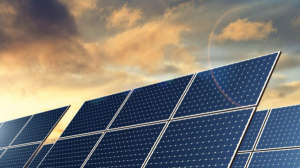
The International Finance Corporation (IFC) and Togo’s government will develop 90MW of solar power plants in the West African country. The related agreement was recently signed in the presence of President Faure Gnassingbé and Sérgio Pimenta, Vice President of IFC, who is currently in Togo.
The deal falls under the World Bank’s Scaling Solar program which provides a set of services including technical assistance, insurance and guarantee instruments, fund mobilization, etc. This program aims at rapidly (within two years at most) building big plants at a low cost. It recorded a rapid success in Zambia, before being expanded to Ethiopia, Madagascar and Senegal where it is currently underway.
“We have talked of how IFC could support the development of Togo’s private sector. We are already active in the country with a portfolio estimated at $325 million. We will open an office in Lomé to be closer to local businesses,” Pimenta declared.
Being an old partner to Togo, IFC is “very” present in the power sector. It took part in the development of the ContourGlobal plant and the elaboration of the national electrification strategy in June 2018. This program aims at electrifying the whole country by 2030, raising the share of clean power in its energy mix by 50%.
International Finance Corporation (IFC) will open an office in Lomé
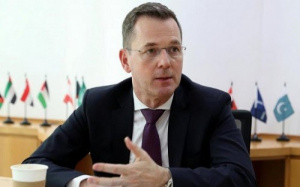
The International Finance Corporation (IFC) will open an office in Lomé, Togo. This was revealed by the institution’s Vice President for Africa and the Middle East, Sérgio Pimenta (photo), during a meeting with Togo’s President, yesterday.
With this office, the IFC will be closer to local business operators and could more rapidly increase its investments in the country. Also, the World Bank’s arm should build new partnerships and seal financing deals more easily. The latter will help Togo achieve its ambition to structurally transform the economy by 2022.
In effect, Lomé is currently seeking XOF4,622 billion to implement its 2018-2022 national development plan. The authorities plan to secure 65% of the funds from the private sector.
Séna Akoda
Togo: Construction and rehabilitation works to be conducted in five towns under PAD
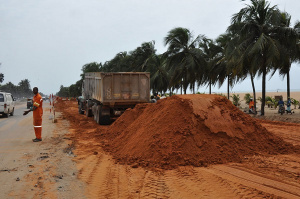
In line with the Decentralization Support Programme (PAD), major construction and rehabilitation works will be conducted in Aného, Atakpamé, Sotouboua, Kara and Dapaong. The works will focus on key economic infrastructures (markets, etc.).
According to Togo’s Urban Works Execution Agency (AGETUR-Togo), the group of companies selected to conduct studies (architectural, technical, environmental and social impact) for the works in Aného, Atakpamé and Sotouboua is Banca-Engineering-Poly Consult.
In Kara and Dapaong, the group picked to complete the same studies is Betra-Bâtir.
The PAD aims at making the concerned towns growth hubs by developing economic circuits and ensuring a sustainable utilization of targeted infrastructures. This would in the long run boost local governance.
In its first stage, the project targeted Kpalimé, Tsévié and Sokodé. The German Cooperation (GIZ) invested XOF7.8 billion (€12 million) in the project. An additional XOF1.2 billion is expected from the State and XOF140 million from benefiting towns.
Séna Akoda
Property transfer : Number of submissions grow significantly while processing period reduces to 6 days

From 10 days, a year before, delay needed for property transfer in Togo at the end of May 2019 was six days. The figure was recently published by the land conservation agency.
Another major feat is that the number of cases processed last May was 40, against only 16 the same month in 2018.
This is attributed to multiple incentives put in place in the beginning of 2018 and augmented this year. The change has in effect propelled the number of property transfers, since January 2019, to more than 60 per month (60 in January and February, 66 in March, 65 in April, and 40 in May).
This year, the Togolese government initiated new reforms adding to others it created last year. This pushed up the country’s score and rankings on the Doing Business under the Property Transfer index.
Some of the new reforms include combining land conservation procedures, which enabled speeding up processes, and reducing registration and transfer fees to XOF35,000. A new tariff grid for notaries for property transfers was also created. To these were added, reforms for business creation, power connection, resolution of commercial and fiscal conflicts. These reforms improved Togo’s business environment and revamped economic activity in the second half of 2018, throughout this year, after slowing in 2017.
IFC’s Vice President Sérgio Pimenta is currently in Togo
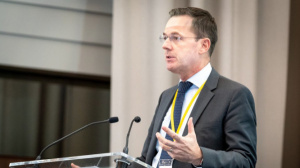
Sérgio Pimenta, Vice President of the International Finance Corporation (IFC), is currently in Togo for a working visit. “The purpose of my visit to Togo is to see how we can expand our operations and support the Togolese private sector to contribute to national development, by creating jobs, economic activities and positively impacting the country,” he declared after meeting with Togo’s Prime Minister, Komi Sélom Klassou.
Pimenta is with Jean-Claude Tchatchouang, Managing Director of IFC Africa. This visit aligns with Togo’s 2018-2022 national development which aims at creating jobs, support private sector, etc.
More precisely, Togo’s economy is currently being structurally transformed and needs in this framework XOF4,622 billion. Nearly XOF3000 billion of this amount is expected from the private sector.
Séna Akoda
Togo : Majorel Contact Centre plans to create 500 jobs by 2021
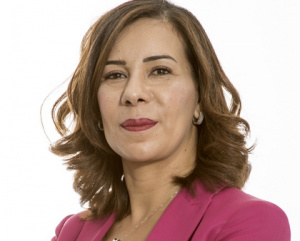
On Monday, the Majorel contact centre was inaugurated in Lomé. On this occasion, the firm’s subsidiary released a press communiqué saying it intends to create 500 medium term jobs (by 2021).
So far, the joint-venture between German Bertelsmann and Moroccan Saham has about 150 employees. However, by the end of the year it expects to raise the staff to 300 employees, leveraging good human resources in Togo.
“Togo offers quality human resources, top-class infrastructres and a proximity to many clients already settled in the country,” says Imane Benaziz (photo), Chief of Operations of the Group in Sub-Saharan Africa.
While the opening of the Majorel centre first results from the group’s expansion strategy, it also aligns with the first axis of Togo’s national development plan (PND 2018-2022). The latter consists in making Lomé a first-class business centre and a reference in the region.
While aiming to create 500 medium term jobs through the new centre’s launch, the move will contribute to a greater goal of the country to create 500,000 jobs by 2022.
Séna Akoda
Togo: Local startup New Road Company reveals its made in Togo chocolate drink, Choco Noor

Last week, Togolese startup New Road Company revealed its chocolate drink, Choco Noor.
According to the firm’s Managing Director, Adoyi A. Bimon-Isso, the drink’s production aligns with Togo’s national development plan (PND 2018-2022), which is to make Made in Togo products.
Indeed, the startup uses locally grown cocoa to make the beverage. The latter, according to executives of New Road Company, meets all standards set by the Togolese Institute for Agricultural Research (ITRA) and the National Hygiene Institute (INH).
This was confirmed by Martin Aziato, Head of Food Technology at ITRA, and Dikeni Kondi Ousmane from INH.
Aziato on the same occasion deplored the low level of cocoa processing despite the beans being produced in quantity and quality across the African continent. He therefore lauded New Road Company’s initiative and urged Togolese to follow its example.
Séna Akoda