EU, UN review Togo farm input project, cite gains in the north
 Monday, 16 February 2026 14:30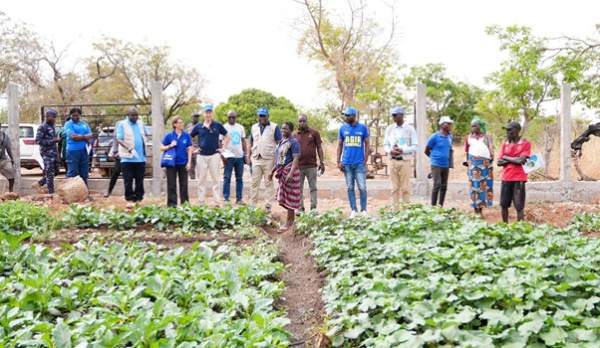
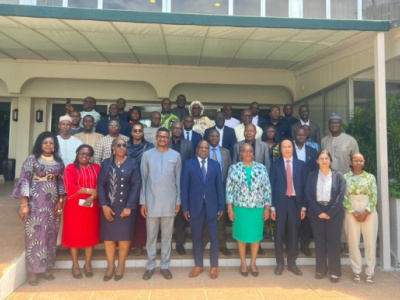
(Togo First) - A joint mission led by the European Union Delegation, the Food and Agriculture Organization (FAO) and the World Food Programme (WFP) last week reviewed the “Strengthening Food Systems for Sustainable Access to Agricultural Inputs for Smallholder Farmers” (Pro-SADI) project in Togo.
Three years after its launch, the mission visited the northern regions of Kara and Savanes to assess progress. Field findings indicate the project has delivered transformative results in both regions.
In Kara, nearly 8,000 smallholder farmers received inputs for rainfed crops, including certified maize and rice seeds, NPK 15-15-15 fertilizer and urea (46% nitrogen). More than 900 vegetable growers were provided with certified seeds (chili pepper, onion and tomato) and NPK 10-20-20 fertilizer for horticulture.
The project also trained 83 agricultural advisers in extension services and agribusiness management. In addition, it supported the construction of a 600-square-metre rice parboiling unit for cooperatives, aimed at adding value to local production.
In Savanes, more than 11,000 smallholder farmers received inputs for rainfed crops, while 1,134 vegetable growers were supported with inputs for off-season production. A further 62 agricultural advisers were trained in extension and enterprise management.
Pro-SADI also provided inputs to 90 agricultural cooperatives supplying schools with WFP-supported canteens, strengthening links between local production and school feeding programmes.
“These interventions have improved productivity, strengthened household incomes and helped sustain the supply of local products to school canteens,” the mission said.
Overall, the project aims to boost agricultural output and enhance the resilience of vulnerable populations, particularly women and young people, amid food and security crises in northern Togo.
Esaïe Edoh