UEMOA consultative chamber pushes reforms and explores new financing tools for private sector
 Friday, 13 March 2026 10:16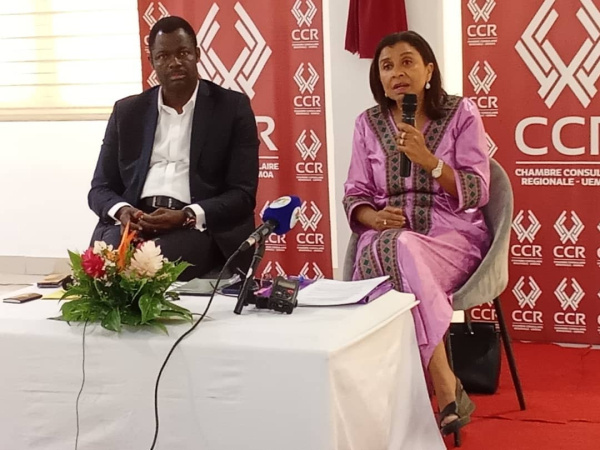
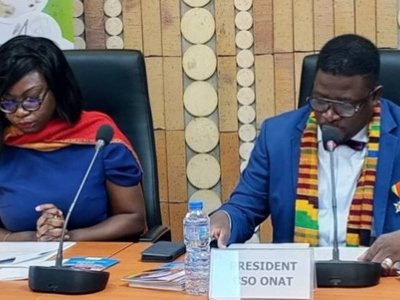
(Togo First) - The president of the CCR-UEMOA, Héléna Nosolini Embalo, presented a mid-term assessment of the institution's efforts to strengthen the competitiveness of West Africa's private sector.
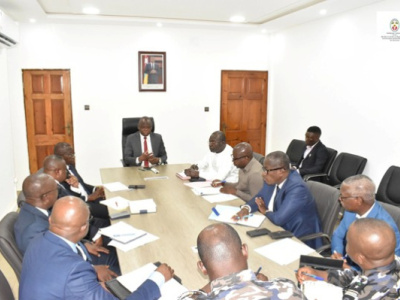
The press conference, held in Lomé on Thursday, March 12, 2026, brought together other senior officials of the regional body, including Mariétou Coulibaly, director general, and José Kwassi Syménouh, president of the Chamber of Commerce and Industry of Togo (CCI-Togo). It was moderated by Léonard Dossou, coordinator of the UEMOA media platform.
The main takeaway: through strategic reforms, studies on business financing and support for African economic integration, the CCR-UEMOA aims to accelerate reforms and financing mechanisms for the private sector.
Updated Strategic Foundations
At the midpoint of its mandate, the UEMOA Regional Consultative Chamber highlighted several advances designed to better support businesses across the community area.
Among its key achievements is the update of the Vision and Strategic Plan 2020-2030 to incorporate the priorities of the 2024-2027 mandate. The institution also developed an action plan for this period, accompanied by a performance framework intended to improve monitoring and the effectiveness of ongoing initiatives.
In the same vein, the CCR-UEMOA continued to build the capacity of its member organizations, particularly through training programs and experience-sharing initiatives, its president said.
The regional consultative body also mobilized to prepare businesses within the Union to capitalize on opportunities offered by the African Continental Free Trade Area (AfCFTA).
In collaboration with the European Union, it rolled out a technical capacity-building program focused on the AfCFTA protocol on trade in goods, targeting member organizations and private sector support structures.
In addition, an economic prospecting mission to Barcelona resulted in the signing of a memorandum of understanding with the Association of Mediterranean Countries' Chambers of Commerce and Industry, opening the door to new economic partnerships.
Recommendations on Economic Issues
On the advisory front, the CCR-UEMOA's technical commissions produced several analyses and recommendations on key issues for the regional economy: the gradual formalization of the informal sector, the free movement of people and goods, industrial competitiveness, local content in the mining sector and the harmonization of tax and commercial legislation.
Other topics, including improvements to the business environment, tourism development, energy challenges and public procurement, also received in-depth consideration.
According to the institution, these analyses help inform decisions by the Union's highest authorities and strengthen the consideration given to private sector concerns.
A Push for New Financing Mechanisms
Business financing is another central focus of the CCR-UEMOA's work. To that end, the institution conducted two opportunity and feasibility studies. The first examined the creation of a regional mechanism to support, stabilize and revive the private sector during major crises, as a complement to existing instruments. The second explored the establishment of a flexible financing mechanism dedicated to micro-enterprises, small and medium-sized enterprises, craft businesses and agro-sylvo-pastoral operations, anchored to Caisse des Dépôts et de Consignations institutions or similar bodies.
Separately, a comprehensive study on the informal sector in the UEMOA was launched with the aim of proposing a five-year action plan for its gradual formalization.
For the remainder of its mandate, running through 2027, the CCR-UEMOA presidency plans to operationalize the financing mechanisms under study, press ahead with reforms to promote formalization and business competitiveness and deepen cooperation with technical and financial partners. The institution also aims to strengthen its position as a strategic interface between the private sector and UEMOA's community institutions.
The CCR-UEMOA is an advisory body established under the Union's Treaty, with a primary mission of ensuring the effective involvement of the private sector in UEMOA's integration process. It serves as the institutional framework for dialogue and consultation between the Union's bodies and the community's private sector.
S.A