Ecobank, Bank of China discuss yuan settlement system for Africa trade
 Wednesday, 22 April 2026 14:25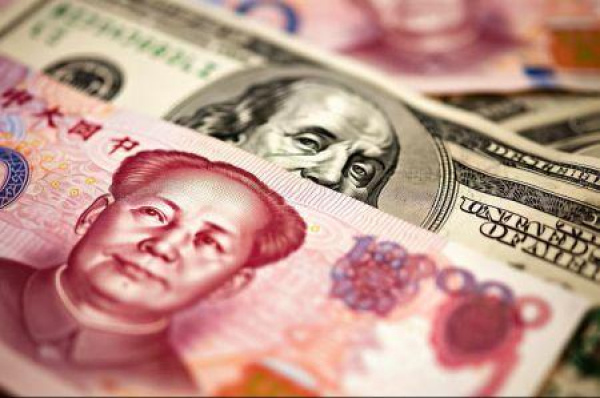
(Togo First) - While China has become Africa’s leading trade partner and investor, the dominance of the U.S. dollar continues to drive up transaction costs. To curb these expenses, pan-African banking group Ecobank, which operates in 33 markets, is negotiating with the Bank of China to establish a direct settlement system in yuan.
A move that could ease financial transactions for thousands of African businesses is underway. Pan-African lender Ecobank said it is in advanced talks with the Bank of China to set up a direct yuan settlement system by the end of 2026, eliminating the need to use the U.S. dollar as an intermediary in trade with China.
For traders in Lagos, Nairobi or Lomé sourcing goods from China, payments have so far been complex and costly. Paying a supplier in Guangzhou typically requires converting local currency into dollars, then into yuan. The two-step process increases banking fees and cuts into margins.
Ecobank aims to remove that constraint. “We are looking at opportunities for us to settle with, instead of going through the dollar, we do it directly with the Chinese yuan,” Chief Executive Jeremy Awori told Reuters. The move reflects current trade dynamics: China is Africa’s largest trading partner by a wide margin. Chinese exports to Africa rose 26% to $225 billion in 2025, contributing to a record $348 billion in total trade. Beijing has also expanded its financial footprint, with around $39 billion in new contracts signed in 2025, making it the largest bilateral investor by new flows.
Shift away from the dollar accelerates
Ecobank’s talks with the Bank of China are part of a broader shift across Africa to reduce reliance on the dollar. In November, South Africa’s Standard Bank took a similar step by joining China’s Cross-Border Interbank Payment System (CIPS).
Across the continent, governments and financial institutions are seeking alternatives to a currency that has become costly and harder to access. Backed by the African Union, the Pan-African Payment and Settlement System (PAPSS) is already reducing conversion costs for intra-African trade. Some countries are moving further: Tanzania and Zambia have restricted the use of the dollar in domestic transactions, while the Democratic Republic of Congo plans to do the same next year.
The trend is also supported by the growing influence of the BRICS+ bloc, which Egypt and Ethiopia have joined and which is promoting a more multipolar financial system.
China is no longer the only player pursuing this strategy. A high-stakes contest is emerging with the United Arab Emirates for financial and logistical influence in Africa. Abu Dhabi is expanding its presence through investments in ports and energy infrastructure, alongside financial initiatives. The UAE has signed multiple currency swap agreements with countries including Egypt, Ethiopia, Kenya and Nigeria to facilitate transactions in dirhams and local currencies, reducing reliance on the U.S. dollar.
Fiacre E. Kakpo