Lomé Airport at 10: From Bold Bet to Regional Hub
 Tuesday, 21 April 2026 07:10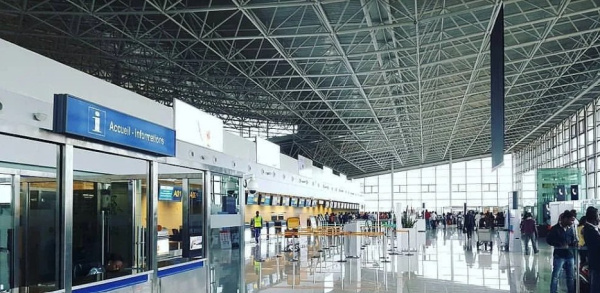
(Togo First) - Inaugurated on April 25, 2016, the new terminal at Gnassingbé Eyadéma International Airport (AIGE) marks its 10th anniversary this month. Driven by rising traffic, strong safety performance and expanding logistics ambitions, the airport has become a key economic asset for Togo, which is positioning connectivity at the core of its development strategy.
Growth Defying Forecasts
Ten years ago, the project appeared ambitious for a country of just 56,600 square kilometers. Backed by a $150 million investment, Togo built a 21,000-square-meter terminal, tripling capacity to 2 million passengers a year.
Since then, traffic has exceeded expectations. Lomé has shifted from being a stopover to a regional transit hub. Passenger numbers rose from 616,000 in 2014 to more than 1.5 million in 2024, a year ahead of projections. In 2025, traffic reached 1,584,188 passengers, with nearly 30% in transit, according to estimates.
This growth is having a significant economic impact. The African Civil Aviation Commission (AFCAC) estimates aviation contributes between $500 million and $600 million to Togo’s GDP, or around 5-6%, and supports between 35,000 and 45,000 jobs across airlines, airport services, logistics and related sectors such as tourism and retail.
Further gains could come from the full implementation of the Single African Air Transport Market (SAATM). The initiative, championed by President Faure Gnassingbé, could generate between $1 billion and $1.5 billion in additional economic activity over five years through increased trade, tourism and logistics flows.
Strong Performance on Safety and regional connectivity
Beyond traffic growth, Lomé has stood out for its safety standards. In 2025, Togo achieved a compliance rate above 90% in an International Civil Aviation Organization (ICAO) audit, confirming alignment with international benchmarks.
The airport is also advancing its environmental strategy. In May 2024, it obtained Level 2 “Reduction” certification under the Airport Carbon Accreditation (ACA) program, reflecting efforts to manage emissions.
Much of the airport’s growth is driven by ASKY Airlines, which operates its hub in Lomé in partnership with Ethiopian Airlines. Together with other carriers, they serve more than 40 destinations, including nearly 30 operated directly by ASKY across 26 African countries.
With over 300 weekly flights, Lomé connects the region to global routes, including direct services to Washington and New York, attracting transit passengers from across West Africa.
ASKY operates a fleet of around 15 aircraft and has proved profitable since 2015, five years after its launch—an uncommon result in a sector where many regional carriers report losses. Its hub-and-spoke model positions Lomé as a key transit point, channeling passengers to major African cities. Supported by Ethiopian Airlines’ expertise, the model has strengthened ASKY’s position as one of West Africa’s more stable carriers.
Capacity Pressures Emerging
Rapid growth is now putting pressure on infrastructure. With capacity utilization approaching 80%, congestion is emerging at peak hours, while competition from Accra and Abidjan is intensifying.
To address this, authorities are optimizing existing infrastructure, including building a DoubleTree by Hilton hotel to improve transit passenger flows. Plans for a third airport at Gbatopé, still under study, reflect longer-term expansion ambitions.
Operational challenges remain. Passenger experience needs improvement, with queues at departures and arrivals during peak periods. Technologies such as biometric systems and facial recognition, intended to support contactless travel, are not yet widely visible in practice.
Strengthening the hub will also require diversifying routes. Attracting long-haul carriers is seen as key to boosting intercontinental connectivity and reducing reliance on regional traffic.
“In the long run, consolidating Lomé as a pan-African hub would depend on rapid network expansion. Full liberalization of African air transport would allow operators like ASKY to extend coverage significantly, potentially beyond 50 destinations,” said a consultant and former ASECNA official. “This would also support regional tourism circuits and reinforce Togo’s role as a gateway to Sahel countries such as Burkina Faso, Mali and Niger.”
A New Phase Under New Leadership
As the airport enters its second decade, Société aéroportuaire de Lomé-Tokoin (SALT) has reappointed former minister Kanka-Malik Natchaba as director general.
He takes charge at a time when the focus is shifting from infrastructure investment to operational and commercial performance. “The challenge is no longer just to build, but to generate returns, optimize operations and improve the user experience,” the expert said.
SALT will need to consolidate recent gains while strengthening Lomé’s position against competing regional hubs, as air traffic continues to recover and evolve.
Together with the Port of Lomé and the Adétikopé Industrial Platform (PIA), the airport forms a logistics corridor that lowers transport costs for landlocked countries and supports growing regional demand.
Ten years after its inauguration, the airport has shown that scale is not a constraint to ambition. The initial investment has paid off. Whether Lomé can sustain its trajectory—and meet its ambition of becoming the “Singapore of West Africa”—will depend on its ability to improve efficiency, expand connectivity and enhance competitiveness.
Fiacre E. Kakpo