
Nagodé adds 60 buses to fleet, accelerates shift toward regional transport network
 Wednesday, 22 April 2026 01:57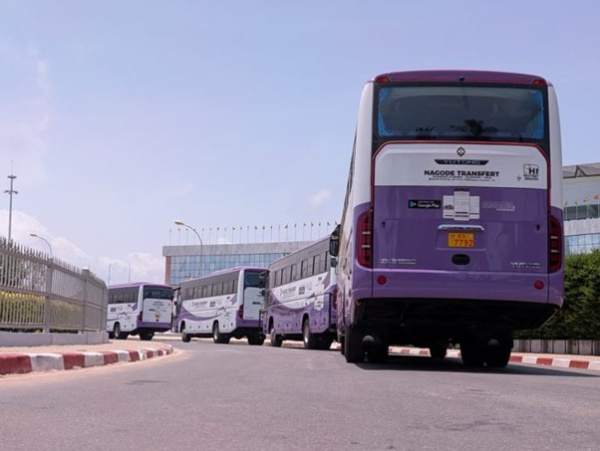
(Togo First) - Togolese transport operator Nagodé Transfert has expanded its fleet by 60 buses, a move the company says will support its growth ambitions in Togo and across the region. The new vehicles were presented to the public at a ceremony in Lomé on Saturday, April 18.
“The customer base is growing in this country. The transport sector is also expanding,” Chief Executive Morou Yara said.
The new fleet, supplied by Chinese manufacturer Yutong, includes premium coaches, express minibuses and cargo vehicles. The company said it aims to improve the passenger experience and help formalize freight transport. “These coaches are not mere vehicles. They reflect a new approach to transport,” Yara said.
Regional expansion and new routes
Nagodé is also extending its international network. The company has already announced routes to Cotonou and Ouagadougou, while an express Lomé-Abidjan service is under study.
“We want to open other routes, including Lomé-Ouagadougou and Lomé-Cotonou,” Yara said.
The company said the strategy is intended to support regional integration and facilitate trade flows. Nagodé began as a money transfer business in Sokodé and has since diversified toward an integrated transport and logistics model.
Formalizing a market still dominated by the informal sector
Interurban transport companies such as Nagodé stand apart from an urban market still dominated by informal operators. In Lomé, motorcycle taxis known as zémidjans handle the bulk of daily trips and account for more than 60% of public transport supply. Shared-route urban taxis complement the network on longer routes, while three-wheelers are gaining ground, particularly in freight and short-distance transport.
Structured operators have so far struggled to establish themselves in this environment. The Société des Transports de Lomé (SOTRAL) accounts for only a limited share of trips because of an insufficient network and fleet. Digital mobility platforms such as Gozem remain marginal despite their growth, mainly in the capital. Two-wheelers account for more than 70% of the vehicle fleet. Against that backdrop, private initiatives such as Nagodé Transfert reflect a gradual effort to formalize the sector, driven by rising demand and growing urban and regional mobility needs.
Ayi Renaud Dossavi