
Behind Togo's 0.4% Inflation: Cheaper Grain for the Rural Poor, Steeper Energy Bills for City Dwellers
 Tuesday, 24 March 2026 10:23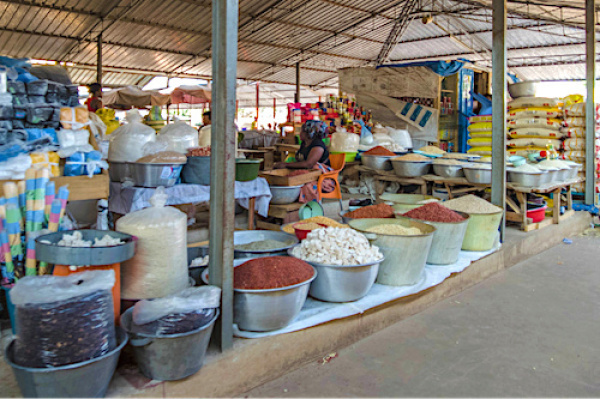
(Togo First) - Inflation is often reduced to a single number. For instance, in February 2026, it was 0.4% year-on-year in Togo. But behind that average lie very different realities, depending on whether households live in urban or rural areas and on their income level. Prices do not rise or fall at the same rate across all spending categories, and not all households spend their money the same way.
Two major trends emerge from February 2026 data published by the Institut national de la statistique et des études économiques et démographiques (INSEED). Food prices fell 0.9% year-on-year, driven by a sharp 17.8% decline in cereal prices. Energy, including electricity, gas and other fuels, rose 13% over the same period. These two trends do not affect all households equally.
Rural poor households: the biggest winners from falling cereal prices
In rural Togo, food accounts for a much larger share of household budgets than in urban areas. For the poorest households, whether rural or urban, food can make up more than half of daily spending. The 17.8% year-on-year drop in cereal prices therefore provides tangible relief. Corn, a staple in the north of the country, sells for 143 CFA francs per kilogram in Kara, compared with more than 230 CFA francs in Lomé. These households are also less dependent on the electricity grid and bottled gas, meaning the rise in energy costs affects them only marginally.
For a rural household living mainly on locally grown cereals and cooking with wood or charcoal, with charcoal prices rising just 3.2% over the month, inflation is likely negative. In other words, their real purchasing power has increased, even if their cash income has remained unchanged.
Urban low-income households: caught between two pressures
The situation is far more uncomfortable for low-income urban households, particularly in Lomé. They too benefit from lower cereal prices, but less so: white corn still costs 231 CFA francs per kilogram in Lomé, roughly 60% more than in the north. More importantly, they are far more exposed to rising energy costs. Connected to the CEET electricity grid, they face the full impact of the 13% year-on-year increase in electricity and fuel prices. Their housing costs incorporate rising energy charges.
These households are also more reliant on restaurants and street food vendors for their meals. The restaurants and accommodation services category, which accounts for 16.5% of the national consumption basket, rose 1% year-on-year. That category weighs even more heavily on low-income urban workers, who often lack the conditions to cook at home for every meal.
The urban middle class: energy becoming an increasingly heavy burden
For middle-class households in Lomé, including civil servants, private-sector employees and small business owners, the fall in food prices provides partial relief. But their consumption profile makes them particularly sensitive to rising energy costs. Air conditioners, refrigerators, freezers, televisions and internet connections all lead to consistently higher electricity consumption. Electricity, gas and fuels rose 13% year-on-year.
The 2.2% year-on-year decline in information and communication prices offers some relief for this group, which is more widely equipped with smartphones and internet subscriptions. It does not, however, offset the pressure from energy costs.
Fiacre E. Kakpo