Nathalie Kouassi Akon on How IFC Plans to Scale Up Investment in Togo | Interview
 Tuesday, 13 January 2026 14:22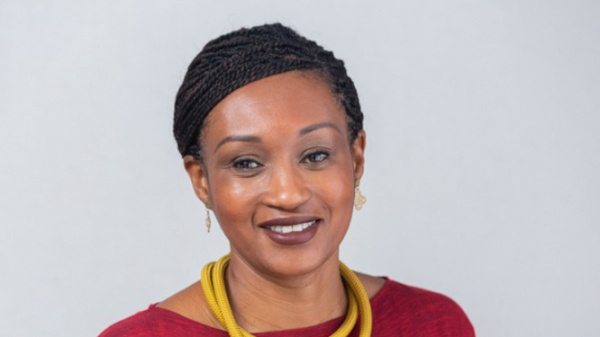
(Togo First) - Making her first official visit to Togo since her appointment, Nathalie Kouassi Akon, IFC Regional Director for the Gulf of Guinea, arrived in Lomé to meet government officials and private sector leaders. The visit comes as Togo seeks to scale up private investment, amid persistent challenges related to industrial development, SME access to finance, and long-term capital mobilization.
In this interview with Togo First, the IFC regional director discusses the growth of the institution’s portfolio in Togo and its sectoral priorities in energy, agriculture, infrastructure, and digital technology. She also outlines strategies to mobilize private capital in a tightening global financial environment, the role of local champions and SMEs, and the outlook for cooperation between Togo and the World Bank Group through 2030.
Togo First: Togo First: How is the IFC’s portfolio in Togo performing today in terms of size, sector coverage, and overall results?
Nathalie Kouassi Akon: Over the past five years, from 2020 to 2025, the International Finance Corporation has invested and mobilized a record amount of around $320 million in Togo. This is a significant volume and reflects the country’s strategic importance for the institution.
These investments span several key sectors, notably energy, industry, and telecommunications. This diversification aligns with a priority clearly shared today by both the World Bank Group and the Togolese authorities: job creation through private sector development. In this respect, Togo holds an important position within the region I oversee, particularly given its employment potential.
Historically, IFC’s engagement in Togo began with port and energy infrastructure. We financed the container terminals at the port of Lomé and later supported the country’s first independent power producer through the construction of a 100-megawatt thermal power plant in Lomé. These are structural investments that are essential to the competitiveness and long-term growth of the Togolese economy.
Over the past five years, I would highlight three investments with particularly strong development impact.
The first is TogoCom, where our support aims to expand access to connectivity and high-speed internet. Digital technology is a key driver of economic transformation, and this investment fits squarely within that objective.
The second is Star Garments in the textile sector. This project is expected to generate around 4,500 direct and indirect jobs, mainly for women, representing a significant social impact for Togo’s economy.
More recently, we supported Zener to strengthen access to cleaner energy, notably by expanding its storage capacity for propane and butane gas.
Financing for SMEs also remains central to our strategy. We mainly operate through financial intermediaries, supporting institutions such as Ecobank, the NSIA Group, and Bank of Africa, notably through guarantee mechanisms. These arrangements enable our partners to extend financing to Togolese SMEs.
Togo First: What lessons can be drawn from the evolution of the IFC’s portfolio in a context of tightening financial conditions and growing security and geopolitical challenges?
Nathalie Kouassi Akon: You are pointing to two major trends, financial and geopolitical, that are reshaping our economies and influencing how we operate. In this context, the IFC’s Vision 2030 strategy has proved particularly forward-looking.
One of its core pillars is the mobilization of private capital. Since the arrival of World Bank Group President Ajay Banga and under the leadership of IFC Managing Director Makhtar Diop, it has become clear that official development assistance alone will no longer be sufficient to finance growth. Mobilizing private capital has therefore become essential.
Our performance is no longer assessed solely on the volume of our investments, but increasingly on our ability to catalyze private capital. Internally, we refer to this as an “originate-to-distribute” approach, under which IFC acts as a catalytic investor with the objective of attracting other investors alongside us.
We pursue this approach through our traditional instruments, such as syndicated loans, as well as through more advanced tools, including bond issuances and public-private partnerships.
In Togo, this strategy is fully reflected in our operations. Over the past five years, for every dollar invested by IFC, nearly three additional dollars have been mobilized from private investors, mostly from abroad. This demonstrates the catalytic impact of our interventions.
This mobilization is achieved not only through our financing, but also through our advisory work with the government, particularly in structuring public-private partnership projects.
Togo First: Which sectors do you currently see as the most promising, and which are receiving particular attention from the IFC?
Nathalie Kouassi Akon: The sectors we see as the most promising are those identified, at the World Bank Group level and in close consultation with the Togolese authorities, as having the strongest potential for job creation, particularly for young people.
At the Group level, five priority sectors have been defined: infrastructure, health, agriculture, tourism, and value-added manufacturing. These sectors are expected to generate significant employment in the years ahead.
In Togo specifically, our partnership with the government, as set out in the Country Partnership Framework, is structured around three main pillars.
The first is energy. Togo was among the first countries to join the World Bank Group’s Mission 300 initiative, which aims to connect 300 million people to electricity by 2030. The government has set an ambitious target of raising the electricity access rate from around 70 percent today to 90 percent by 2030. This objective relies in particular on solar energy, as well as several projects supported and accompanied by the IFC.
The second pillar is agriculture, notably through the AgriConnect initiative. In Togo, our approach in this sector is built around three levers.
The first is agribusiness financing, through risk-sharing mechanisms developed in partnership with commercial banks.
The second focuses on capacity building, through programs such as Africa Agricultural Leadership, which aim to train and support small-scale producers.
The third, which is expected to expand further, is agri-tech. The objective is to support digital platforms capable of structuring value chains and improving access to financing, markets, and agricultural information.
The third priority sector, in agreement with the government, remains logistics and transport, which is a core pillar of Togo’s economic development.
Togo First: How important are local champions in the IFC’s strategy for Togo?
Nathalie Kouassi Akon: Supporting the emergence of local champions has become a central pillar of our strategy in Togo. By local champions, we mean Togolese companies with strong growth potential and a capacity to generate significant economic and social impact.
In this context, the IFC has launched a dedicated initiative targeting Togolese local champions. We carried out a screening of around 300 SMEs, from which eight companies were identified as eligible for the program. At this stage, two have formally joined the initiative.
These companies receive structured support, with a strong focus on financial management and compliance with environmental and social standards, in preparation for direct IFC financing. The objective is to help them reach a level of maturity that is compatible with long-term investment.
One concrete example is Zener, a company active in the distribution of liquefied petroleum gas, which received $16 million in financing. Its operations cover the entire LPG value chain. Another example is Yatt & Co, also operating in gas distribution, which recently signed a technical assistance agreement with the IFC. Discussions are under way regarding potential financing, which we expect to materialize in the near term.
Togo First: A recent IFC report on Togo points to a high concentration in the productive sector. Just 0.4 percent of companies account for 77 percent of total revenue, while nearly 90 percent are micro or small enterprises, often undercapitalized. How does this finding translate concretely into your strategy for Togo?
Nathalie Kouassi Akon: This finding is central to our strategic thinking. Under the IFC’s Vision 2030 framework, we have decided to double the share of our portfolio dedicated to financing SMEs.
That said, it is important to be precise about definitions. The term “SME” covers a wide range of realities, from micro-enterprises to mid-sized companies.
Micro-enterprises account for the vast majority of the economic fabric, in Togo as in many African countries. This represents both a vulnerability and an opportunity. To address this effectively, IFC has recognized that it cannot act alone and that stronger partnerships are required.
For example, we work with innovation ecosystems and incubators, including those supported by UNDP, to help build a pipeline of companies that could eventually become financeable. Today, some start-ups or very small businesses are not yet eligible for direct IFC financing, but that does not mean they fall outside our scope. The objective is to support them progressively, either directly or indirectly, along their entire value chain.
Togo First: More concretely, how is this approach reflected in the IFC’s financing instruments?
Nathalie Kouassi Akon: Historically, IFC’s support for SMEs has been delivered mainly through financial institutions. For many years, we worked primarily with large international banks, using instruments such as credit lines and guarantees. Over time, we gradually extended this approach to mid-sized banks.
Today, our strategy is evolving further. As part of our effort to scale up SME financing, we are placing particular emphasis on microfinance institutions and fintechs. The guarantees and financing facilities we provide enable them to expand their loan portfolios, while complying with clearly defined conditions.
We also complement this with technical assistance to help these institutions better structure their products, refine their targeting of SMEs, and better assess both the attractiveness and the risks of this market segment. It is a demanding market, but a critical one if we are to respond effectively to the realities of Togo’s economic landscape.
In addition, we have created a dedicated department, known as Upstream, whose role is to prepare companies ahead of time, before they become bankable. It is within this framework that we are supporting, for example, Gozem, a start-up that we are currently financing in Togo.
Togo First: Despite the guarantees, including those provided by the IFC, some SMEs say the cost of credit has not declined, suggesting that risk reduction is not being passed on in financing terms. How do you explain this gap, and how does the IFC ensure that its guarantees have a tangible impact for businesses?
Nathalie Kouassi Akon: It is a legitimate question and one that requires close and ongoing monitoring. The cost of a loan is determined not only by credit risk, but also by the cost of liquidity, which remains high in our economies and is often available only at short maturities.
That said, this does not mean that all outcomes are justified. We work closely with our financial partners to ensure that our instruments deliver real impact. Today, our partnerships with banks are governed by clearly defined impact criteria, including the number of SMEs financed, attention to women-led businesses, and compliance with consumer protection standards.
In practical terms, we require transparency in how interest rates are set, as well as mechanisms designed to prevent abusive practices. These requirements form part of the regular reporting obligations of our banking partners. It is a demanding process, but one that is essential to ensure the credibility and effectiveness of our interventions.
Togo First: Over the past decade, Togo has attracted foreign direct investment, notably in banking, logistics, and certain industries. Can we speak of a genuine economic upgrade, or do structural bottlenecks still limit the ability of Togolese companies to scale up and attract more investment?
Nathalie Kouassi Akon: First, it is important to acknowledge the progress that has been made. In Africa, expectations are often high, and rightly so, but it is also important to recognize tangible improvements.
In this respect, Togo has delivered notable results. In the latest Business Ready, or B-READY, assessment, the country ranked as the third-best reformer in Sub-Saharan Africa. It is also among the few low- and middle-income countries to feature among the leading performers in most of the areas assessed, including business entry, business location, financial services, international trade, taxation, dispute resolution, and competition.
At the continental level, only a small number of countries, such as Rwanda, show a comparable reform trajectory. This is a very positive signal that now needs to be consolidated.
These reforms have already helped mobilize significant volumes of private capital. As mentioned earlier, IFC has invested and mobilized around $320 million in Togo. This momentum reflects close cooperation with the government under targeted, sector-specific initiatives.
In the energy sector, for example, the objective is to raise the electricity access rate to 90 percent by 2030, which will require mobilizing around $1.4 billion in private capital. In agriculture, investment needs are also estimated at around $1 billion. Meeting these targets will require further reforms, carried out in consultation with the private sector, to identify remaining bottlenecks and accelerate their removal.
A sector-by-sector approach allows reforms to be better targeted, in coordination with our World Bank colleagues. It also helps distinguish more clearly between the needs of large firms and those of small and micro-enterprises, which are very different.
In this context, initiatives such as the Local Champions Initiative are essential. They are not only about financing volumes, but also about better understanding the ecosystem, structuring needs, and reform priorities of local companies, so that they can play a larger and more formal role in the economy.
Togo First: Looking ahead to 2030, what are the IFC’s financing objectives in Togo, and under what conditions can the country further scale up its relationship with the IFC and the World Bank Group, including MIGA?
Nathalie Kouassi Akon: In close coordination with the World Bank and MIGA, we have identified the sectors that will remain our focus in the coming years. These are primarily agriculture, transport and logistics, digital development, and energy, which will continue to sit at the core of our priorities.
A key feature of this next phase is stronger coordination within the World Bank Group. For the past two years, we have been rolling out a joint representation model in several countries, under which a single representative covers the World Bank, IFC, and MIGA. The objective is for all countries to have a unified Group representative by 2026, in order to ensure a more coherent and integrated approach.
In Togo, this joint representation will come into effect in February, further strengthening coordination between public and private sector interventions.
More concretely, IFC has already contributed to SME financing in Togo, notably through a $25 million securitization transaction led by NSIA in partnership with BOAD. We have also supported the agricultural sector through risk-sharing mechanisms, as well as by financing a leading leasing company in the market, which facilitates access to agricultural equipment for small-scale farmers.
Our approach is to intervene across the full value chain, supporting SMEs primarily through indirect channels, while also backing large international investors capable of driving public-private partnerships and major structural projects for the State.
Togo First: Any closing remarks?
Nathalie Kouassi Akon: Togo remains an important partner for the IFC. We have been present in the country for many years, and we are seeing steady and encouraging progress, with growing investor interest despite a more challenging regional and global environment. Our commitment to Togo is long-term, and we will continue to support this transformation in the years ahead.
Interview by Fiacre E. Kakpo