Togo Weighs Allowing Women to Claim Husbands as Dependents for Income Tax
 Monday, 01 December 2025 11:54
(Togo First) - To reduce gender inequality in taxation, female civil servants should be allowed to declare their husbands as dependents for Personal Income Tax calculations, just as men can do for their wives. This recommendation appears in an analytical brief published earlier this year by the Directorate General of Budget and Finance within Togo’s Ministry of Economy and Finance, which examines gender disparities in the tax system.
Currently, only a husband may declare his wife as a dependent for IRPP calculations in Togo. The ministry argues that this contradicts existing laws on gender equality in public administration.
Togo’s IRPP applies a progressive rate ranging from 0 percent for annual income below 900,000 CFA francs to 35 percent for income above 10 million CFA francs. Overall, most current tax measures are gender neutral, and the analysis finds that they do not reduce economic inequalities between men and women.
Beyond the IRPP proposal, the report suggests lowering import duty rates for women traders. The African Union levy could be reduced from 0.2 percent of customs value to 0.1 percent, and the national solidarity levy from 0.5 percent to 0.2 percent. These adjustments would target the informal sector, where women account for 54 percent of workers.
The report also proposes reductions for women subject to certain import-related charges, including adjustments to the ECOWAS solidarity rate, given women’s strong participation in informal trade.
On the budgeting side, allocations for gender-related programs increased from 20 billion CFA francs in 2022 to 30.5 billion in 2024, a rise of 52 percent. Even so, they represent only a small share of the national budget, increasing from 1.07 percent in 2022 to 1.35 percent in 2024.
The ministry recommends expanding gender-equality strategies across all sectors, strengthening statistical data collection and building administrative capacity for gender-responsive budgeting.
The assessment highlights progress in education and healthcare, alongside persistent disparities. Women hold only about 21.7 percent of leadership positions in the administration. Their access to land and finance remains limited, despite initiatives in Planned Agricultural Development Areas and inclusive finance programs. Some 7,964 women have been allocated plots in ZAAPs, representing 41 percent of beneficiaries.
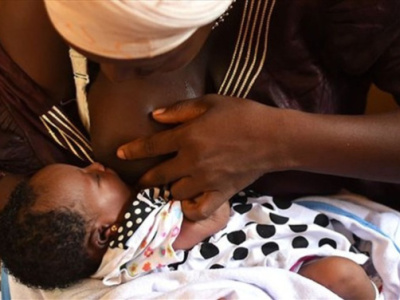
Gaps also remain in secondary schooling, although primary completion rates for girls reached 95.7 percent in 2024. The Wezou initiative has supported more than 400,000 pregnant women. Women’s representation in the National Assembly stands at 18.5 percent, and women’s land ownership in the Savanes region is only 2.6 percent.
The ministry argues that integrating gender into taxation and budgeting is essential to closing these gaps. The goal is a fairer allocation of resources and stronger support for women’s economic participation. Women make up 51.3 percent of the population and more than half of the national labor force.
Ayi Renaud Dossavi