Togo Is No Longer a Low-Income Country: 10 Questions About What It Means
 Saturday, 04 July 2026 04:25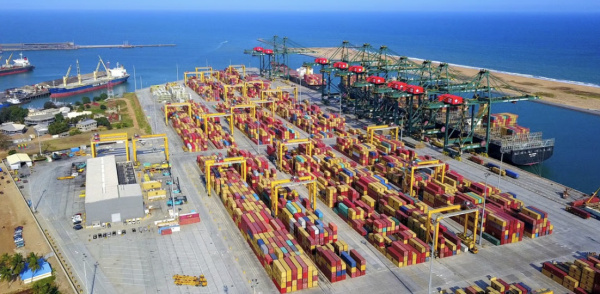
(Togo First) - Togo officially joined the ranks of lower-middle-income countries on July 1 after the World Bank upgraded its classification. The change is more than a statistical update. It reflects important shifts in Togo's economic trajectory and future financing prospects. Here are 10 questions that explain why it matters.
- How does the World Bank classify countries?
Each year on July 1, the World Bank classifies 218 economies into four income groups: low income, lower-middle income, upper-middle income, and high income.
The ranking is based on gross national income (GNI) per capita, calculated using the Atlas method, which smooths exchange rate fluctuations over a three-year period. This year, six countries moved up a category and none moved down. Togo was the only country to move from the low-income group to the lower-middle-income category.
- Why was Togo reclassified now?
Two main factors explain the upgrade.
The first is sustained economic growth. According to the International Monetary Fund (IMF), Togo's economy expanded by about 6% in 2025, supported by the services sector and activity at the Port of Lomé, outperforming many countries in the region.
The second factor is less obvious: updated population data.
- What changed in the population figures?
Results from Togo's 2022 census showed that the country's population was 11.7% lower than the World Bank had previously estimated.
Since income per capita is calculated by dividing national income by the number of people, a smaller population automatically raises the figure. In other words, Togo had been wealthier per person than previously estimated. Exchange rate movements also contributed to the higher GNI per capita.
- Is the new status likely to last?
Most likely, yes.
The reason is simple. Togo's economy is growing at around 6% a year, while its population is increasing by about 2.3% annually. As long as economic growth continues to outpace population growth by that margin, income per capita should keep rising.
If that trend continues, Togo could eventually join the upper-middle-income group, alongside countries such as the Philippines, Sri Lanka, and Vietnam, which entered that category this year.
- Will people notice a difference in their daily lives?
Not immediately.
The new classification does not create jobs or increase household incomes overnight. It is primarily a statistical reclassification.
However, it matters because it influences how investors, lenders, and credit rating agencies assess the country's economic prospects.
- Will Togo lose access to financing reserved for poorer countries?
Not anytime soon.
Togo remains eligible for financing from the International Development Association (IDA), the World Bank's concessional lending arm, as well as the African Development Fund, the concessional window of the African Development Bank (AfDB).
Eligibility depends not only on income classification but also on specific income thresholds and a country's ability to borrow on market terms. When countries eventually transition away from concessional financing, the process is generally gradual and can take years.
- What changes with the IMF?
Nothing for now.
Togo remains under the IMF's Extended Credit Facility (ECF), which is designed for low-income countries. The program's third and fourth reviews recently cleared the way for a new disbursement of about $110.8 million.
Over the longer term, the country could eventually seek financing through the Extended Fund Facility (EFF), the IMF's non-concessional lending instrument used by more advanced economies.
- What can Togo learn from neighboring countries?
The region offers encouraging examples.
Benin, Côte d'Ivoire, and Senegal were all reclassified before Togo but continue to receive concessional financing from the World Bank, the AfDB, and the IMF.
Instead of limiting access to development finance, the new status has broadened their funding options by allowing them to combine concessional loans with borrowing on international capital markets.
- What does Togo stand to gain?
Greater credibility is one of the biggest advantages.
Lower-middle-income countries are generally viewed more favorably by private investors and financial markets, which can help reduce future borrowing costs.
The new status may also give Togo access to a broader mix of financing sources, allowing it to mobilize more resources for infrastructure, education, healthcare, and energy projects.
It also reinforces the country's improving economic profile. The IMF recently upgraded Togo's debt-carrying capacity to strong, while public debt has fallen to about 65% of GDP.
- What is the biggest challenge now?
Turning the new status into tangible improvements in people's lives.
The timing coincides with the government's preparation of its 2026-2031 development roadmap, which aims to double average living standards and reduce the poverty rate to below 15% by 2040.
The biggest risk is falling into what economists call the middle-income trap—when countries reach middle-income status but struggle to sustain growth because they fail to transform their economies.
The World Bank's reclassification shows that Togo has made significant economic progress. The next challenge is ensuring that progress translates into broader gains for its population.
Fiacre E. Kakpo
REFORMS OVERVIEW
STARTING A BUSINESS (more info)
At the fifteenth position, worldwide, and first in Africa, under the Starting a Business index of the 2020 Doing Business ranking, Togo sustains its reformative dynamics with more reforms….
ENFORCING CONTRACTS (more info)
Compared to some years ago when it was one of the lowest rankers under the Doing Business’ Enforcing Contracts indicator, Togo, leveraging many efforts to improve its business climate, was able to jump significantly on the index in the recent years... .
CONTRACT EXECUTION (more info)
Creation of special chambers of commerce for small debts • Creation of chambers of commerce at the Court of Appeal • Civil and commercial cases now handled by distinct clerks • Establishment of commercial courts in Lomé and Kara • Lawyers and bailiffs now have access to the FORSETI COMMERCIAL platform • A maximum period of 100 days was fixed to settle a commercial dispute .
TRADING ACROSS BORDERS (more info)
In comparison to previous years,Togo has significantly improved its ranking under the“Trading across borders” indicator by adopting multiple reforms that focus mainly on the digitization and reduction in delays, for import and export procedures related to import and export.
In comparison to previous years, Togo has significantly improved its ranking on the “Trading across borders” index by adopting multiple reforms that focus mainly on the digitalization and reduction in delays, for import and export procedures related to import and export.
CONSTRUCTION PERMIT (more info)
After moving from the 133rd to 127th place under the 2020 Doing Business’ construction permit index, Togo intends to reiterate this feat in the coming edition of the global ranking. To this end, it has introduced this year multiple reforms.
GETTING ELECTRICITY (more info)
Over the past two years, Togo’s ranking under the Doing Business’ Getting electricity and water indicator has increased consistently. Owing this performance to multiple reforms aimed at making it easier for businesses to access power and water, Lomé plans to introduce even more reforms this year to keep up its improvements.
REGISTERING A PROPERTY (more info)
Out of all the 'Doing Business’ indicators, Property Registration is where Togo has improved the most since 2018. Indeed, after spending years in the lowest part of this ranking, the country now seeks to beat Rwanda which is the best performer on this index in Africa. To do so, Lomé has been introducing many reforms, with the latest batch implemented this year.
PUBLIC PROCUREMENT (more info)
From professionalization to digitization, through legislative regulations, Togo’s public procurement framework is constantly being modernized. Several reforms have been implemented to improve the sector much to the benefit of the private sector, which is the focus of the National Development Plan.
PAYING TAXES AND DUTIES (more info)
To improve its business environment, Togo introduced some important reforms related to the payment of tax and duties. From the replacement of some taxes to the cancellation of others through exemptions, the country has only one objective: offer the most attractive tax framework to investors and economic operators. To achieve this, the authorities relied on digitization.