Barcola: WAEMU public debt market has become a strategic sovereignty tool
 Wednesday, 28 January 2026 11:40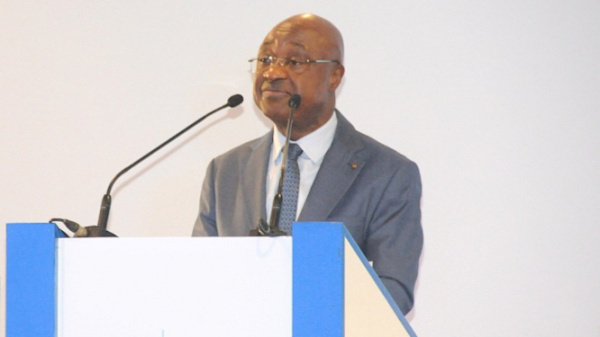
(Togo First) - The regional public debt market has become a key tool of financial independence, Togo’s Economy and Finance Minister Essowè Georges Barcola said on Tuesday.
He was speaking at the opening in Lomé of the Public Securities Market Meetings (REMTP), a two-day event on Jan. 27–28 focused on how West African Monetary Union (WAEMU) states finance their budgets.
Organised with the participation of the BCEAO central bank and UMOA-Titres, the meeting brought together government officials, regional market participants and institutional investors.
It comes as the regional market has expanded rapidly, raising nearly 11.9 trillion CFA francs in 2025, up from just over 5 trillion three years earlier.
A strategic funding tool
Barcola said the regional securities market now plays a broader role than simply covering budget needs.
In the current environment, he said, government bond issuance has taken on strategic importance by helping states fund structural reforms and major public investment programmes through domestic resources.
With international financing conditions tightening and capital flows becoming more volatile, Togo wants to strengthen its use of internal funding sources, he added.
Mobilising domestic savings is essential to reduce reliance on external capital and to build a more resilient and sustainable model for development finance, he said.
A pillar of Togo’s financing
Barcola highlighted the central role the regional market plays in financing Togo’s economic policy.
Between 2021 and 2024, Togo raised between 500 billion and 700 billion CFA francs a year on the public securities market, he said.
Those resources covered between 50% and 110% of the state’s annual financing needs and were used mainly for public investment, infrastructure projects and social spending at a time of mounting budget pressures.
As a sovereign issuer, Togo wants to contribute fully to the development of a deeper and more integrated regional market, built on discipline, transparency and mutual trust, the minister said.
Broadening the investor base
The BCEAO is also pushing to widen the investor base, particularly by building on gains in financial inclusion.
Within the Union, access to financial services rose from 45% in 2016 to nearly 75% in 2025, with a target of more than 90% by 2030, according to figures cited during the discussions.
BCEAO Governor Jean-Claude Kassi Brou said the trend should help channel more regional savings toward financing the economy and public finances as funding needs grow.
A key challenge is to increase the market’s capacity by diversifying investors beyond the traditional dominance of banks.
Banks once held close to 90% of outstanding debt, but their share has fallen to around 80% as non-bank investors gain ground.
Pension funds, insurers and other long-term institutional investors are increasing their presence, a shift seen as necessary to support the market’s continued growth.
Developing the secondary market
Beyond the primary market used to raise funds, discussions also focused on strengthening the secondary market, which remains relatively illiquid.
In 2025, trading volumes reached a record of more than 5.4 trillion CFA francs, signalling a rebound after a slowdown in 2023.
Barcola said that while the primary market currently meets governments’ immediate financing needs, authorities must now create the institutional, regulatory and operational conditions for the secondary market to play a stronger role.
A more active secondary market is essential to boost investor confidence and stabilise expectations by ensuring liquidity in government securities, he said.
Fiacre E. Kakpo