Trade, Investment, Influence: The Logic Behind the Launch of AmCham Togo
 Tuesday, 27 January 2026 10:39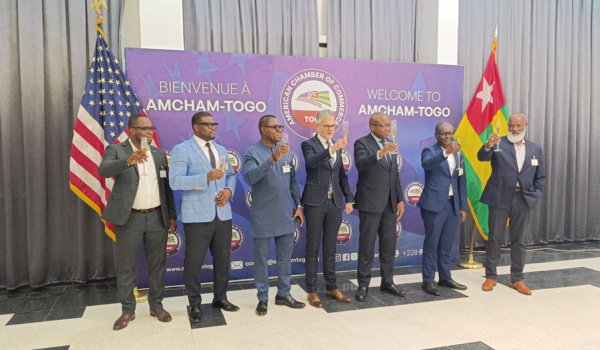
(Togo First) - The American Chamber of Commerce in Togo (AmCham Togo) was launched on Monday, Jan. 26, in Lomé. The organisation aims to strengthen economic ties between the United States and Togo as the country seeks to attract more private investment and diversify its international partnerships.
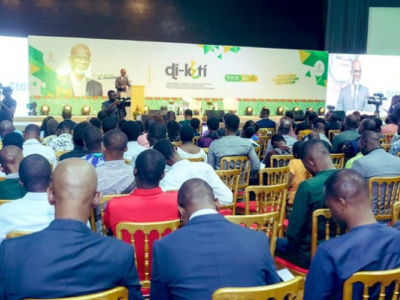
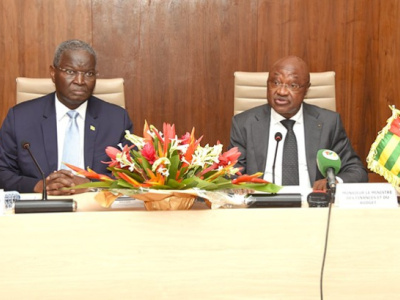
The launch ceremony was attended by business leaders, Togolese officials including Minister of Mines and Energy Resources Robert Koffi Messan Eklo, and U.S. business representatives. U.S. Chargé d’Affaires Richard C. Michaels hailed “a new chapter in commercial relations between the United States and Togo,” saying the new chamber would serve as “an essential platform for dialogue, opportunities and shared prosperity.”
Led by the private sector, AmCham Togo intends to serve as a bridge between companies and public policymakers. Affiliated with the global network of American Chambers of Commerce, it aims to promote economic freedom, ethical business practices, innovation and inclusive growth. According to its officials, the organisation seeks to help create a more transparent and competitive business environment conducive to responsible investment.
The founding board of directors includes leaders from various sectors with business networks in Togo, the United States and Europe, a profile intended to strengthen the new structure’s credibility with international investors. AmCham Togo plans to play an active role in economic advocacy, public-private dialogue, trade development and capacity building, particularly in digital transformation.
Existing U.S. economic footprint
The economic relationship is already reflected in several U.S.-linked operations in the country. More than a dozen companies and organisations affiliated with the United States operate in Togo across key sectors such as energy, aviation, agriculture and logistics, according to the U.S. Embassy. ContourGlobal supplies nearly 30% of the country’s electricity, while Boeing aircraft are used on regional routes operated by ASKY Airlines. In 2025, the first shipment of American organic fertilisers was also imported into Togo.
This presence is also visible in bilateral trade flows. According to TradeMap data, Togolese imports from the United States reached about $61 million in 2024, dominated by plastics, vehicles, petroleum products and industrial equipment. Togolese exports to the U.S. market totalled nearly $49 million in 2024, up from less than $12 million four years earlier. These exports remain largely concentrated in products with limited value added, such as food industry residues and certain vegetable oils. The recent emergence of textile manufacturing at the Adétikopé Industrial Platform, led by U.S. group Star Garments Group, a subsidiary of American firm Charles Komar & Sons, points to an early, though still limited, move up the value chain.
Navigating a changing trade policy
The bilateral relationship now faces tighter conditions. Since returning to the White House, Donald Trump has put the “America First” doctrine back at the centre of U.S. trade policy. The introduction of a uniform 10% tariff on Togolese exports to the United States from April 2025 has raised the cost of access to the U.S. market. This came even as the AGOA preferential regime had just expired before being extended until the end of 2028 by Congress, sending a mixed signal to African partners between the maintenance of a preferential framework and tighter access conditions. In this context, AmCham Togo is seen less as a showcase than as a practical tool for securing and upgrading economic relations, said a member of the chamber’s board.
Against this backdrop, the new chamber also plans to launch the “AmCham Togo CARES” programme. The social impact initiative will focus on education, job readiness, digital inclusion and sustainable development, linking economic development with stronger local communities.
U.S. authorities have said they want to rapidly expand AmCham Togo’s membership base, encouraging U.S. and Togolese companies with ties to the United States to join the chamber, which is described as a platform for dialogue and support in an increasingly demanding commercial environment.
Fiacre E. Kakpo