ECOWAS Takes Next Step Toward Lower Airfares at Lomé Meeting
 Saturday, 04 July 2026 04:14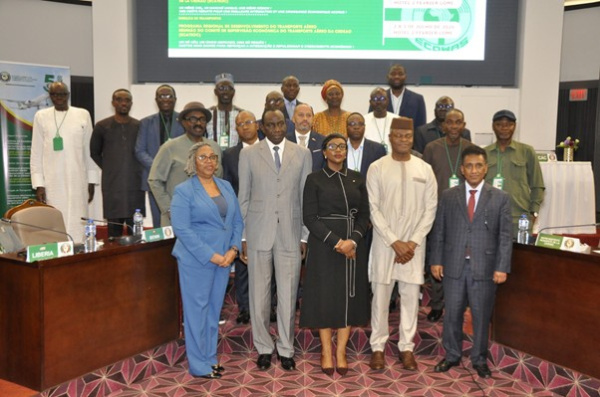
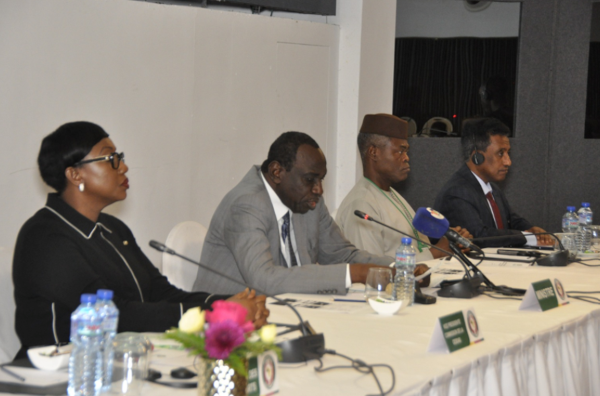
(Togo First) - West African aviation regulators, airport operators, airlines, and air navigation service providers gathered in Lomé on July 2 for the first meeting of the ECOWAS Air Transport Economic Oversight Committee (ECATEOC).
The two-day meeting focused on efforts to make air travel more affordable across the region. It was opened by Togo's Minister of Transport, Rural Access, and Rural Roads, Komlan Kadjé.
"West African air transport stands at a crossroads today. It can remain an expensive service accessible to only a few, or become the engine of regional integration, trade, and mobility that our people expect," the minister said at the opening ceremony.
Addressing one of the world's most expensive air travel markets
The meeting follows a decision adopted by ECOWAS heads of state during their 66th ordinary summit in Abuja in December 2024. Under the agreement, member states committed to lowering the cost of air travel by eliminating selected aviation taxes and reducing passenger and security charges by at least 25%. The measures officially took effect on January 1, 2026.
The reforms were prompted by the high cost of flying within West Africa. According to ECOWAS, passengers in the region can face as many as 66 separate charges, while airlines pay more than 100 different fees to operate a flight.
Citing figures also presented during African Airlines Association (AFRAA) discussions, Minister Kadjé said taxes, fees, and charges on an international departure average $92 in West Africa, compared with $66 across Africa as a whole and roughly $32 in Europe and the Middle East. As a result, passengers in West Africa pay nearly three times as much in taxes and fees as travelers in Europe for comparable services.
Lower fees, lower fares
The ECOWAS agreement eliminates four levies considered unrelated to aviation sector development: ticket taxes, solidarity taxes, tourism taxes, and taxes on international travel.
It also requires member states to reduce passenger service charges and aviation security fees by at least 25%.
According to ECOWAS parliamentary experts, full implementation of the measures could reduce ticket prices by about 40% while increasing passenger demand by 20% to 30%.
ECOWAS Vice President Damtien Tchintchibidja said those projections underpin the reform's broader objective of making air transport more competitive, attracting low-cost carriers to the region, and significantly increasing passenger traffic.
Monitoring implementation
ECATEOC was established to ensure the reforms are fully implemented rather than remaining a policy commitment on paper. Chris Appiah, ECOWAS Director of Transport, said member states have made uneven progress, with some already implementing reforms while others have yet to begin.
The committee will establish country-specific implementation timelines, with progress reports due to ECOWAS heads of state at the end of July and again in December. The regional bloc has also created a monitoring mechanism to ensure reductions in airport charges translate into lower ticket prices for travelers rather than higher profit margins for airlines.
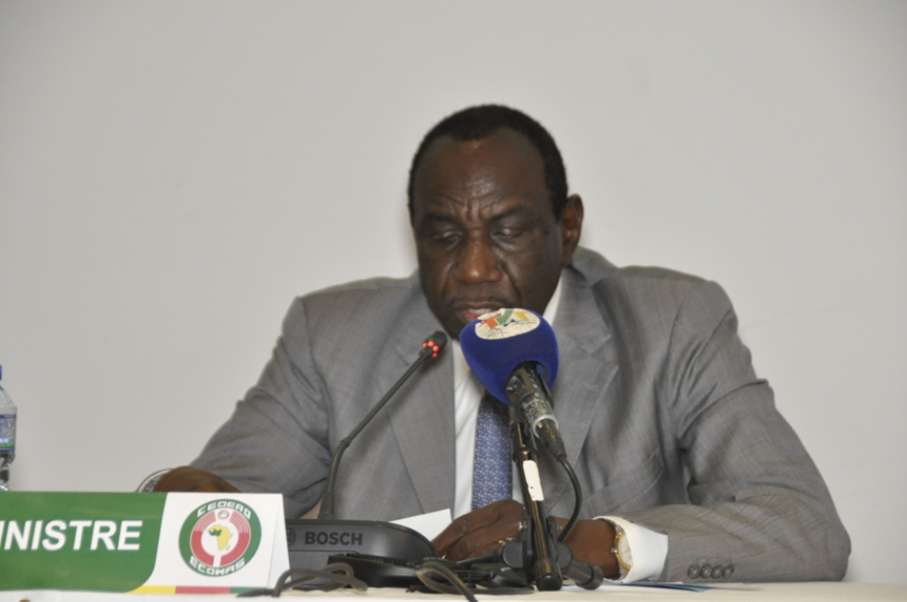
Minister Kadjé acknowledged that the reforms will reduce government revenue in the short term. "These decisions are not painless. Several of our member states, including Togo, collect some of these taxes and rely on them as a source of revenue," he said. "But experience teaches us a simple lesson: an overtaxed sector is a shrinking sector, and a shrinking sector ultimately generates less revenue." He called on development partners to support member states during the transition.
For its part, Togo reaffirmed its ambition to position Lomé as a regional aviation hub and pledged to fully implement the reforms. The country has championed African air transport liberalization since President of the Council Faure Gnassingbé was appointed by the African Union in 2018 as champion of the Single African Air Transport Market (SAATM).
Ayi Renaud Dossavi
REFORMS OVERVIEW
STARTING A BUSINESS (more info)
At the fifteenth position, worldwide, and first in Africa, under the Starting a Business index of the 2020 Doing Business ranking, Togo sustains its reformative dynamics with more reforms….
ENFORCING CONTRACTS (more info)
Compared to some years ago when it was one of the lowest rankers under the Doing Business’ Enforcing Contracts indicator, Togo, leveraging many efforts to improve its business climate, was able to jump significantly on the index in the recent years... .
CONTRACT EXECUTION (more info)
Creation of special chambers of commerce for small debts • Creation of chambers of commerce at the Court of Appeal • Civil and commercial cases now handled by distinct clerks • Establishment of commercial courts in Lomé and Kara • Lawyers and bailiffs now have access to the FORSETI COMMERCIAL platform • A maximum period of 100 days was fixed to settle a commercial dispute .
TRADING ACROSS BORDERS (more info)
In comparison to previous years,Togo has significantly improved its ranking under the“Trading across borders” indicator by adopting multiple reforms that focus mainly on the digitization and reduction in delays, for import and export procedures related to import and export.
In comparison to previous years, Togo has significantly improved its ranking on the “Trading across borders” index by adopting multiple reforms that focus mainly on the digitalization and reduction in delays, for import and export procedures related to import and export.
CONSTRUCTION PERMIT (more info)
After moving from the 133rd to 127th place under the 2020 Doing Business’ construction permit index, Togo intends to reiterate this feat in the coming edition of the global ranking. To this end, it has introduced this year multiple reforms.
GETTING ELECTRICITY (more info)
Over the past two years, Togo’s ranking under the Doing Business’ Getting electricity and water indicator has increased consistently. Owing this performance to multiple reforms aimed at making it easier for businesses to access power and water, Lomé plans to introduce even more reforms this year to keep up its improvements.
REGISTERING A PROPERTY (more info)
Out of all the 'Doing Business’ indicators, Property Registration is where Togo has improved the most since 2018. Indeed, after spending years in the lowest part of this ranking, the country now seeks to beat Rwanda which is the best performer on this index in Africa. To do so, Lomé has been introducing many reforms, with the latest batch implemented this year.
PUBLIC PROCUREMENT (more info)
From professionalization to digitization, through legislative regulations, Togo’s public procurement framework is constantly being modernized. Several reforms have been implemented to improve the sector much to the benefit of the private sector, which is the focus of the National Development Plan.
PAYING TAXES AND DUTIES (more info)
To improve its business environment, Togo introduced some important reforms related to the payment of tax and duties. From the replacement of some taxes to the cancellation of others through exemptions, the country has only one objective: offer the most attractive tax framework to investors and economic operators. To achieve this, the authorities relied on digitization.