Kako Nubukpo Advocates African Currency, Greater Fiscal Mobilization to Help Africa Move Beyond Aid
 Thursday, 11 December 2025 16:52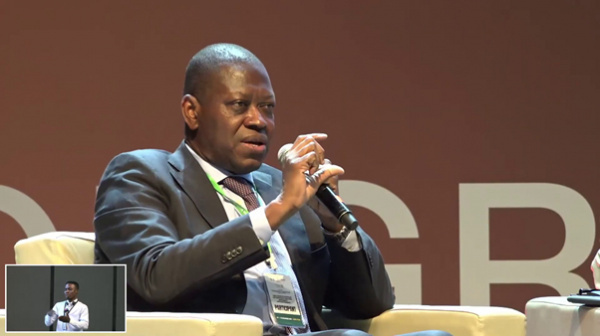
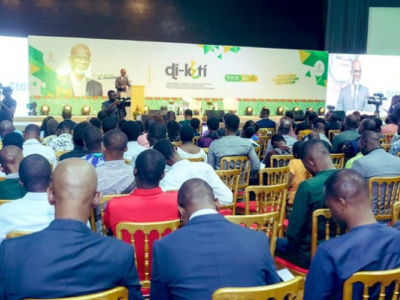
(Togo First) - Togolese economist Kako Nubukpo renewed his call for a common African currency on the second day of the 9th Pan-African Congress in Lomé, arguing that such a project is essential to speed up the continent’s economic integration. Speaking on a panel on Africa’s economic challenges, the former minister highlighted the shortcomings of the current monetary system and the reforms needed to support long-term growth.
He said the absence of a shared currency continues to hold back intra-African trade. “The first reason is to expand our trade flows. We need an African currency to achieve what we expect from the Continental Free Trade Area,” he said. He added that a monetary union would strengthen the competitiveness of African economies. “We need a currency that allows us to compete with the rest of the world.”
Nubukpo also linked monetary reform to the continent’s demographic outlook. “We need a currency capable of financing the entry of 600 million young people into Africa’s labor market over the next 40 years,” he said, stressing the urgency of mechanisms adapted to this structural shift.
While debates around the CFA franc have already prompted reforms at the Central Bank of West African States, particularly on foreign-exchange reserves, the launch of a regional currency, the Eco, still appears distant. The long-discussed project has stalled, hampered by structural and political obstacles.
For Nubukpo, mobilizing resources through a pan-African approach is another strategic lever. He advocated the creation of an African central bank with a mandate centered on employment and development financing. “Our states need resources. We need a central bank that finances governments,” he said.
He further proposed pairing these reforms with a Pan-African Fund to support the budgets of the most vulnerable countries. “If we increase Africa’s tax-to-GDP ratio by two percentage points, we would no longer need external aid,” he said, calling for stronger domestic resource mobilization.
Such proposals could widen countries’ fiscal space, which is currently constrained by low public revenues that average 16 percent of GDP in sub-Saharan Africa according to the World Bank. However, they would face significant hurdles. The instruments could strengthen intra-African solidarity, but would require robust governance and agreement among more than 50 states with diverse tax systems. Convergence efforts remain limited despite initiatives by blocs such as UEMOA and ECOWAS.
Ayi Renaud Dossavi