DokitaEyes: A Decade of Digitalizing the Patient Journey in Togo
 Saturday, 06 December 2025 17:54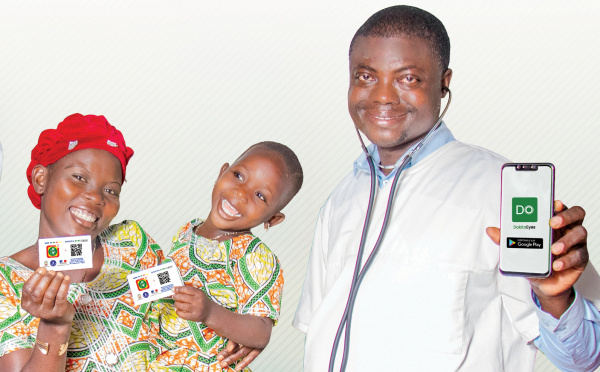
(Togo First) - Launched in 2015, the DokitaEyes application now has 45,000 users and more than 230 partner health facilities, co-founder Koffivi Agbetiafa said, marking ten years of growth in a sector where user adoption remains the biggest challenge.
From Hospital Runners to Digital Platform
The origins of DokitaEyes date back to 2014, with the creation of the “Coursier d'hôpital” association. The founders first noticed that elderly people, pregnant women and people with disabilities struggled to move through Togo’s health system. “You see an elderly person standing in line at every step, buying a consultation voucher, then waiting again for hours in front of the doctor’s office,” Agbetiafa said.
The association initially deployed “medical facilitators” in health centers to assist these vulnerable patients and handle all administrative steps. The system began in four public facilities before expanding to about 20 centers, including private and faith-based clinics.
Digitizing the service helped meet rising demand, including from the diaspora, who wanted to monitor the health of relatives in Togo. “We realized we needed an application that allowed patients to manage their own follow-up,” the co-founder said. Patients could now report side effects directly to the prescriber without waiting for a facilitator’s visit.
A Digital Health Record Against Data Fragmentation
DokitaEyes addresses a systemic weakness in Togo’s health system: the lack of continuity in medical follow-up. “A patient buys a paper notebook when they arrive at the hospital. They don’t return with the same notebook at the next visit. At each consultation, they buy a new one,” Agbetiafa said.
“You cannot ensure proper care when the health professional works blindly because there is no medical history,” he added.
The platform stores each patient’s medical record, which is accessible through a QR code. Patients show their card at consultations, and only the authorized prescriber can access the file. “Patients cannot see other patients’ information,” Agbetiafa noted, highlighting data-protection safeguards.
The application now includes several features: booking appointments with medical facilitators, sending prescriptions to partner pharmacies and laboratories, paying online via Mobile Money, and receiving test results directly in the app.
A health-insurance module handles patient co-payments with the Universal Health Insurance (AMU) system and private insurers. The startup hopes to position itself for nationwide AMU deployment.
A new feature also lets users search for medicines and tests available in nearby partner facilities within a 5-kilometer radius and pay directly through the platform.
Promising Results in Rural Areas
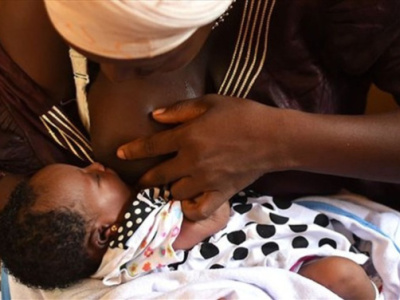
Between 2018 and 2022, DokitaEyes rolled out a community health-monitoring program for pregnant women and children under five in remote areas.
Community health workers used the app to create patient files during home visits. They tracked vaccination status, prenatal visits, pregnancy danger signs, and symptoms in children.
“We supported nearly 15,000 pregnant women and did not record a single death,” Agbetiafa said. Togo’s maternal mortality rate is around 401 deaths per 100,000 live births. The program also covered nearly 70,000 children under age five. “Digitization saves lives,” the co-founder said.
The program slowed after donor funding ended, and activity now continues with reduced field engagement.
An Application Accessible Online and Offline
“DokitaEyes is accessible both online and offline,” Agbetiafa said. Urban users rely on the online version, while rural users, who often face poor network coverage, use the offline mode.
Some platform services are free, such as requesting delivery of test results from partner laboratories, with patients paying only the delivery fee. Other services are paid: booking a facilitator is charged to deter frivolous requests.
Creating a digital patient file costs 2,500 CFA francs for a virtual card and 4,500 CFA francs for a physical QR code card.
Team size varies by project: around ten people during normal operations, rising to as many as 50 full-time staff during large deployments, not including volunteers working in the field. The co-founder declined to disclose revenue figures.
Adoption, the Main Obstacle
DokitaEyes was a finalist for the RFI Challenge App Africa prize in 2016 and has won several international awards. The Ministry of Health also supported its development.
“The key challenge is scaling up adoption,” Agbetiafa said, citing issues of training, equipment and regulation.
Data protection now absorbs much of the technical team’s resources. “We no longer focus on new features. Most of our work is monitoring, protecting and securing the system,” the co-founder explained.
Regional Expansion Planned
DokitaEyes is already active in Burkina Faso and Ivory Coast and is entering Benin. Expansion to Ghana has been paused due to the lack of a sufficiently structured local team. The company aims to reach 4 million users within two years, driven by subregional expansion.
Ayi Renaud Dossavi