
Togo First
Togo, Burkina Faso, Benin and Niger coordinate efforts to tackle terrorism threat
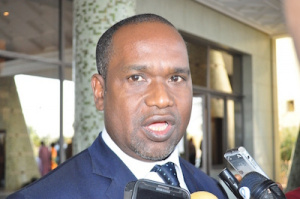
At the beginning of this week, the respective ministers of foreign affairs of Togo, Burkina Faso, Benin and Niger met in Ouagadougou to discuss security issues at the borders of these countries which are connected.
On this occasion, it was decided that threats to the security of these nations would be coordinated from now on. The meeting mainly aimed to develop a common strategy to fight terrorist threats around borders.
A move that is quite understandable considering that since 2015, insecurity and repeated terrorist attacks in the national parks of W, in Niger, and Pendjari, in Benin, greatly impaired economic activities in other border areas of these countries.
From 2015 to October 2018, the attacks which killed 243 citizens and soldiers, represent a serious threat to efforts for integration and free movement of goods and people, said Alpha Barry, Burkina’s minister of foreign affairs. According to him, “a global and holistic approach paired with preventive and concerted measures” are required to properly fight terrorism.
Recommendations were issued at the end of the meeting and a declaration was adopted to better coordinate actions taken by each of the countries concerned.
Octave A. Bruce
Togo’s Extended Credit Facility under review from October 18 to 30
Since October 18, 2018, a team of the International Monetary Fund (IMF) has been in Lomé for the review under the 3 years Extended Credit Facility programme. This facility approved in May 2017 for Togo is estimated at $241.5 million.
The present mission that should be concluded on October 30 is the third under the Credit Facility.
This mission should concretely help the Washington based institution to asses the country’s progress in the implementation of public finances sanitation reforms.
Last June, satisfied with the economic and financial reforms implemented in the framework of the three years programme, IMF announced the third tranche of $35.5 million. That tranche included, the total amount disbursed to Togo in the framework of that extended facility program amounted to $106.5 million (the first tranche of $34.5 million was immediately disbursed after the programme was approved and a second tranche of $36 million disbursed in December 2017). If this review is successful, Togo can expect a fourth tranche.
Fiacre E. Kakpo
African Culture Fund launches tender to back culture projects
The African Culture Fund has launched its first tender for cultural projects and the winning bidder will get a $10,000 funding.
The Pan-African fund supports art education as well as cultural and creative industries in Africa, towards making these sectors more professional.
It exists to improve careers of promoters, artists, culture professionals. It also backs socioeconomic and cultural organisations, in addition to producers and providers of cultural goods and services.
For its first tender, the Fund will reward only the best projects falling under the sectors of visual arts, creation, production or broadcasting. Candidates working on traditional visual arts media, photography, video art, digital art or decorative art are eligible to submit their bids.
Projects selected must require a maximum of $10,000 and be able to be carried out over a maximum period of 18 months. Interested applicants have until next December 5 to submit their bids on the fund’s official website.
Séna Akoda
Togolese Edem Tengue and Paul-Harry Aithnard listed under 2018 Choiseul 100 Africa

Kokou Edem Tengue and Paul-Harry Aithnard are the two Togolese listed on the 2018 Choiseul 100 Africa released October 17.
Co-founder of Emergence Capital, a firm that gets businesses listed on WAEMU’s regional stock market, Tengue, 38-year old, currently heads Maersk’s subsidiary in Togo. He is a graduate from the University of Stellenbosch in South Africa, Sciences-Po Paris in France and the Imperial College Business School of London.
The second, Paul-Harry Aithnard, Director of Ecobank Group WAEMU and chief of Ecobank Côte d’Ivoire, was placed under the “Alumni” category of the rankings’ fifth successive edition. This category regroups African economic leaders who have been ranked once or more under the Choiseul 100 Africa rankings, and are more than 40 years old.
The rankings are released yearly by the Choiseul Institute, an independent think tank established in 1997 to assess strategic global issues and global economic governance.
The Choiseul 100 Africa is an original annual study carried out by the Institut Choiseul. It identifies and ranks the 200 young African leaders of 40 years old and below, who will play a major role in the development of Africa in the near future. Selection criteria include image and reputation, experience and skills, power and position, influence and networks, potential and leadership.
This year, the rankings named Algerian Sahbi Othmani as the first of the laureates picked from 41 African countries, out of 54. There were 67 women among the listed laureates.
Octave A. Bruce
Togo’s government about to start maintenance of 267km of asphalt roads
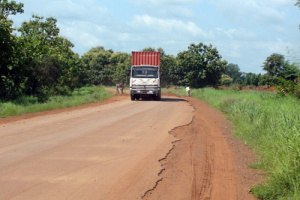
In Togo, the ministry of infrastructures and transport will rehabilitate 267.5 km of asphalt roads. The works which fall under the ministry’s 2019-2021 agenda will be carried out in three of the country’s economic regions.
These are the Maritime, Plateaux and Savanes regions where 27km, 128km and 112.5km of roads will be rehabilitated respectively.
Works projected include mainly “major, localized and timely repairs”.
The project was divided into five distinct lots. The first covers the Tandjouaré-Cinkassé national road (RN 1); the second, the RN2/3 Aflao-Rond-point Port-Avepozo and Aneho-Sanvee Condji axes; the third, RN 5 which is the Kpalimé-Adagali-Kpélé Govié axis; the fourth, RN 15 or Témédja-Badou-Ghana Border and the fifth and last covers RN 28 which is the Dapaong-Ponio- Burkina Faso Border axis.
Related costs will be paid by SAFER which is the Autonomous Corporation for Road Maintenance Financing. However, firms currently holding public procurements that have not completed 70% of their contracts and are behind execution schedule are eligible for tender for the project.
Séna Akoda
More than half of the world’s population live in poverty –World Bank
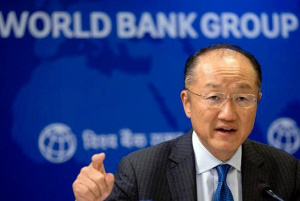
In 2015, the number of people living in extreme poverty fell to 10%. This was disclosed by World Bank in its bi-annual report entitled “Poverty and Shared Prosperity 2018: Piecing Together the Poverty Puzzle”, released on October 17, 2018, on the sidelines of International Day for the Eradication of Poverty.
While the number of people in extreme poverty indeed reduced, it remains that almost half the world’s population still struggle to satisfy their basic needs, the Bretton Woods institution indicates, providing concerning statistics.
More than 1.9 billion people or 26.2% of the global population, most of whom are in Sub-Saharan Africa, lived with less than $3.2 per day in 2015. In this region where most of the people living in extreme poverty reside, 40% of the poorest populations in one third of its countries recorded a revenue slump in 2015.
Globally, the World Bank notes that nearly half of the world’s population, 46% to be exact, lived on less than $5.5 per day that year.
Beyond monetary challenges, “poor people lacked mostly access to education and basic infrastructures”, World Bank says. Meanwhile its chief, Jim Yong Kim reaffirmed the institution’s goals of “ending extreme poverty by 2030 and boosting shared prosperity”.
As for Togo, the country’s national institute of statistics, economic and demographic studies (INSEED), indicates that its poverty rate slumped by 1.6%, between 2015 and 2017, to stand at about 53.5%.
Togo to implement $19.4M power hibridization project for its multipurpose platforms
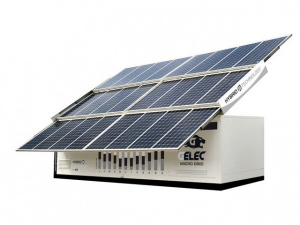
Togo plans a project to hybridize diesel engines of the multipurpose platforms deployed under the Grassroots Support Development Program. The project which will cost about $19.4 million (CFA9.7 billion) will enable the engines to use both diesel and solar as sources of energy.
The hybridization project will be steered by the ministry for grassroots development over 36 months, according to an official statement.
It aims to boost access to power and modern power services by developing solar-based power technologies, in 50 rural communities.
The communities which already use multipurpose platforms set by PRADEB, were selected based on criteria such as socioeconomic profitability, financial and technical management of the platforms.
To accelerate the hybridization project, BOAD signed with Togo’s government a grant valued at $2.6 million (CFA1.3 billion), secured from the World Environment Fund (WEF).
The bank also disbursed a loan of CFA6 billion, while CFA472 million was provided by the State as cash and CFA1.912 billion in kind.
Séna Akoda
Togo: ART&P to automatize control of e-communication tariffs

Togo’s Post and Telecommunications Regulatory Authority (ART&P) wants to automatize control of e-communication tariffs.
Once effective, the reform will enable ART&P monitor, with a modern management tool, tariffs of services provided by TogoCom, Moov and other telecom and mobile operators operating in the county.
According to a document obtained by Togo First, the regulator has launched a tender to secure an automatization tool. Closing date for submission of bids for the tender was October 9, 2018. However, submissions were fewer than the required number.
As a result, ART&P extended the date of closure to October 31, 2018.
Indeed, article 54 of Public Procurements Code states that when “at least three candidates do not submit bids when closure date for bid submission is reached, the regulating authority can set a new deadline of more than 15 official days; a deadline it must inform the public of”.
Séna Akoda
NASA Space Apps Challenge 2018 to be held on October 20-21 in Lomé
From October 20 to 21, 2018, Lome, will host the 2018 edition of the NASA Space Apps Challenge.
The event, a sort of international hackathon created in 2012 by the US space agency, will be simultaneously organized in many cities around the world.
For 48 hours, the competition organized for the fifth time in Togo in partnership with l’Africaine d’Architecture, WoeLab, and Nativ Stimulation Numérique, will gather engineers, programmers, hackers, designers, entrepreneurs, and students.
They will be tasked to create innovative and open solutions that could be applied on earth or in space.
Gathered in multidisciplinary teams, the participants will have to take up this year’s challenge which is "help others discover the Earth, create a variety of useful tools and tech, dive into NASA data to prepare the world for surprises, improve life on Earth, understand our planet’s cryosphere, or get creative when it comes to space science and exploration"
The most innovative project will be presented to NASA.
Octave A. Bruce
Microfinance : Loans and Deposits on the rise across WAEMU, despite portfolio quality degrading
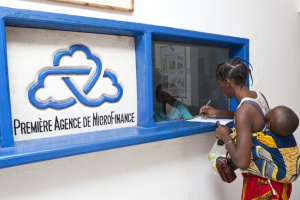
At end-June 2018, access to microfinance services across the West African Monetary Union (WAEMU) rose by 10.7% on a year-on-year basis.
The number of people that benefited from the services over the period was 15,017,666, against 13,565,535 a year earlier. Also, the services were provided by 593 decentralized financial services (DFS).
As a result of the improvement, loans and deposits increased also. However, quality of credit portfolio degraded, falling far below required standards.
In details, loans granted by DFS in the Union expanded by 11.5%, amounting to CFA1,274.1 billion. A growth driven by Côte d’Ivoire (+18.9%), Burkina (+16%), Benin (+14.7%), Mali (+11.1%), Togo (+10.5%), Senegal (+5.2%) and Niger (+3.6%). Guinea Bissau however recorded a drop of 3.5%.
As for deposits collected by the decentralized units, they amounted to CFA1,307 billion, against 1,216.1 billion the previous year, thus 7.5% more. While the rise is to be attributed to Côte d'Ivoire (+13.5%), Togo (+9%), Burkina (+7.9%), Mali (+7,9%) and Senegal (+6.4%), it could have been greater if not for Guinea Bissau, Benin and Niger which recorded lower deposits (-30.4%, -3.7% and -2.6% respectively).
Regarding the quality of loans portfolio, main asset and revenue provider of microfinance institutions, it slumped by 2.6%. Indeed, while it stood at 6.3% at end-June 2017, gross portfolio degradation rate rose to 8.9% this year. This is against a standard of 3%, often admitted in the sector.
At the end of June 2018, eight microfinance institutions were placed under provisional administration ; two in Togo, two in Benin, one in Côte d’Ivoire, Mali, Niger and Senegal respectively.
Fiacre E. Kakpo