
Togo First
Togo takes an enormous leap in the Doing Business index!
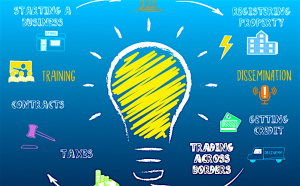
Published today October 31, 2018, the yearly reference report on business environment places Togo in the 137th place in the world.
The country thus gains 19 places compared to the 2018 edition of this document that reviews the ease of doing business in 190 countries.
Togo now outruns good performers like Senegal and Tanzania. It also largely outcompeted Benin, Nigeria, and Burkina Faso.
This positive performance is the result of numerous reforms initiated since the start of this year under the coordination of the cellule Climat des affaires (CCA), established in January 2018.
In Africa, Côte d’Ivoire, Rwanda, and Djibouti also recorded substantial progress.
The Doing Business index is an essential reference for investors, backers, international institutions and rating agencies for their decision making.
Togo’s progress in this ranking bodes well for investors’ commitments in the public and private sectors in the country.
Togo: 34th edition of the end of year two-week fair to be held on December 15-31, 2018
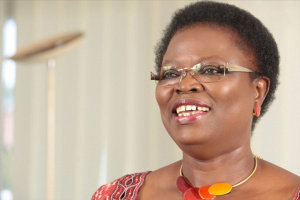
This year, the 34th edition of the two-week commercial which has become one of the reference end of year events in the sub-region will be held.
Yesterday October 30, 2018, Bernadette Legzim-Balouki, the trade minister, launched this edition in Lomé in the presence of Germain Méba, president of Togo’s Chamber of Commerce and Industry and economic operators.
Organized on three sites namely, Agbadahonou, Adéticopé, and Baguida, this fair will help micro, small and medium companies boost their sales and establish business contacts. It will also provide economic operators with opportunities to discuss and exchange.
“Our country has important opportunities that we should value. We can thus fulfill our population’s expectation which is to make Togo an important, open and competitive trade hub for the reputation of our traders and investors”, the trade minister said.
The president of the chamber of commerce and industry, promoter of this event, invites economic operators to take this opportunity to promote their activities.
Séna Akoda
Togo: with World Bank’s help, government starts building carrier hotel in Lomé

Togo’s government has started building and equipping a data center and a TIER III-level Carrier Hotel in Lomé. This was disclosed by the ministry of posts and digital economy in a document obtained by Togo First.
These projects fall under the West African Regional Communications Infrastructure Program (WARCIP-Togo). The program which received a $30 million financing from the World Bank aims to define a global strategy that will help assess operational conditions to deploy broadband across the country.
The facilities under construction will host private servers. Overall, works initiated include setting a fire alarm system, developing and operating a web platform, operating a data center and international bandwidth, as well as works related to telecom, IT and maintenance.
At this stage, the government is looking for a firm specialized in operation and maintenance of data centers, one that will efficiently manage facilities projected.
Séna Akoda
Faure Gnassingbé to chair a business roundtable at G20’s investment forum in Berlin
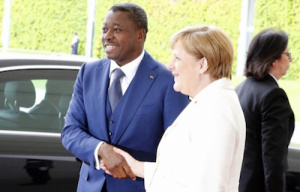
Togo’s President has been invited by Germany’s chancellor, Angela Merkel, to take part to G20’s investment forum started today and ending November 1, 2018.
According to the Presidency’s communication cell, various heads of State that partner in the Compact With Africa program, will meet with representatives of international firms and financial institutions, in the presence of German authorities.
As for President Gnassingbé, he is accompanied by a strong delegation of his government and Togo’s private sector. The meeting will provide Lomé an opportunity to raise funds to finance projects falling under its 2018-2022 national development plan. The presidential delegation includes various ministers, such as the minister of foreign affairs, the minister of economy and finance, the minister of posts and digital economy, the minister of infrastructures and transports and the minister of mining and energy.
During the event, President Gnassingbé will chair the Africa-Verein/Togo roundtable where will gather many German companies and Togolese business owners.
Séna Akoda
Angolan group DGM, qualified for final stage of tender for e-ID Togo project

Angolan group DGM is qualified for the final stage of an international tender launched by Lomé for the development of a national biometric identification system. The latter is one of the major projects of Togo’s new national development plan (2018-2022).
DGM Sistemas takes part to the bidding with Mtdhouse and Unys. The first operates in the IT sector and develops infrastructures to modernize public institutions while the second is active in the biometry sector.
Beside these firms, six others are running against DGM to win the tender.
The Angolan conglomerate’s decision to participate to the tender aligns with its international strategy to expand its operations, knowingly in the sectors of civil identification, social security and health, to other African nations, with a focus on members of the community of Portuguese language countries (CPLP) and French-speaking African countries.
“Our conglomerate is renowned for its excellence in the projects we developed over the last years. We are now looking to export this experience, our knowledge and most advanced technologies to help government institutions fulfill their obligations toward the people,” said Mauro Franco, associate at DGM and head of its expansion strategy.
Baptized e-ID Togo, Togo’s biometric ID programme will require an investment of CFA20 billion. It aims to provide each Togolese citizen and resident with a unique biometric ID number.
Fiacre E. Kakpo
Orabank lends CFA330 million to Togolese farmers in support to MIFA
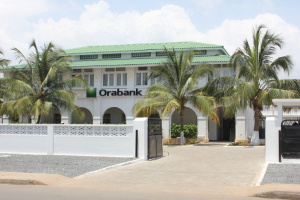
In Togo, under the mechanism fostering agricultural funding (MIFA), Orabank-Togo has issued a loan of more than CFA330 million for 392 farmers who belong to three cooperatives.
The cooperatives are COOP-CA UCAPRIKO, COOP-CA UCARIM and COOP-CA UNION WLI-BOLOU which respectively received CFA125,249,000, CFA120,383,000 FCFA and CFA88,665,000 FCFA to fund their operations.
Interest rate on the loan is 8%, according to the related note released on MIFA’s Facebook page.
MIFA aims to provide in ten years, up to ten times seed money and bring agricultural loans’ share in banks’ loans from 0.3% to 5%.
The scheme should positively impact a million farmers by 2021, through the professionalization of value chains, boosting financial inclusion and creating cooperatives.
Séna Akoda
Togo raised CFA25bn out of CFA50bn for its latest fungible treasury bonds issuance on regional market
CFA25.077 billion. That is the amount raised by Togo’s treasury through its latest fungible bonds issuance on the UMOA-Titres market last Friday.
This sum is about half (54.1%) the amount targeted by the treasury. In detail, total amount of bids placed for the 3-year bond issuance was CFA23.259 billion, of which CFA21.03 billion was retained. As for the 5-year bonds, only about CFA4 billion were raised for the operation.
The issuance falls under Togo’s public security issuance programme, in line with the country’s mid and long term debt management strategy.
Let it be recalled that monies collected through the operation should help the country fund its budget.
Séna Akoda
France's leading power firm EDF secures 50% of BBOXX’s capital in Togo
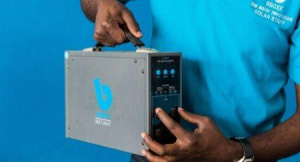
Electricité de France (EDF) has inked an agreement to buy 50% of BBOXX’s capital in Togo. The related ceremony was chaired by Togo’s Prime Minister, Komi Selom Klassou.
The French firm’s decision to join BBOXX’s shareholding should help speed up the CI-ZO programme.
“BBOXX’s solar kits include solar panels with integrated batteries. They are easy to set up and can be paid via mobile. These kits are used for lighting and also to power various low consumption home appliances such as TV, radio, fan or mobile phone,” the firm explains.
Identified as one the reference initiative of G20’s Compact With Africa programme, CI-ZO is a project designed by Togo to achieve universal access to power by 2030.
Togo: Government adopts bill to establish commercial courts to better handle related conflicts

Last October 2015, the ministers’ council adopted a bill to establish commercial courts in Togo. It also set procedures to follow when reaching out to these courts.
The decision aligns with the government’s desire to improve the country’s business climate. Lomé had already established commercial chambers to ensure contracts are duly carried out. However, the ministers’ council says, the chambers, while ensuring good practices, fail to fill the void left regarding legal basis for court proceedings.
Additionally, article 84 of Togo’s constitution states that rules defining legal and administrative proceedings are set by the law.
Hence, the newly adopted bill which is based on OHADA’s universal principles for equity tackles this shortcoming. Now, the next step consists in the approval of the bill by the parliament.
Séna Akoda
Lomé’s port becomes West Africa’s leading container port, overtaking Lagos’
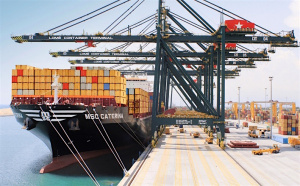
Lomé now hosts West Africa’s leading container port, snatching the position from Lagos, Nigeria. This was revealed by Netherlands firm Dynamar which provides intelligence and consultancy on maritime sector.
Spurred by many modernisaion reforms, the Port of Lomé (PAL) has rapidly expanded indeed. From 311,500 Twenty-foot equivalent (TEU) containers in 2013, the number of containers transiting by the port has almost tripled reaching 1,193,800 TEU in 2017, while at other ports in the region, it barely rose.
According to Dynamar, the surge is due to the commissioning of the Lomé Container terminal (LCT) which handles containers shipped through the port of Lomé. LCT actually handles nearly 890,000 TEU yearly, that is about 75% of containers that transit via the PAL, Dynamar indicates.
Beyond the LCT’s commissioning, Lomé profited from the congestion hampering activities at the port of Lagos to overtake it. Dynamar’s report adds that this, and low quality service, caused Lagos to lose its position of leading port in the region. Indeed, the flaws cost the port of Lagos close to 30% of its container traffic over five years, bringing it to 1,050,000 TEU at the end of 2017.
Hence, Tema’s port in Ghana, which used to be second after Lagos’ for years, is now third in the region with 956,400 TEU handled in 2017. The Ghanaian port is ahead of Abidjan (663,600 TEU), Dakar (570,500 TEU) and Cotonou (333,000 TEU). Since 2013, all these ports have stagnated, data shows.
In 2017, 285 container ships sailed through the seven intercontinental routes towards West Africa. Sent by 24 operators, each ship had an average capacity of 3,300 TEU. The biggest of these ships, a 13,600 TEU-ship is used by the Mediterranean Shipping Company (MSC) under a hub and spoke service that connects Lomé to various ports in the region.
Spurred by the increase in oil prices, the number of containers in West Africa should reach 4.3 million TEU by 2021, with containers cargo expected to record a 5% average annual growth.
Fiacre E. Kakpo