

Togo First
Togo validated 20 EITI requirements out of 27- Komi Selom Klassou

Eight years after it joined the Extractive Industries Transparency Initiative (EITI), Togo made significant progress thanks to the efforts deployed. "Out of the 27 requirements of the EITI standards, Togo validated 20", Komi Selom Klassou, Togo’s prime minister, said on October 15, 2018, during the seventh ordinary meeting of national EITI supervision committee in Lome.
The results are explained by the modernization of Togo’s mining code that the country plans to harmonize with WAEMU community framework. They are also due to the instauration of the law related to mining companies’ contribution to local and regional development and the reforms initiated for operationalization of institutions in charge of the implementation of EITI.
There is also the creation of Togo revenues bureau (Office Togolais des Recettes-OTR), establishment of the HAPLUCIA, in charge of the fight against corruption and related crimes, and the elaboration of the 2019 finance law focused on a management that brings results.
Despite these good performances, Togo which was declared compliant with EITI standards in Sydney in 2013 is not planning to stop there. “A second validation is expected in November 2019 to assess the performances realized in the seven remaining others [requirements]”, Komi Selom Klassou added.
In 2017, extractive industries represented 18.5% of total exports and contributed about 3.5% to GDP and 2.5% to revenues. For the current year, these industries' contribution to the country's revenues has already been estimated at 3.5% by the end of September.
Octave A. Bruce
Togo plans institutional and organizational audit of its Centre for Construction and Housing
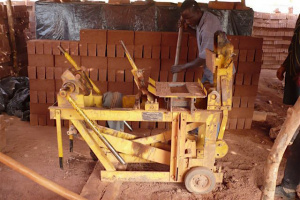
The government plans to soon conduct an institutional and organizational audit of the Centre for Construction and Housing (CCL), Togo First learned.
Created via a decree falling under a framework for technical support between the UN Development Program (UNDP) and Togo, CCL exists to produce low-cost building materials using local resources, as well as construction processes and methods that help improve existing traditional methods.
However, to foster the implementation of the 2018-2022 national development plan and construction of low-cost housing, the government thought it necessary to reorient the structure’s missions and attributes.
Thus, through the coming audit, Togo’s ministry of housing, backed by UNDP, will achieve this goal and identify what CCL needs in terms of human, material and financial resources to function properly.
A notice was issued by UNDP to hire a firm that will carry out the audit.
Séna Akoda
Togo paves the way to secure funds from Green Climate Fund
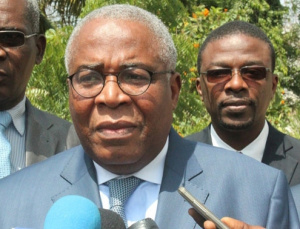
Togo now has an institutional framework enabling it to secure financing from the Green Climate Fund (GCF). A quite significant milestone considering that in May 2017, the country was not yet ready to access the financing, according to André Johnson, Togo’s minister of environment and forest resources.
During a council of ministers held on 12 October 2018, the government assessed and adopted the decree related to the creation, organization and functioning of the above-mentioned institutional framework.
The Green Climate Fund is a fund established in 2010 within the framework of the UNFCCC which helps finance projects and programs initiated by developing countries to limit or reduce greenhouse gas (GHG) emissions, and in their adaptation to climate change.
This fund which is very important for implementing the Paris Agreement on Climate Change, helps provide financing in various forms, including loans, subsidies, equity deals and guarantees to developing countries.
Let it be noted that the current decree was adopted a few days ahead of the 21st board meeting of GCF which will begin October 11 and close October 20. On this occasion, the fund will examine 20 financing proposals, worth $1.15 billion.
Fiacre E. Kakpo
Government issues draft bill to tackle cybercrime and improve cybersecurity in Togo

Last Friday, Togo’s government, during a ministers’ council, issued a bill to improve cybersecurity.
Through the bill, Lomé wishes to put in place an appropriate legal and institutional framework to tackle cybercrime, a global issue.
Once adopted by the parliament, the bill would “ensure that cybercrime is effectively and efficiently dealt with across Togo”, statement from the ministers’ council reveals.
The newly reached milestone translates a will to adapt Togo’s penal system, through the restructuring of legal procedures in the digital industry as well as the modernization of traditional penal rules.
In this framework, the bill plans for the creation of a national cybersecurity agency and a Cybersecurity Support Fund.
In the same vein, the government announced the upcoming creation of a cybercrime national agency and the establishment of a computer Emergency Response Team.
Séna Akoda
Togo gets CFA21.3bn from West African Development Bank (BOAD)
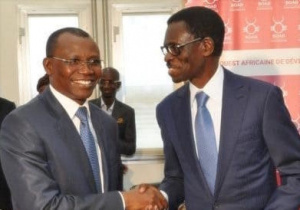
Sani Yaya, Togo’s minister of economy and finances, and Christian Adovèlandé, President of BOAD, signed on October 12, 2018, three funding agreements worth a total value of CFA21.3 billion.
The first loan, approved in June 2018, amounts to CFA10 billion. It is to be injected in the Togo Agrofood Processing Project (PTA-Togo). The latter will help operationalize Togo’s new agricultural policy, focused on developing agropoles, especially the one in Kara.
The second loan, approved in September, has the same value and will be used to supply drinking water to 89 semi-urban centres across Togo.
As for the third financing, CFA1.3 billion, it will be used to finance the project to hybridize diesel engines of multipurpose platforms with solar energy. This project consists in setting PV solar equipment on the multipurpose platforms installed by the Grassroot Support Development Program (PRADEB). The facility comes in the form of a grant provided by FEM and managed by BOAD. It should help “improve access to clean power and modern power services in fifty villages across Togo, by using and developing solar power technologies,” BOAD said.
All these schemes fall under the country’s 2018-2022 national development plan (PND), which according to BOAD represents a reference framework for mid and long term actions. “I would like to reaffirm BOAD’s desire to support the Togolese government throughout the implementation of its 2018-2022 national development plan, in order to significantly reduce poverty, foster a low carbon-induced development, and boost the country’s resilience against climate change effects”, declared Christian Adovèlandé.
Fiacre E. Kakpo
Togo : Compact with Africa to help set 100,000 off-grid solar home systems in the framework of the CIZO project
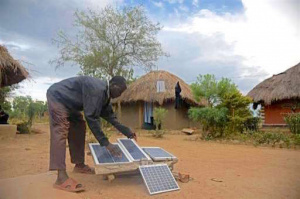
Launched Last December, the project CIZO has just received the support of the European Union via the African Development Bank. Estimated at €20 million to €25 million, the fund provided should be used for the installation of 100,000 off-grid solar home systems in the near future.
The fund will be provided via an innovative funding model to which local banks will take part to facilitate the materials’ acquisition for final users.
This financing falls within the framework of Compact with Africa, an initiative launched in March 2017 by G20 countries under the presidency of Germany.
The ultra selective initiative to which Togo was added last April is aimed at promoting private investments in the renewable energy sector in Africa.
By supporting the CIZO project, the European Union aims to provide energy to 2 million Togolese within 5 years. Recently, another operator, Soleva, joined the British BBOXX, which was the only operator on that project with the objective to set 300,000 solar kits.
CIZO is part of the national electrification strategy launched at the end of June 2018. It is a programme which aims to increase the electrification rate in Togo to 50% by 2020, 75% by 2025 and 100% by 2030. 550,000 households should be provided energy via solar systems by 2030.
Fiacre E. Kakpo
The 54 visa-free countries for Togolese in 2018

The latest Henley & Partners passport index, which provides a global ranking of countries according to the travel freedom for their citizens, rated Togo at 87th out of 106 countries with most powerful passports in the world.
Here are the 54 countries accessible without visas for Togolese in 2018.
- Bangladesh
- Cambodia (e-visa available)
- Indonesia
- Laos (e-visa available)
- Macao (e-visa available)
- Malaysia
- Maldives (e-visa available)
- Nepal (e-visa available)
- Philippines
- Singapore
- Sri Lanka (e-visa available)
- East Timor (e-visa available)
- Benin (e-visa available)
- Burkina Faso
- Cape Verde
- Chad
- Comoros (e-visa available)
- Congo (e-visa available)
- Côte d’Ivoire
- Djibouti (e-visa available)
- Gambia
- Ghana
- Guinea
- Guinea-Bissau
- Kenya (e-visa available)
- Liberia
- Madagascar (e-visa available)
- Mali
- Mauritania (e-visa available)
- Mauritius (e-visa available)
- Mozambique (e-visa available)
- Niger
- Nigeria
- Senegal
- Seychelles (e-visa available)
- Sierra Leone
- Somalia (e-visa available)
- Tanzania (e-visa available)
- Uganda (e-visa available)
- Cook Islands
- Micronesia
- Niue
- Palau (e-visa available)
- Samoa (e-visa available)
- Tuvalu (e-visa available)
- Dominica
- Haiti
- Sainte Lucie (e-visa available)
- St Vincent & Grenadines
- Bermuda
- Bolivia (e-visa available)
- Ecuador
- Nicaragua (e-visa available)
- Iran (e-visa available)
Togo seeks to attract Nigerien importers and carriers
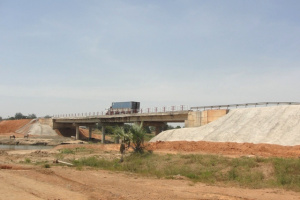
Following the collapse of the Malanville bridge in Benin, Niger’s leading port supplier (70% of traffic), which caused losses for Nigerien importers and carriers, the latter is considering diversifying their port partners. Togo thus seeks to become an alternative solution.
In this wake, a Togolese delegation composed of officials from the Ministry of Transport, Customs and Port of Lomé authorities presented opportunities offered by the Lomé-Ouaga-Niamey corridor to transport sector stakeholders and the Nigerien transport minister, during a visit to the country.
“The port authorities have managed to reduce the distance on this 1,200-km corridor to the equivalent of that of the Cotonou-Niamey corridor, via Ponio, on the border of Togo and Burkina Faso,” said an executive of Nigerien Ministry of Transport’s cabinet, according to comments relayed by Niamey et les 2 jours.
Nigerien authorities said thanks to the “fruitful collaboration” between Niger, Togo and Burkina Faso, abnormal practices along the corridor will no longer occur and road safety is now improved.
“Only one ISRT (Inter-Sates Road Transit) carnet is required for the entire section from Lomé to Niamey. Ponio's point is already operational. The Burkinabe authorities have given their agreement in principle to this regional traffic facilitation project on the corridor. A joint mission will soon go to Ouagadougou to sign a memorandum of customs interconnection between our three States,” stated the Nigerien Minister of Transport.
“This notches the end of hassles on this section which is now safe for carriers heading for our country,” he concluded.
Fiacre E. Kakpo
Togo : PASA receives an additional CFA1 billion support
In Togo, the agriculture support project (Projet d’Appui au Secteur de l’Agriculture-PASA) received an additional CFA1 billion support.
After a first phase during which CFA1.2 billion was raised for 59 small ruminants and poultry farmers, this program (Programme National d’Investissement Agricole et de Sécurité Alimentaire -PNIASA), is in its second phase and should be implemented in 2017-2020.
The funding received as grant from Togo’s government should help 304 breeders selected in the country, boost their activities that are in line with the 2018-2022 national development plan.
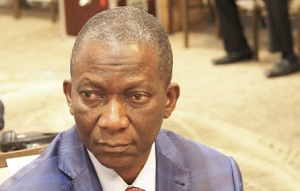
Among the 304 breeders selected, 48 have just received CFA3.5 million each. On the occasion, Ouro-Koura Agadazi (photo), the agriculture minister, declared: “Rural people have shown the world their ability to transform their environment by engaging in some activities for which the government is constantly providing multi-faceted support. This is, therefore, reassuring for young people coming from training centers, be them in or out of the country, who in fact are real entrepreneurs”.
Séna Akoda
Faiej celebrates the 3-year anniversary of "Jeudi J’ose" and awards 21 entrepreneurs
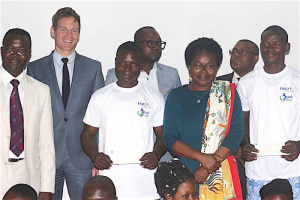
The monthly exchange and experience sharing platform "Jeudi J’ose", celebrated its third year anniversary on October 11, 2018, in Lomé during a special edition.
The celebration, held at Bluezone in Cacaveli in attendance of many officials, was coupled with an award ceremony of 21 entrepreneurs who are laureates of the competition and regular attendants of the previous editions.
Eight laureates of the youth entrepreneurship promotion programme (Programme de Promotion de l’Entreprenariat des Jeunes-PPEJ 2018) and one laureate of the International Forum of Youth and Green Jobs (IFYGJ), received a total of CFA17,974,004 to launch their activities.
Nine other laureates of the PPEJ 2017 received motivating envelopes totaling CFA3,678,000 to consolidate their operations.
In addition, 3 regular participants of the Jeudi J’ose meetings received a loyalty trophy and a check of CFA500,000 each.
In the presence of the media, Sahouda Gbadamassi-Mivedor, director of Faiej, (Fonds d’Appui aux Initiatives Economiques des Jeunes), praised the success of Jeudi J’ose, which "within 3 years mobilized more than 4,000 young people, in Togo, who were able to implement the advice and knowledge shared during the exchanges".
Commenting on the numerous awards won by young Togolese entrepreneurs recently, Victoire Tomégah-Dogbé, the minister of youth employment indicated that "this initiative and, more broadly, all the youth support reforms, initiated by the government are now yielding results".
Before the award ceremony, the entrepreneurs were advised on the theme, retained for this 36th edition of the exchange which is "5 réflexes d’un entrepreneur gagnant" ( Five behaviors of a winning entrepreneur) developed by the coach Malick Ayeva.
Octave A. Bruce