
Togo First
FAIEJ trains 65 young entrepreneurs in the creation of business plans

Sixty-five youths from the Support Fund for Youth-led Economic Initiatives (FAIEJ) and Lions Club International, are currently taking part in a workshop for young entrepreneurs in Lomé where they are trained in methods of creating and designing business plans.
The workshop on October 1 lasted two weeks. In effect, the trainees will build up their leadership skills to better identify and manage opportunities. “It is a place to train these young people,” said FAIEJ’s director general, Sahouda Gbadamassi-Mivedor.
The workshop focuses on three main pillars, knowingly: helping youths overcome challenges, build their skills and help them master markets.
FAIEJ is a mechanism put in place by the ministry of grassroots development, craftsmanship, youth and youth employment. It promotes entrepreneurship and youths’ economic insertion.
Togo : Bolloré to invest CFA127 million in the construction of Kovié market
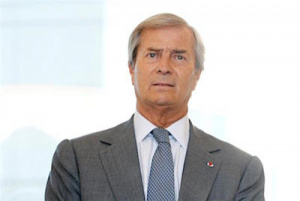
Bolloré will invest about CFA127.1 million in the construction of Kovié market (Zio prefecture).
Total cost for the infrastructure is about CFA240 million. The State will inject the remaining sum. Related works commenced last September 28 with the first stone laid by the minister of grassroots development, Victoire Tomégah-Dogbé.
Construction of this new market, which will replace the old one, falls under the Program to support community-oriented micro-projects (PSMICO), led by the national agency for grassroots development support (Anadeb).
It will have 15 sheds, 7 of which will have 28 places, four storage warehouses, 2 blocks of WCs, 1 administrative block, a slaughter house and a photovoltaic well, among others.
In Togo, it should be recalled, Bolloré has already constructed various sanitary, socio-educational and cultural facilities.
Octave A. Bruce
Government to build modern waste management centers in Atakpamé and Dapaong
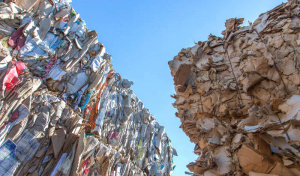
Togo’s government plans to build waste management centres in Dapaong and Atakpamé, capitals of the Savanes and Plateaux regions. This move aligns with the authorities will to coordinate decentralized management of domestic waste.
According to a document obtained by Togo First, the projected centres are intermediate recollection centres (IRC) and waste storage infrastructures, and others to treat faecal sludge and finally end treatment and valorization centres.
In detail Atakpamé and Dapaong will respectively get seven and five IRCs. The two towns will also be equipped with a watch post, a shared building, a car park, and a multipurpose metallic hangar. Technical landfills, composting spaces, effluent treatment plants are also projected.
All the infrastructures will be funded by the 11th European Development Fund, in line with phase 1 of Togo’s Water and Sanitation project (PEAT-1).
The project will be managed by the ministry of development planning which is seeking qualified firms to carry out projected works. A tender was launched to this end.
For a more efficient management of urban waste, a modern technical landfill centre was established in the Zanguera district, which is located on the outskirts of Lomé.
Séna Akoda
Togo: AfDB to provide two new financings for agropoles projects in 2019 and 2020
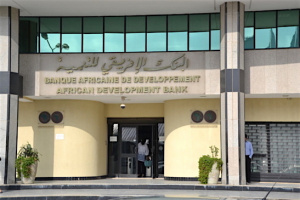
The African Development Bank (AfDB) will provide two new financings for Togo’s agropoles project. The facilities fall under the bank’s "Program-Based Operations" for the rest of the 2018-2020 period.
The Abidjan-based institution could approve by 2019 an additional financing of UA 4 million (about CFA3.2 billion based on exchange rate in September) to initial funding it disbursed for the agropoles project, Togo First learned.
In 2020, it should approve a more significant financing, amounting to UA 20 Million (about CFA16 billion).
Between 2018 and 2020, the Pan-African bank plans to commit nearly CFA80 billion to Togo for various projects.
Fiacre E. kakpo
2018-2022 PND: Sensitization campaign tour begins in Tsévié
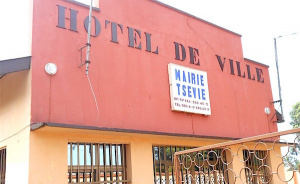
Tsévié (35 km from Lomé) is the first place where the sensitization campaign begins for the 2018-2022 National Development Plan (PND 2018-2022). This tour started on October 1.
Supported by the United Nations Development Program (UNDP) and the European Union’s delegation in Togo, this tour aims to promote the document which is to serve as the country’s economic and social strategy over the next five years.
After Tsévié, the next places that will be covered are Atakpamé, Sokodé, Kara, and Dapaong.
Adopted last August to replace the SCAPE, the PND revolves around three main axes. The first of these aims to make Togo a logistics hub, as well as a top-class business centre in the region. The second aims to establish poles for agro-processing, manufacturing, and extractive industries across the country. As for the last, it aims to improve social development and reinforce inclusion mechanisms.
In the long run, the plan aims to transform the Togolese economy, structurally, for a strong, sustainable and inclusive growth; one that creates jobs.
Octave A. Bruce
Togo: Total launches Oasys+, a new card for their products
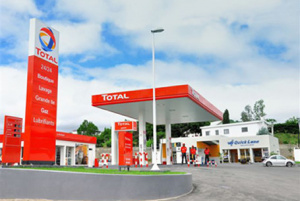
In Togo, Total launched a new card for purchasing their products called Oasys+. It adds to the already present Oasis classic and Fat’ka cards launched in 2003 and 2016 respectively by the French giant.
While the first two ranges are processed only in Lomé, at Total’s headquarters, the recent one aims to enable total’s customers have access to all of its products and services even after traditional working hours. This was disclosed by Cyrille Kokou Dos-Reis, Deputy Managing Director Total Togo.
“Oasys+ is an innovative product that is dedicated to the mass and it can be topped up at stations. It is issued and activated in less than ten minutes in all Total stations, but for the moment, it is only available in 25 stations spread across the country,” he added.
“This card also takes into consideration users’ security concerns. This card is protected with a code that only its owner or user knows,” the executive said in this regard, highlighting that “it must be renewed after five years of use”.
For a user to acquire an Oasys+ card, he or she should come to a Total station with an ID document, fill an adhesion form which costs CFA3,500 and load the card with an initial minimum amount of CFA5,000.
With this card, the customer can access the history of his or her purchases and check his or her balance.
Séna Akoda
Togo is the only Sub-Saharan country selected to take part in the European Union’s EdiCitiNet project

Togo, backed by the University of Lomé, is one of 17 nations selected across Europe, Asia and Africa to be part of the EdiCitiNet project. Togo’s capital is actually the only sub-Saharan African city to take part in the project which is funded by the European Union (EU).
EdiCitiNet aims to foster the use of urban landscapes to produce food products for transformation, consumption or commercialization. It will also accelerate a global movement of Edible Cities; that is cities where agriculture, nature, among others, are valorized.
Products, activities and services of these Edible Cities regrouped under the Edible City Solutions (ECS) banner will empower local communities to overcome social challenges they usually face while creating new green businesses and jobs.
In effect, a release on the European Commission’s website indicates, “five Front Runner Cities (FRC), supported by a highly interdisciplinary consortium of city authorities, SMEs, NGOs and academia, will demonstrate their unique experience with ‘own Living Labs’ and transfer their knowledge to seven dedicated Follower Cities (FC)”. Lomé falls under the second group (FC).
Séna Akoda
Togo’s economy regains vigor, after political crisis recorded last year
Progressively, and steadily, Togo’s economy is regaining balance after the political crisis that crippled the economy which started from the second half of 2017.
Throughout the first half of this year, macroeconomic activity was favorable, Togo First learns. While the whole economy had grown by 4.4%, reaching CFA2,800 billion, last year, economic growth stood at 4.8% in Q2 2018, up 0.3% compared to the previous quarter.
According to the third session of the National Credit Board (CNC) for the year, held last week, growth should continue, with a relatively low inflation.
Forecasts put economic growth at 4.9% for 2018. Despite the rise, it should be emphasized that the figure still remains below the average in the region, in countries such as Côte d’Ivoire, Senegal or Burkina Faso for example.
Fiacre E. Kakpo
Regional stock market: Togo raises CFA16 billion in first bond issuance of Q3 2018
On September 28th, Togo’s public treasury raised CFA16.925 billion on the regional stock market. The country however initially sought CFA20 billion through the fundraising.
The funds will be used to finance State expenditures.
This recent bond issuance is Togo's first during Q3, 2018 after an extremely profitable second quarter. Indeed during the second quarter, the government proceeded to three bond issuances, two of which were oversubscribed.
Fiacre E. Kakpo
Togo to set new legal framework to regulate privatization processes
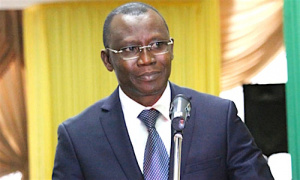
In Togo, privatization operations will be covered by a general legal framework. Initially handled under the law n°2014-014 of October 22, 2014 regarding the modernization of the State’s action, elaboration of modalities related to "competition between candidates running in a privatization project”.
Indeed, the new law introduces three new articles including the n°66 which suppresses the act previously in force empowering the regulatory authority to define modalities related to “competition between candidates running in a privatization project”.
As a result of this new law, the national assembly, in the coming days, weeks or even months, should adopt a new general legal framework to regulate private processes.
As for the regulatory authority, it will set related execution conditions and modalities. In this regard, the minister of Finance, Sani Yaya, declared: “The establishment of modalities related to competition between candidates running in a privatization by the national assembly will alleviate the privatization process, in addition to making it more transparent.”
Séna Akoda