
Togo First
Togo: Number of newly-registered businesses up 19%, year-to-year, over first three quarters of 2018
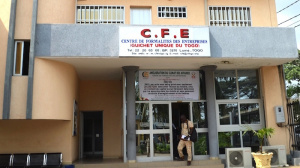
Between July and September 2018, 2,564 companies were created in Togo. This is 25.5% more than the 2,043 recorded last year over the same period.
The recent increase is a continuation of a trend started since the beginning of this year. Indeed, from January to March 2018, 2,934 new businesses were registered, against 2,583 in Q1 2017, thus up 13.5%. From April to June, the figure stood at 2,462, against 2,055 newly registered firms a year before.
Overall, 7,960 new firms have been registered over the first three quarters of this year, representing a surge of 19.4% compared to the same period, in 2017.
The rise was spurred by the many reforms implemented by the government, via its Business Climate Cell, to ease creation of companies and make them more sustainable, especially LLCs.
Indeed, among these incentives there is the reduction of fees required to register a business and delay to do so, liberalization of social capital for LLCs, reduction of fees and delay related to connection to power grid. Also, it is now possible to register a business online.
Let’s recall that last month, 773 new firms were registered. This is against 579 in September 2017 (+33.5%).
Fiacre E. Kakpo
Togo: 70,000 mail addresses with gouv.tg domain name to be created for civil servants, by mid-2019
By mid-2019, 70,000 public workers will get a professional email address with a gouv.tg domain name, credible sources reveal.
This decision falls under a government project to secure and rationalize mail exchanges.
Led by the ministry of posts and digital economy, this project aims at improving the reliability of the exchanges as well as productivity of the administration, while facilitating communication and collaboration.
The new messaging system is indeed more reliable, safe and convenient, with various functionalities integrated, such as management of mails, contacts, calendars, files and other work tools like instant messaging or online videoconference.
Pilot stage of the project, launched in 2015, has already led to the creation of 150 accounts, for the staff of Presidency, heads of institutions, government members and their secretaries, as well as their ambassadors.
Let’s note that in line with their objective to modernize the country’s administration and boost its visibility online, Togolese authorities created a web portal regrouping all sites of governmental institutions, and another regrouping all the government’s procedures and administrative formalities.
Octave A. Bruce
Togo: Brussels Airlines increases number of flights to Lomé to five
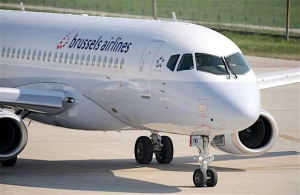
From three, the number of flights served by Brussels Airlines to Lomé increased to five, respectively on Monday, Tuesday, Wednesday, Friday and Saturday. By the end of this month, the decision will be made official.
In this framework, Pierre-Yves Buysscahert, Director of Brussels Airlines Togo, met on October 11 with Prime Minister, Komi Sélom Klassou.
On this occasion, he informed the official of the new change, explaining that the decision aligns with Togolese authorities’ will to “make Togo a transit hub in the region”. “Brussels Airlines wishes to contribute, in a way or the other, to Togo’s development by providing the nation its services, thus ultimately helping promote Togo and its tourism industry using its aircrafts,” Buysscahert added.
Séna Akoda
World Investment Forum to be held in Geneva, on October 22-26
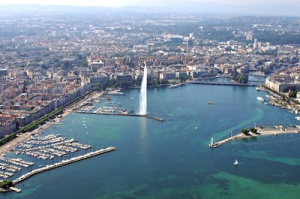
From October 22 to 26, 2018, Geneva (Switzerland) will host the sixth World Investment Forum organizd by the United Nations Conference for Trade and Development (UNCTAD).
More than 5,000 participants from 160 countries, including Togo, are expected at the event where investors and development institutions build partnerships to bridge the current investment deficit. The latter is estimated at around $2,500 billion.
The forum was set to provide an opportunity for an open dialogue, and for “investment stakeholders to brainstorm solution-oriented initiatives and build global partnerships to advance prosperity for all”. This edition will include about sixty events, including three summits, five ministerial roundtables, private sector-led sessions and various award ceremonies.
In addition to giving participants the opportunity to shed light on priorities to attract and mobilize investments for sustainable development, the forum’s sessions will also focus on transforming actions and innovative development-oriented funding modes, such as Blockchain, sustainable bonds and mixed financing.
Around 100 major firms and renowned organizations will be there. There will also be some Heads of States and about 50 ministers.
The global conference, let’s indicate, occurs in a context where concerns keep rising due to the fall of investments and their impact on efforts made to achieve the 2030 agenda for sustainable development, adopted by the international community three years ago.
According to the UN, in 2017, foreign direct investments (FDIs) flows worldwide slumped 23% and there was almost no growth in many developing nations.
Fiacre E. Kakpo
World Bank releases its new human capital index
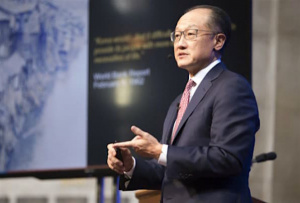
As announced on the sidelines of Africa Pulse’s launch at the beginning of this month, the World Bank just released in Bali (Indonesia) its new human capital index. This was in the framework of the Bretton Woods institution's annual assemblies.
The new index measures losses in economic productivity incurred by countries that under-invest in their people. “The human capital index reflects the productivity as a future worker of a child born today, compared with what it could be if he or she had full health and complete, high-quality education,” World Bank explains.
The measure includes :
- Survival : Will children born today survive to school age ?
- School : How much schooling will they complete and how much will they learn ?
- Health : Will they leave school in good health, ready for further learning and/or work as adults ?
First results for the new study are quite alarming it appears. Indeed, it shows that 56% of children born today will be deprived of more than half of their potential lifetime earnings because governments are not making necessary investments to produce an educated, resilient and healthy population, ready for the workplace of the future.
According to the World Bank, “if governments take action now, children born today could be in better health, wealthier and more productive when they become adults”.
“For the poorest people, human capital is often the only capital they have,” World Bank Group President Jim Yong Kim said. “Human capital is a key driver of sustainable, inclusive economic growth, but investing in health and education has not gotten the attention it deserves. This index creates a direct line between improving outcomes in health and education, productivity, and economic growth. I hope that it drives countries to take urgent action and invest more – and more effectively – in their people” he added.
Fiacre E. Kakpo
Togo parliament gives approval for ratification of statutes of Africa 50-Infrastructure Fund
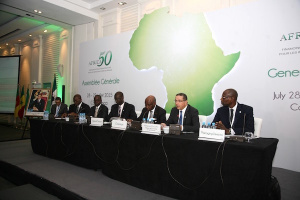
On October 9, 2018, Togo’s parliament authorized the government to ratify statutes of the Africa 50-Infrastructure Fund.
These statutes were adopted on July 29, 2015, in Casablanca, Morocco. The institution was established by 22 countries including Togo, and three African financial institutions, namely: Al-Maghrib bank, the African Development Bank (AfDB) and the Central Bank of West African States (BCEAO).
Once the statutes’ ratification is effective, Togo could raise long term financing from African investors to develop viable projects, at a large scale. It will do so via two institutions: the project finance company and the project development company.
Moreover, the country would be able to rely on financial support from other African nations to attract institutional investors, sovereign funds, pension funds and insurance firms, among others.
Séna Akoda
Togo urged to take part in AfDB’s upcoming Africa Investment Forum
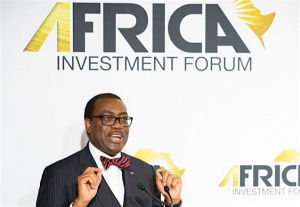
From November 7 to 9, 2018, the African Development Bank (AfDB) will hold in Johannesburg the first edition of the Africa Investment Forum.
This forum is a totally transactional market place dedicated to advancing projects to bankable stages, raising capital, and accelerating the financial closure of deals. It is a platform to attract investors and ease transactions, in order to unlock investment opportunities worth billions of dollars in Africa, says AfDB.
During the three days the forum will last, the Abidjan-based institution will gather project developers, pension funds, sovereign wealth funds, private investors, policy makers, private equity firms and heads of governments, from all over the world, to raise funds in order to transform Africa’s economic, agricultural and industrial sectors. Hence, funds could be raised even during the forum, AfDB’s executives revealed.
Targeted projects and sectors include industrial parks, mini-grids, agropoles, new cities, ports, railways, fiber optics, clean energy, roads, etc.
This is a great opportunity for Togo which already positioned itself with its National Development Plan (PND 2018-2022) which covers many of the sectors concerned, such as industrial parks, mini-grids, agropoles, ports, railways, fiber optics, renewable energies, and roads.
Actually, AfDB’s office in Togo urged the country to be at the meeting in Johannesburg.
Let it be recalled that around $130-170 billion are needed each year to develop infrastructures in Africa, according to the AfDB’s 2018 African Economic Outlook report.
Fiacre E. Kakpo
Banque de France report on Franc Zone's economies : WAEMU more dynamic than CEMAC
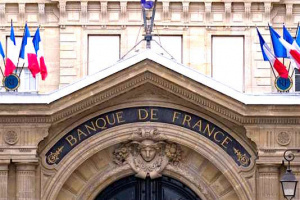
In 2017, real GDP growth in Franc Zone stood at 3.9%, as compared to 3.6% in 2016. This was disclosed in a report released by Banque de France last Monday. According to the report, the increase should be sustained this year.
Last year, growth of economic activity in the Franc Zone was higher than in sub-Saharan Africa. However, France’s central bank indicates, there remain “major gaps between countries”.
Hence, economic activity in the WAEMU, spurred by growth in Côte d’Ivoire and Senegal, kept rising at a sustained pace of 6.7% whereas in the CEMAC, this figure stagnated, due to lower oil prices at mid-2014 and the beginning of 2016.
Meanwhile, far from inflationary shocks, countries that belong to the Franc Zone, benefiting from being pegged to the Euro, recorded in 2017, with favorable perspectives, inflation rates (+0.8% average per year) that are extremely lower than that of the sub-Saharan African region (+11%).
The apex bank’s report also notes a rise of public debt which could in the long run, cut leeway of the concerned nation’s budget policy. In addition, Banque de France recommended the diversification of exports which are still, in its opinion, too insufficient to foster economic development.
Beside France, the Franc Zone covers WAEMU nations, those of the CEMAC and the Union of the Comoros.
Fiacre E. Kakpo
Togo gets approval from its parliament to join Afreximbank
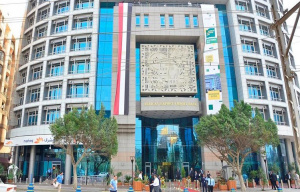
Yesterday October 9, the Togolese parliament unanimously passed the law authorizing the country to join the African Export-import Bank (Afreximbank). This was during the 2nd plenary of the 2nd ordinary session.
The government thus receives the parliamentary approval for a formal accession to the financial institution. Once this is done, the country will be able to participate in the bank's shareholding and benefit from financial assistance and support for export growth. In the long term, Togo would develop its private sector, its transport and logistics infrastructures, as well as its energy production capacity.
For the record, the government reviewed the draft law during the Ministers’ Council of June 13 this year. Afreximbank aims to promote and develop trade between African countries and between Africa and other continents (intra- and extra-African trade).
Séna Akoda
Asky Airlines to start serving the Mozambican air market in December 2018 thanks to a partnership with Ethiopian Airlines
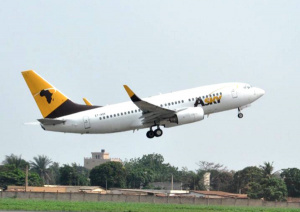
Via its subsidiary, Ethiopian Mozambique airlines, Ethiopian Airways, technical partner and shareholder of Asky, will launch its operations in Mozambique as of December 2018.
To serve the local market in that country, Ethiopian Airways will mobilize part of the fleet of the panafrican company Asky Airlines, whose headquarters is in Lomé, Togo’s capital. To be precise, the company’s services will be delivered with a Boeing B737-800 and Dash8-Q400 chartered from Asky Airlines.
It is explained that Ethiopian Mozambique airlines based in Maputo, Mozambique’s capital will serve 9 airports in the country; 6 of which are international (Maputo, Beira, Tete, Nampula, Nacala and Pemba). It will compete with five local companies namely Mozambique Airlines (LAM), Mozambique Expresso (MEX), CFM Transportes Aereo, TTA and Solenta Aviation Mozambique.
Let’s note that before this new offer, thanks to the technical partnership between Ethiopian Airlines and Asky Airlines, the Panafrican company was able to fly to the USA, Brazil and many other destinations.
Séna Akoda