
Togo First
Customs cooperation: Noèpé control station gets inaugurated
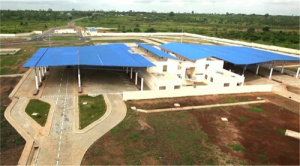
Today, October 26, Togo and Ghana’s leaders, Faure Gnassingbé and Nana Akufo-Addo, will inaugurate the Noèpé-Akanu juxtaposed check post, 30km from Lomé.
Built over 17ha, under the initiative of ECOWAS and with a financing from the European Union, the station will help ease movement of people and goods in the region.
It attests of coordination between the two countries’ customs and will lead to less controls along the roads.
It should be indicated that the Noèpé station had already been inaugurated once in 2014 but could not start operating due to various logistics-related issues. Also, the two leaders had already visited the site in May 2017 on the sidelines of a visit by the Ghanaian president to accelerate its operationalization.
Octave A. Bruce
Togo : World Bank and the EU disburse $20mln to improve economic governance
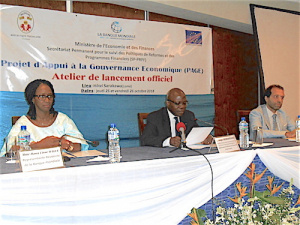
The World Bank and the European Union have provided a $20 million financing to support Togo’s economic governance support project (PAGE). The latter was launched 25 October 2018 by Aharh-Kpessou, Permanent Secretary monitoring reforms and financial programmes at the ministry of economy and finances.
The PAGE aims to help the State better manage public investments, mobilize internal resources, and improve accountability mechanisms and monitoring of service provision in key sectors. This would enable the government to overcome major challenges both in regards to economic governance and public finance management.
According to Aharh-Kpessou, “this programme focuses mainly on good governance and civic engagement as base for a sustainable economic growth”. Similarly, Hawa Cissé Wagué, World Bank’s resident representative in Togo said: “By getting the civic society more engaged in the budget preparation process and downstream in the monitoring of public service provision, the project will ease and ensure transparency in the management of public finances.”
Indeed, the PAGE will produce platforms and mechanisms through which the civic society and other citizen groupings can take part to dialogue with the State concerning budget priorities and give their opinion to improve quality and access to public services in targeted sectors. The project will be carried out in over five years.
Séna Akoda
IFC inks partnership agreement with AMIFA to develop microfinance sector in Subsaharan Africa
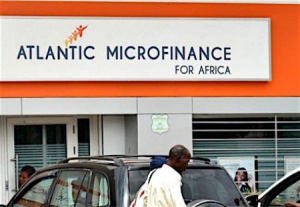
Last October 24, the International Finance Corporation (IFC), signed a partnership agreement with Atlantic Microfinance For Africa (AMIFA) for the development of AMIFA’s products and services and the promotion of microfinance in Subsaharan Africa.
The agreement signed in Rabat should help AMIFA, a subsidiary of Groupe Banque Centrale Populaire (BCP) since 2014, develop its microfinance programme aimed at micro companies and small projects carriers in Subsaharan Africa.
Despite the development of financial inclusion in the region, in the recent years (from 23% of the population in 2011 to 43% in 2017) majority of the adult population have no access to sustainable and regulated financial services.
According to BCP managers, "the partnership will enable us benefit from IFC's expertise and support in optimising our model and delivering a microfinance programme that contributes more efficiently to the financial inclusion of a significant part of the low-income population”. BCP which owns a microfinance institution in Côte d’Ivoire aims to establish similar institutions within the WAEMU community.
In 2018, IFC consecrated about $23 billion in long-term investments aimed at ending extreme poverty and promoting shared prosperity.
Octave A. Bruce
Lomé to host forum on public-private partnership’s contribution to agropole creation on Nov 22-23

Next month, November 22 and 23, Lomé will host a major forum on opportunities for Togolese and foreign investors to co-finance agropoles in Togo.
This was announced on Wednesday October 24 by Odilia Gnassingbé (photo), Executive director of Autonomous centre for study and reinforcement of development capacities in Togo (CADERDT).
The official who was expressing herself at the International Agrofood and Agriculture Trade fair of Lomé (SIALO) said the forum would be the occasion to discuss private sector’s engagement in Africa’s structural transformation, via agriculture.
According to her, private-public partnerships (PPPs) constitute a relevant option to fund agriculture. “The CADERDT will have to showcase actors of both private and public sectors, potentialities and opportunities for business in the agro-industrial sector in Togo”, Odilia Gnassingbé declared, highlighting that during the event, “conditions required for an efficient implementation of PPPs in Togo would be revealed”.
Let’s recall that under the second axis of Togo’s new national development plan (PND), Togo plans to develop 10 agropoles. Actually, the pilot phase of this project will soon be started in Kara, northern Togo.
Octave A. Bruce
Oragroup presents public offering of 13,883,006 shares in Lomé
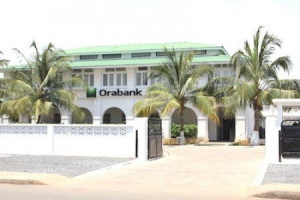
On October 19, 2018, in Abidjan, Oragroup officially announced the IPO process for its listing on Bourse Régionale des Valeurs Mobilières (BRVM), WAEMU’s stock exchange.
Today October 25, the pan-African banking group step further in that perspective. Indeed, it will present the public offering of 13,883,006 shares in Lomé.
According to Binta Touré Ndoye, managing director of the group, this public offering comprises of the issuance of 6,097,561 new shares by the capital increase and the sale of 7,785,445 existing shares. The price of each share is XOF4,100.
The manager also expects that this operation will help boost the group’s growth and support its development.
The offered shares should generate XOF56.92 billion (€86 million), representing 20% of its capital. The remaining 80% will remain at the hand of the current shareholders.
This should be the most important IPO on the BRVM since it started operations in 1998.
Séna Akoda
Togo : Nouvelle Société Cotonnière launches major contract for young entrepreneurs

The Nouvelle Société Cotonière du Togo (NSCT) just issued a tender for the supply of tire equipment for its rolling stock.
Fifteen enterprises led by young people and operating a wide range of activities will be able to submit their bid for this contract. They are Car Wash House, Christ Winner, Coudi Business, Doc Engine, Ets Allassane Amidou, Ets Yamba, Fredy et Sons Technologie, Garage Auto Nouvelle Technologie, Gnim & Frères, Happy Days and Fine Investment, IB & RAO Business, IBTC Sarlu, Keno Services, Megatram Sarl and Telemobil International.
The contract is divided into three lots. The first concerns the provision of tires and tire consumables. The second concerns the provision of pneumatic tires and the last the provision of tubeless tires.
Let’s note that NSCT’s announcement falls in line with a commitment of President Faure Essozimna Gnassingbé to set aside 20% of procurements for young entrepreneurs, men and women.
Séna Akoda
A year after its launch, Ecobank Mobile app records more than 500,000 users in Togo
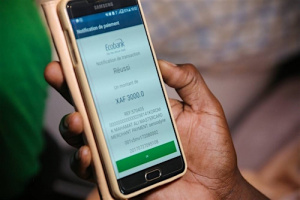
To date, exactly 500,000 people are using the Ecobank Mobile app launched by the pan-African bank in Togo over a year ago.
Through this app that it launched in the 33 countries where it operates, Ecobank aims to boost bancarization rate and access to financial services across the continent. “Opening an account is safe and free with this app. There is no account maintenance fee required. You can check your balance and access account statements just like with a traditional account. You can also make payments to merchants and receive instant notifications for any payment made,” declared Ecobank-Togo’s managing director, Mamady Diakite. This was during the launch of a service to pay power bills for free, through the app.
In the same vein, Patrick Akinwuntan, executive director of Ecobank’s Consumer Banking division, said : “Ecobank has a lot of opportunities to offer to every African. Our Ecobank Mobile app, Xpress Account, Ecobank Pay, Xpress and Rapidtransfer points are becoming prefered banking services of users, in Africa and the diaspora, due to their flexibility, low costs and instant nature”.
Mobile banking, let’s recall, perfectly aligns with Ecobank’s expansion strategy and objective to substantially increase its customer portfolio by 2020.
Séna Akoda
Togo identifies various projects to benefit from $60bn financing promised by China at FOCAC
Togo just identified a few projects to benefit from the $60 billion financing that China promised to inject in African countries over three years, during the recent FOCAC, to support their efforts to grow.
The newly identified projects all aim to make Togo a logistics and business hub in the region.
Among these, there is the expansion of the N°1 National Road (RN1) and that for the creation of a dry port in the northern part of the country. “Widening RN1 will help ease traffic flow along the corridor, deliver goods within set delays, hence become more competitive,” Cynthia Gnassingbé-Essonam, general secretary of Togo-Invest, declared during the workshop to appropriate the national development plan.
Regarding the second project, related to the dry port creation, it will help landlocked nations surrounding Togo to easily access goods. It should be attached to another project that involves developing a multipurpose platform at the Autonomous Port of Lomé (PAL). The latter aims to boost space and services provided to haulers.
Still in order to make Togo a logistics and business hub, other projects are planned. These include creating a business centre to boost tourism, creating a school of commerce, and building top-class hotels.
Séna Akoda
WFP considers increasing support to school canteens in Togo
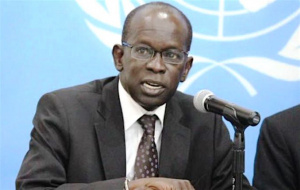
On October 23, 2018, Togo’s Prime Minister gave an audience at his office to Abdou Dieng, World Food Programme’s (WFP) Director for West Africa.
Dieng came to relay his conclusions regarding the study related to the end of hunger (SDG 2), that will be released in the coming days. According to him, WFP is looking for ways to increase its support to school canteens in Togo.
In effect, the UN programme plans to boost its support to small producers to increase their yields and subsequently better supply the canteens with local products.
The creation of school canteens is financed by the Togolese government, as part of the Social nets and community development project (PDC+) with the support of WFP and the World Bank. In 2017-2018, the scheme helped provide 7,089,359 meals to 91,319 pupils, including 43,697 girls.
Let’s recall that every year, WFP distributes meals to about 22 million pupils across 60 countries.
Togo: Eranove officially gets license to build Kékéli Efficient Power thermal plant in Lomé
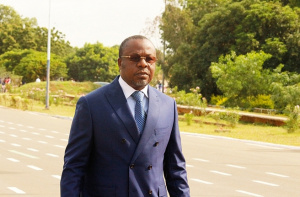
Eranove has officially gotten license to build and operate the Kékéli Efficient Power thermal plant in Lomé’s port zone.
Related concession agreement was signed October 23, 2013, by Eranove’s CEO, Marc Alberola and Togo’s minister of mines and energy, Marc Dèdèriwè Ably-Bidamon.
Works will last 18 months for a total cost of CFA64 billion. While the required investment will be provided by BOAD and Oragroup, the works will be carried out by Spanish firm Grupo TSK (EPC).
Once built, the power plant will generate 65MW, using a combined cycle technology which helps produce more power with no additional gas consumption while reducing carbon dioxide emissions into the atmosphere.
Eranove will develop, operate and maintain the plant at first but it will finally be run and managed by the Togolese government.
According to local authorities, the plant which will boost the country’s output will also help it “reach energy independence by 2030”.
The newly signed agreement is a major milestone in the framework of Eranove’s expansion. Indeed, the pan-African group already operates 1,247MW of power and develops projects that aim to add 1,000MW to the continent’ production capacity.
Octave A. Bruce