
Togo First
MCC: Togo passed 14 out of 20 indicators this year, two more than last year
On November 5, 2018, Millennium Challenge Corporation (MCC) produced its yearly assessment of performances of countries rivaling to benefit from its investment programs for developing economies.
The report looks at three indicators namely good governance, economic freedom and human capital investment. This edition, the sixteenth, analyzed performances of 80 countries, including Togo. The latter, in this year’s report, has met two additional criteria, now totaling 14 out of 20, against 12 last year and 5 only four years ago.
It therefore now stands on par with Côte d’Ivoire (14/20) and comes ahead of Benin (13/20), Burkina (13/20), Niger (11/20) or Mali (9/20).
Still, Togo needs to improve regarding indicators like land, tax policies, child health and public administration efficiency, if it wants to reach a nation like Senegal, the only WAEMU member that satisfies 16 indicators.
The main thing to retain from the report is that Togo can now apply for MCC’s compact program even if its requirements are more strict than the Threshold program which the country has been eligible to since 2015.
In effect, Togo, for the third consecutive year, has passed the three eligibility criteria of the Compact, knowingly: control of corruption, democratic rights and passing at least half of the 20 indicators.
These are the indicators passed by Togo under MCC’s 2019 scorebook.
Ruling justly (5 indicators passed out of 6)
Control of corruption
Freedom of information
Political rights
Civil liberties
Rule of law
Investing in people (5 indicators passed out of 6)
Health expenditures
Primary education expenditures
Immunization rates
Girls’ primary education completion rate
Natural resource protection
Economic freedom (4 indicators passed out of 8)
Inflation
Regulatory quality
Trade policy
Gender in the economy
Fiacre E. Kakpo
Coris Bank International’s net profit up 13% at end-September 2018, compared to 2017
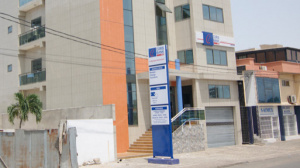
Burkinabe banking group Coris Bank International (CBI), also active in Togo, has over the first three quarters of 2018 recorded a net profit of CFA19 billion, up 13% compared to 2017. Same goes for its pre-tax profit which grew by almost 15% over the period reviewed reaching CFA21 billion.
The lender attributes the performance to “a surge of intermediation and treasury activities as well as to commissions derived from its products and services”. These pushed the bank’s net banking product up 21% to CFA41.3 billion.
Going deeper, CBI statistics show a 27% increase in customer loans to CFA598 billion at the end of Q3 2018, against CFA469 billion at September 30, 2017. Similarly, deposits grew from CFA497 billion to about CFA619 billion year-on-year over the period reviewed.
The positive results of the group which currently operates in Côte d’Ivoire, Benin, Mali, Togo, Senegal and soon Niger, allows the bank to boost its activities. At the end of September 2018, its total balance sheet expanded by 14% to CFA1,139 billion, while it stood at CFA885 billion back in 2016. In 2017, Coris Bank International had 282,477 customers.
Fiacre E. Kakpo
Togo: Works executed by SAFER in 2017 and 2018 to soon be technically and financially audited
Works executed by the Autonomous Company for Road Maintenance Financing in 2017-2018 will be audited, technically and financially.
In detail, the audit will focus on road maintenance programs by the General Directorate of Public Works, training activities conducted by the Regional Centre for Road Maintenance Training (CERFER) and also procurement provision process over the period under review.
The audit will revolve around three main axes. First is assessing the whole execution process of selected projects, both those fully carried out and ongoing (from contract signing to end of works).
Next, the audit will check how regular processes for procurement and contract provision are, and if works executed technically conform with the terms of contract; if costs and delays agreed upon are respected; projects’ financial situation will be assessed as well.
Last, the audit will help analyze works conformity with standards set in the related specifications.
Séna Akoda
Togo: Vo prefecture to get a CFA750M agro-pastoral experimentation and research centre
In Togo, about 40km North-East of Lomé, the Vo prefecture will soon host a multipurpose agro-pastoral research and experimentation centre.
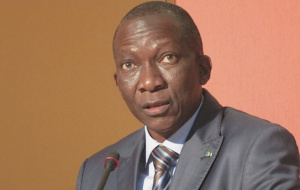
According to Togo Press which released the information, construction works for the project were just launched by Victoire Tomégah-Dogbé, minister of grassroot development, in the presence of her peer from the ministry of agriculture and husbandry, Ouro-Koura Agadazi. The project will cost CFA750 million.
The centre will focus on various agricultural sub-sectors including animal (poultry, pigs, sheep and goats) and crop (vegetables) production.
Commenting on the educational nature of the upcoming centre, the minister of agriculture declared: “We all know that traditional education has reached its limits. Today, most countries have to overcome a major challenge which is job creation”
On her part, Victoire Tomegah-Dogbé encouraged the youth to not lose faith in farming and become rural entrepreneurs.
Séna Akoda
Togo: Beam to help EDF acquire stake in Bboxx Togo
Beam, an investment platform created by private equity firm Bamboo, has partnered with French energy giant EDF to inject funds in Bboxx Togo, subsidiary of the eponymous British firm specialized in solar systems.
Though the transaction’s amount is yet to be disclosed, it will allow EDF to acquire 50% of Bboxx Togo, as agreed last month, and help Bboxx to expand its footprint in the West African nation. In effect, Bboxx will use the investment to provide more than 300,000 households, which is nearly two million Togolese, with solar power by 2022, under the CIZO project.
The French firm will assist the British technically towards improving installation of solar systems that the latter plans to deploy. This is a major step for BEAM, said for his part Jean-Philippe de Scherevel, founder and associate of Bamboo.
“Beam was created with a clear vision which is attracting major investments to off-grid power projects in developing countries, which Togo is part of,” added the head of the equity firm.
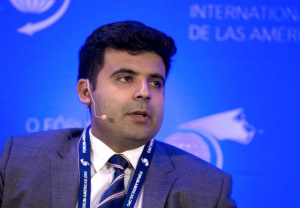
Meanwhile, for Mansoor Hamayun, CEO of Bboxx, “Beam’s investment in Bboxx Togo will be key to produce expected impact”.
Bboxx has been operating in Togo since 2017 and has already provided access to power to 26,000 Togolese residents, through the CIZO program which it partners with. It has opened about 20 stores in the country and employs around hundred people. Its domestic solar systems include solar panels with batteries. These can be paid for with mobile money.
Fiacre E. Kakpo
Over its four months of existence, MIFA helped initiate a number of projects valued at CFA2bn, profiting 4,500 farmers
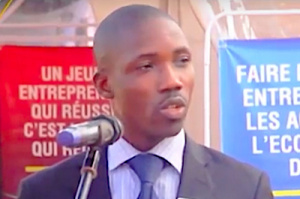
In four months, Togo’s agricultural financing incentive mechanism (MIFA) has provided technical support to nearly 4,500 farmers. This was disclosed by Noel Bataka, coordinator of the mechanism’s value chains, during an interview with local news website, Actu Togo.
According to the former strategic coordinator of PNIASA, since it was launched on June 25, 2018, MIFA helped provide around CFA500 million as financing support to farmers, and more monies should soon be disbursed for agricultural projects valued at about two billion CFA.
“Projects valued at about CFA2 billion are being put in place for these farmers and financial partners are working to provide needed funds. So far, half a billion has been provided to producers, out of targeted two billion,” the official told the local website.
Regarding concerns about producers not reimbursing the loans they are given, Bataka said the mechanism is based on a risk-sharing system that tackles the issue. “Farmers’ insolvency is often due to many causes and MIFA has solutions tackling all these issues. The first cause is failure to sell goods produced, he said. With MIFA however, producers and aggregators sign contracts and production is structured only based on these contracts,” he added.
“Deploying operating advisors near producers to tackle low productivity, reducing cost of loans which used to reach up to 20% (but now stands around 5%-7% with MIFA), and the assessment of projects by MIFA’s financial experts to produce viable business plans are some of MIFA’s solutions to make sure loans provided to producers are recovered,” Bataka declared.
Over the next three years he adds, “a million producers and players of agricultural value chains will be backed by the mechanism”.
Ten years from now, MIFA aims to get banks to invest, using their own funds, up to a billion euros, that is CFA650 billion, in agricultural value chains. Also, starting next year, the mechanism should expand to the coffee, cocoa, cotton, soybeans and cashew sectors.
Fiacre E. Kakpo
OTR bets on synergy between various tax authorities to fight tax fraud
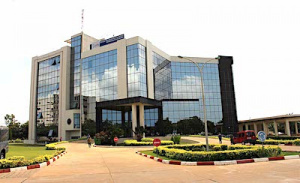
Lomé is currently hosting until November 9 a regional seminar on ways to counter tax fraud. Organized by the International Monetary Fund's Regional Technical Assistance for West Africa (AFRITAC WEST - AFW), the seminar’s theme is “Fighting tax fraud efficiently”.
The general commissioner of Togo’s Revenue Office (OTR), Kodzo Adedze, who expressed himself at the seminar’s opening put emphasis on working in synergy. He believes “synergy between tax administrations is a major lever to efficiently fight tax fraud”.
Indeed, he adds that, still in line with the same objective, “information sharing (Between tax administrations – ed. note) can help clear suspicions in the case of tax fraud”. This, according to the official will improve control of declared goods from a point A to point B, and fight tax fraud more efficiently.
Also, “our tax offices must have a control mechanism that relies on data collection and risk assessment”, he concluded.
Séna Akoda
Togo: More firms were created in October than in any other month this year

Since 2017, never has the number of firms created over a month been as high as that recorded in October 2018. Last month, a total of 1,281 new companies were created. A true record that confirms a dynamic entrepreneurship which was spurred by the many incentives introduced by the government, and also because of the quick recovery of the economy from a political crisis which it tried to overcome since mid-2017.
Compared to September where the number of firms created was the lowest since January, last month’s record is 65.7% up. Let’s emphasize also that the number of firms created over the first 10 months of this year, 9,241, is far greater than that recorded throughout the whole 2017 year, knowingly 8,199. From January to October 2017, this number stood at 7,243, thus representing a 27.5% year-to-year growth.
Togolese more and more interested in entrepreneurship
Statistics show that 80.39% of firms established during the first three quarters of this year (7,429 firms to be exact) are owned by Togolese. That is 55% more than the figure recorded the previous year over the same period. Togolese had only created 4,769 at the time.
Meanwhile, foreigners created less firms this year, as compared to the last. From 1,912 firms in the first three quarters of 2012 (28.62% of all firms created), foreigners created 1,812 firms (19.61%) this year, over the period reviewed.
Result of multiple reforms introduced by business climate cell
The impressive figures are partially due to the favorable macroeconomic context that prevailed in Togo, during this second half of the year, but also to government’s conscious efforts to improve things since the year began. Most importantly, the improvements must be attributed to reforms implemented by authorities to improve business climate, reforms coordinated by the Business Climate Cell. Major reforms that pushed entrepreneurs to formalize their business include suppression of registration fees and stamp duties, liberalization of minimum capital, slight reduction of e-payment procedures, legal online ad cost brought down to CFA1,000. Beside these reforms, the government’s decision to set aside 20% of public procurements for youth and women also fosters business formalization.
Praised by the 2019 Doing Business
These efforts to improve business climate helped Togo’s image improve under the Doing Business 2019 which ranks it as the top reformist economy of the WAEMU, and the second in Africa. The country’s overall rank on the index surged 19 places and this enabled it to be among the top fifteen sub-Saharan African countries, and top 75 countries worldwide, where creating a firm is easy.
Togo also achieved this year its entry into the top 10 countries around the world to have the most simplified regulatory framework for businesses.
Fiacre E. Kakpo
Togo aims to become leading “blue” touristic destination in West Africa by 2022

By 2022, Togo wants to become West Africa’s leading “blue” touristic destination.
Aiming for the country to turn into a perfect location for seaside, cultural, sport, business, ecologic and agricultural tourism, the government plans to develop structuring project and provide Togo a new touristic identity.
Hence, emulating Rwanda's ‘Visit Rwanda’ program, Togo’s authorities plan to adopt the “Go to Togo” slogan to become a tourism hub in the sub-region.
To achieve this goal, Lomé intends to diversify, boost, valorize its touristic and hospitality offer (focusing on culture, craftsmanship, economic and social sectors) via systematic labelling and rating ; facilitate investment in tourism and hospitality, in addition to improving both the legal and structural frameworks of the sector.
Presently, Togo is refining its strategy to unlock the potential of its tourism industry given that it is one of its economic drivers.
Clearly stated, the nation aims to “increase tourism's contribution to GDP to 6.2% in 2022, from 4% in 2015”. In the same framework, it expects “number of visitors per 100 people to reach 5 by 2022, from 3.2 in 2015, and revenue per visitor to reach $700 in 2022, from $520 in 2015”.
This dynamism should result in the creation of at least 10,000 decent jobs by 2022.
Fiacre E. Kakpo
PND plans multiple power projects, including hydropower dams, solar and coal-fired thermal plants

In line with its new national development strategy (PND 2018-2022), Togo plans to build four hydropower dams, a coal-fired thermal plant, two solar plants and six transmission lines. The document combines both traditional and clean energy sources to provide power to 50% of the Togolese population by 2020.
The document plans various energy infrastructures which according to authorities will enable access to reliable, modern and low-cost power services.
The “ambitious program will help tap into hydropower potential through the construction of four dams, namely Tétéou (50MW), Danyi-Konda (10MW, Baghan (6MW), Landa-Pozanda (4MW). It will also leverage thermal potential with a project involving construction of a coal-fired thermal power plant. Finally, two transmission lines of 330KV and four lines of 161KV will be built in addition to a 10MW solar plant in Mango and another of 5MW in Kara”, authorities indicated.
If effectively carried out, these projects would be clear evidence that Togo is doing everything to become one of the region’s top energy producers.
Fiacre E. Kakpo