
Togo First
Togo plans to set quality control lab to make “Made in Togo” products more competitive
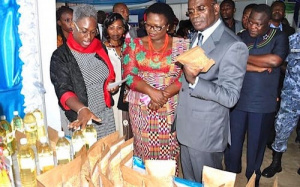
Togo’s government plans to open in Lomé an agricultural product certification lab, according to Germain Mèba, Chairman of Togo’s Chamber of Commerce and Industry (CCIT). The official revealed that the project is driven by authorities’ desire to make Made in Togo products more competitive in the region, the continent and even worldwide.
Indeed, Togo counts on a significant boom of its agriculture to drive its growth. So far, the sector contributes 40% of the country’s GDP.
While the country currently implements various innovative initiatives, such as its agropoles project and the agricultural financing incentive mechanism, it is the competitiveness of made in Togo products that will enable the country to expand worldwide. However, these products must first meet global standards.
This thus explains the need for the projected certification lab. According to credible sources, works are ongoing for its installation.
Actually, the minister of trade and private sector promotion, Bernadette Legzim-Balouki, and CCIT’s chairman, were recently in Turkey to request collaboration of Turkish experts to successfully develop the project.
Séna Akoda
Togo among top 15 African countries under 2019 Doing Business
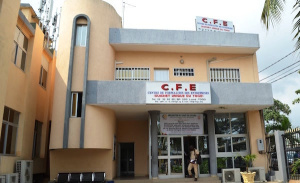
It is much easier to create a firm in Togo than it is in Ghana, Burkina Faso, South Africa, Kenya, Ethiopia, Gabon, Angola, or even Seychelles.
In the 2019 Doing Business, Togo is the 11th African nation where launching a business is easy. The country made remarkable achievements, coming before most member States of the Organization for Economic Co-operation and Development (OECD) with a greater revenue. Indeed, in terms of procedures and delays needed to formalize a business, Togo is far above average recorded in sub-Saharan Africa and OECD’s 36 member States.
While according to the Doing Business, four procedures and 5.5 days are needed in Togo to make a business formal, the report states that it takes about 7.3 procedures and more than 23 days in sub-Saharan Africa to do so, and 4.9 procedures and 9.3 days in OECD.
In WAEMU, Togo which is the third country under the Doing Business, behind Côte d’Ivoire and Benin, is also the nation in the region to have implemented the most reforms over the period reviewed.
Fiacre E. Kakpo
According to IMF, in 2019, Togo’s debt level should fall below 70% if…
Togo’s debt level should fall below 70% of GDP next year, in line with WAEMU’s macroeconomic convergence criteria. This was forecasted by the IMF's mission that stayed in the country from October 18 to 31, 2018.
Similarly, the mission said Lomé’s budget deficit should stand below 3% of GDP. “We believe that in 2019, Togo’s budget should meet WAEMU’s macroeconomic convergence standards, that is budget deficit below 3% of GDP and debt level below 70% of GDP,” said the head of the IMF's mission.
Considering the country’s debt/GDP ratio which is still high, even if it has improved over the past years, Togo will only achieve the forecast if it keeps reforms it recently implemented and effectively implement the ones planned for the next six months, the mission indicates.
“Structural reforms advance as planned. For example, OTR’s reforms to improve revenue mobilization and those to reinforce treasury’s single account (directing all commercial banks’ accounts to the treasury’s). These reforms should ensure a better management of treasury and decrease loan rates. There also, everything is going well,” the mission declared.
Regarding public investment management, the mission commented saying: “Reforms are being implemented to make sure that under the 2019 budget, projects are selected based on some criteria that, for example, require that only new or ongoing projects, and also projects for which feasibility studies have been conducted, are developed.”
Togo, leveraging reforms, aims to contain its debt level at 52.8% of GDP by 2021.
“Togo did almost six times better than Mauritius” – Sandra Johnson
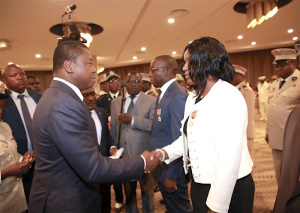
“Togo did almost six times better than Mauritius”. This was declared by Sandra Ablamba Johnson, Head of Business Climate Cell (CCA) and Advisor to the President, commenting on Togo’s score in the latest Doing Business report.
Indeed, Togo’s score rose by 6.32 points to 55.20 points while the score of Mauritius, first African nation on the 2019 Doing Business, increased by 1.29 points compared to the previous year.
After highlighting Togo’s performances regarding business facilitation in Africa –the country is ranked second most reformist nation across the continent and number one in WAEMU- CCA’s coordination emphasized major indicators on which the nation focused its reforms. “Taking business creation for example, we suppressed registration fees and stamps. Let it be recalled that the fees in question amounted to 2% and 4% in cash and kind respectively. Today, let’s say you want to create a company with a capital of one billion CFA…You do not need to pay anything. Also, minimum capital which was set at CFA1 million two to three years ago has been reduced to CFA100,000 and liberalized,” Johnson said.
As for property transfer right, the official indicated: “A single desk for property transfer has been opened while process related to the issuance of a construction permit has been dematerialized. In the past, one needed to come to the town hall to apply for this permit. Now, regardless of the applicant’s geographic position, be it in France or Burkina, he or she can apply for the permit and get it once in Lomé”.
Commenting on bribes paid to intermediates while seeking land titles or similar documents, Sandra Johnson declared : “Today, not only are bribes not paid, issuance fees to get the documents, between CFA400,000 and CFA500,000, have been suppressed as well. Application is done online now”.
Last, “there is e-declaration,” she says. “Before, people had to go queue at the tax office to pay their taxes. Now, they can be paid online, from your office or anywhere else”.
Séna Akoda
ECOWAS launches regional contest for new currency’s name and icon
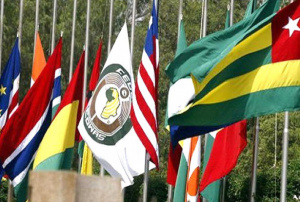
The commission of the Economic Community of West African States (ECOWAS) just launched a regional contest for a name and icon for the future single currency within the community.
Open to "citizens of all the member states of the organization, regardless of their place of residence, and to moral entities legally established in a member state", this contest will end on November 20, 2018.
The best three names and icons will be rewarded with checks from $5,000 to $10,000. According to the organization, a special interest should be paid by participants to key values in the community, Vision 2020 particularly.
This call for submissions falls within the framework of the implementation of the ECOWAS Monetary Cooperation programme which plans for creation of a common currency for the 350 million residents of the community in 2020.
It also follows instructions given during the 53rd session of the conference of heads of state and government held in Lome last July.
Information related to the contest, notably to the entry requirements and selection criteria are available here.
Octave A. Bruce
Togo among top 5 African countries in UNCTAD’s maritime connectivity rankings
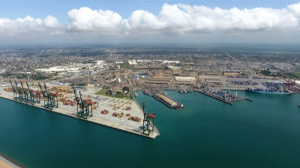
Togo is among top five countries in Africa in terms of maritime connectivity. This is revealed in the 2018 maritime transport report published by the United Nations Conference on Trade and Development (UNCTAD).
With an indicator of 35.9, Togo comes after Morocco (71.5), Egypt (70.3), South Africa (40.1) and Djibouti (37).
Togo’s rise in the ranking since 2010 was spurred by activity at the port of Lomé, the only deep-water port in West Africa. In the sub-Saharan Africa region, the country maintains its position of second in the ranking. A feat which is to be attributed to multiple investments in logistics infrastructures. South Africa is first on this ranking (since Djibouti is ranked under the MENA category).
According to the UNCTAD, Togo’s performances have doubled in less than a decade. From 14.2 in 2010, its index soared to 33.9 in 2017, then 35.9 in 2018.
Worldwide, China remains the leader in terms of maritime connectivity with an index of 187.8, far ahead of Singapore (133.9) and the Republic of Korea (118.8). This top three is followed by Hong Kong (133.5).
Entitled “Review of Maritime Transport”, the UN report assesses maritime trade, transport cost, port traffic, world fleet, as well as various legal and regulatory achievements in the global maritime transport industry.
Fiacre E. Kakpo
IMF may disburse $35 million for Togo in December 2018, under ECF
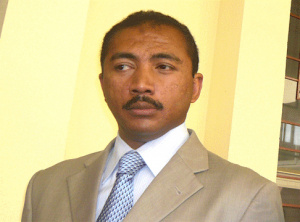
On October 31, 2018, an IMF mission in charge of the third rewiew of Togo’s extended credit facility program met with the press.
Led by Ivohasina Razafimahefa (photo), chief of IMF’s mission in Togo, the meeting gave the mission a chance to share conclusions of its review, regrouping them into three main axes.
First, the mission said that next month IMF’s board will assess the review in order to study the possibility of providing Togo a new financing of $35 million, or CFA20 billion out of CFA240 billion to disburse over three years.
The mission also said it was satisfied by the country’s performances in the framework of the ECF-backed program. All quantitative criteria and three out of five structural benchmarks were met. As for structural budget reforms, they are “gradually being implemented”.
In relation to economic activity, it is stabilizing with inflation rate at 0.9% in September 2018. Regarding efforts to streamline budget, they were made throughout the first half of 2018 and public debt was reduced, according to the delegation’s head.
While following its second review mission in April 2018, the Bretton Woods institution warned that “socio-political tensions posed a threat to economic growth perspectives with a negative impact on the real economy and fiscal revenues”, this time, it said “risks related to sociopolitical tensions have reduced”.
Séna Akoda
Ayi Renaud Dossavi-Alipoeh awarded laureate of the 15th edition of France-Togo literature award
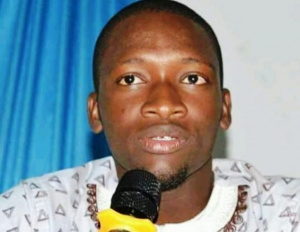
On October 30, 2018, the Togolese author Ayi Renaud Dossavi-Alipoeh won the France-Togo 2018 littérature awards for his poetry book "Chants de Sable".
Laureate of the first place for the writing contest "L’Afrique de mes rêves" initiated by the African Devlopment Bank (AfDB), the young Togolese illustrated himself during this fiftenth edition of the France-Togo literature award with his poetry book which is an ode to love and to women’s beauty.
The award created in 1985 by France-Togo association and awarded every two years, rewards the first book from a less than 40 years old Togolese author being or already edited in the past year.
A biologist by training, Ayi Renaud Dossavi-Alipoeh is a novelist, poet and blogger.
The awarding ceremony was held at the French institute of Lomé.
Octave A. Bruce
Ethiopian Airlines to launch Lomé-Los Angeles flights without stopovers on December 17, 2018

Starting from December 17, 2018, Ethiopian Airlines will launch direct Lomé-Los Angeles flights, well-informed sources reveal.
To serve this line, the airlines company should have the fifth-freedom rights between Los Angeles and Lomé which means that passengers can only book flights exclusively between the two airports.
The schedule is as follows:
Addis Ababa- Lomé,
Departure 08 : 20, arrival 11 : 10
Lomé – Los Angeles :
Departure : 12 : 25, arrival : 19 : 35.
This would be the first flight between Los Angeles and Africa without stopover. This new opportunity offered to Gnassingbé Eyadéma international airport is the result of the redirection of reservations for Ethiopian Airlines flights going to Los Angeles and Dublin to Lomé.
With traffic right to the most populated city in the US after New York since 2015, the company which is a technical partner of Asky, used to offer Addis-Ababa-Los Angeles via Dublin flights.
Séna Akoda
Governance: Togo among top 15 most reformist African nations over the past decade, according to Mo Ibrahim Index
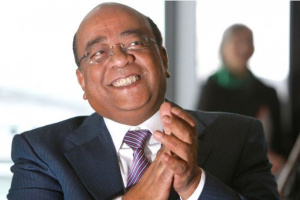
In Africa, Togo is one of the nations that has implemented the most reforms in 2018. This is revealed in the 2018 Mo Ibrahim Index on African Governance (IIAG) released October 29.
11th most reformist country in Africa since 2008
Just like last year where it outpaced many of the best economies in the reform category, becoming Africa’s second most reformist nation in the last 10 years, behind Ivory Coast, Togo is progressing but…
Indeed, after last years’ record, Togo is now among the 15 most reformist nations in the past decade. This fall reflects a general trend. “Over the last five years, more than half (19) of the countries that have improved their Overall Governance performance over the last decade are either losing momentum, with the rate of progress slowing, or have begun to register a recent downturn”. The West African nation improved its governance but lost momentum regarding its progress, according to the foundation of 46-year old billionaire Mo Ibrahim.
Spurred by many institutional, social and economic reforms, Togo was ranked 30th in Africa with a score of 49.1 points, a little below average (49.9 points), and has improved its overall governance by 5.2 points. It is the 11th most reformist nation, behind Côte d’Ivoire, which has been leading this ranking for two years now (+12.7 points), Rwanda (+5.9), Kenya (+6.1), Morocco (+7.3), Zimbabwe (+10.8).
Hundred indicators regrouped in four categories
The IIAG contains 100 indicators divided into four main categories, namely: safety and rule of law, participation and human rights, sustainable economic opportunity, and human development. Africa’s 54 countries are ranked based on their economic, demographic and environmental growth, political achievements, level of education and health, human rights, sustainable economic growth and finally human development. The safety category for example contains 27 indicators such as independence of the judicial process, corruption, domestic armed conflicts or social unrest. Under the human development category, there are 26 indicators spread across health, education and social welfare.
The category containing the most indicators is the sustainable economic opportunity with 29 indicators such as the robustness of banks, State of infrastructures, transparency of public firms and support to agriculture.
Human rights, parity and political inclusion
Under the participation and human rights group, Togo’s score rose by 5.6 points in 10 years, while average across the continent was only 2.9 points. The rise was spurred by constant efforts made by the country in regard to participation, human rights and parity. Especially, parity improved significantly (+10.3), with more efforts made to promote gender equality, establish laws to punish violence against women and to ensure workplace gender equality.
As for the human rights sub-category, it was fostered by positive achievements related to freedom of association, civil rights, as well as protection against ethnic and religious discrimination. There is also inclusion through political participation, democratic elections and civil society participation.
Significant economic achievements
With sustainable economic opportunity, IIAG shows a considerable improvement of public management with, for example, the following indicators improving: effectiveness of the public service, tax and revenue mobilization, online public services, etc. In relation to quality and opportunity of infrastructures, Togo is 12th in Africa, in terms of transport infrastructure and the country’s IT and digital infrastructures are experiencing a full modernization, according to the IIAG which cites WEF, EIU and UIT.
As for policies related to the rural sector, Togo made significant progress to improve access to land, providing water to farmers, research and development with IITRA, participation of rural organizations and promotion of gender parity in rural areas.
Similarly, there is slight improvement of business climate in the country.
Security challenges
While the continent has been experiencing a downturn in the Safety and Rule of Law category since 2008 (-2.5pts), Togo seems to be faring better in this area. This is due to slight improvement of the rule of law, transparency and accountability, but also personal safety. However, national security regressed.
Human capital
For human development, the people’s welfare improved; same goes for health and education.
Overall, in Africa, the five top-ranked countries under the IIAG are Mauritius (79.5pts), Seychelles (73.2pts), Cape Verde (71.1pts), Namibia (68.6pts) and Botswana (68.5pts).
Fiacre E. Kakpo