
Togo First
Togo : Deloitte explores ways to support 2018-2022 national development plan
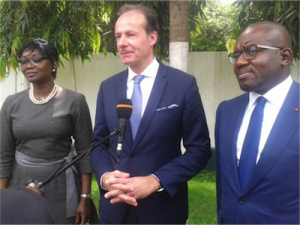
Deloitte wishes to help Togo implement its 2018-2022 national development plan. The firm’s manager for Africa, Brice Chasles, disclosed this to Togo’s Prime Minister, Komi Sélom Klassou, during an audience held on October 23, 2018.
Chasles said he discussed with the PM about various opportunities for cooperation in many economic sectors. The discussions focused mainly on finding ways to reinforce Togo’s position as business and logistics hub in the region.
The group also wishes to partner with Togo to find various ways to help the country grow. It wants in this framework to improve its business climate to attract more foreign investors.
Deloitte in the long run wants Togo to develop, both socially and economically, by developing strategic axes of the national development plan.
The firm currently provides services of audit, accounting, as well as financial, legal and fiscal consulting and operates mostly in the sectors of consumption, energy, industrial resources and products, public sector and financial services.
Séna Akoda
“MIFA will push banks to inject more than CFA650 billion into agriculture over 10 years”- Noel Bataka
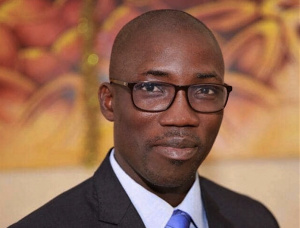
Launched last June 25th by Faure Gnassingbé, MIFA is one of the flagship projects of the national development plan. Here, Noël Bataka, coordinator of MIFA’s value chains explains the ins-and-outs of this scheme.
Togo First: From scratch, what is MIFA about?
Noël Bataka (NoB) : MIFA stands for Incentive Mechanism for Agricultural Financing. Established on a risk-sharing basis, it is a tool developed by the government to provide concrete solutions to challenges faced by agricultural value chains and their related actors. It aims to structure the market, and organize the various actors of these value chains, enabling them to get funds needed to supply quality products, in quantity, to the structured markets. MIFA provides structural solutions to risks and challenges that actors of agricultural value chains deal with in their activities, both agricultural and financial.
Togo First: How can a farmer or any other actor of the agricultural value chain benefit from MIFA?
NoB : There are four categories of actors. The first, aggregators include entities handling purchase, processing, consumption and commercialization of agricultural products, both in the country and outside. For any person falling under this category and in need of a specific commodity, such as rice, maize or cassava, you must submit the requested volume and technical specifications, then the mechanism will put you in contact with farmers.
Also, if you lack funds to purchase or process products but have solid contracts and guarantees for marketing, sales and supply, MIFA can help you secure these funds from banks.
Similarly, if you are a processor or logistics expert, the mechanism can support you as long as you have a solid contract. In this framework, you must be able to provide proofs of your market, as well as supply and transportation guarantees.
As for farmers, who belong to the third category, the MIFA helps them gather in united groupings, then in cooperatives with a more accurate assessment of their needs in input, labor, agricultural machinery and equipment. This is to help them produce higher quantity and quality goods that aggregators or a market might need. This sales contract is the starting point that the farmers organization needs to respond to demand.
Starting from that moment, farmers will identify service providers for their suppliers who form the fourth category. Input or service provision by the latter will then be directly paid with a loan secured from banks.
Alongside these four groups of actors are insurers. Insurers’ role is to provide a specific product to cover the risk of drought which the sector is currently dealing with. They also cover individual and health risks faced by farmers.
In addition to insurers, there are banks, obviously. Their role is to fund farmers and other actors of the agricultural value chains.
Togo First : … Concretely, what does this support involve ?
NoB : MIFA as I said earlier, finds buyers and market players, put them in contact with farmers and supports the whole chain with regard to loan access.
Moreover, the scheme provides technical support to farmers to help them take the most appropriate technical path towards improving their yields.
Finally, MIFA helps banks identify and characterize needs in the agricultural sector in order to develop the most innovative and appropriate financial products.
Togo First: Regarding financial products, what tools do you intend to develop to boost financing in the agricultural sector?
NoB : The government’s goal is to get banks to dedicate at least 5% of their loan portfolio to the agricultural sector. In 2017, banks and the decentralized financing system dedicated only 0.7% of this portfolio to the sector. To reverse this trend, the mechanism will back intermediaries so that they provide loans as efficiently as possible.
In this framework, an assessment, supported by the mechanism again, will be conducted. It’s a financing tackling specific needs identified by banks. Bankers will be funding business plans and not mere declarations.
Lastly, the financing mechanism operates in a loop, thus preventing misuse of funds. This way, the farmer, processor or logistician can only pay banks for the various purchases and services they invest in, and therefore has no room to use the funds for personal purposes.
Togo First: 100 billion. That’s the amount to be raised in the long term. How do you plan to secure this sum?
NoB : The hundred billion actually is a starting fund. What does this mean in actual fact? It means the State and its partners will create a common basket where both private and public funds will be collected. These resources will help banks, through a lever effect, finance themselves and agriculture via 5%-10% multiplier effects. Providing €100 million (CFA65 billion), as announced by the President on April 27, will push banks to inject up to €1 billion (CFA650 billion) of their own funds, in agriculture, over 10 years.
Togo First: How will the MIFA contribute to the implementation of the national development plan (PND)?
NoB : The second axis of Togo’s national development plan focuses on investments dedicated to processing in the agricultural and manufacturing sectors.
Under this second axis, amongst major projects, there is the creation of agropoles and the MIFA. Our objective is to ensure that the mechanism facilitates access to loans and financing for actors of the agricultural value chains in order to develop manufacturing, production and processing firms through agropoles.
MIFA is a facility created by the State for private economic operators to develop agricultural value chains, as projected under the second axis of the PND.
Togo First: After the pilot stage which focuses on the sectors of rice, maize and cassava, what are the next steps?
NoB: To master the approach and stabilize tools (since the mechanism operates based on contracts and other instruments), starting off with a simple phase is obvious. That is why the pilot stage focuses on only three sectors, knowingly: maize, rice and cassava.
After stabilizing the pilot phase, the mechanism will be expanded to seven other sectors. In crop production, we target sectors like cereals, tubers, roots, oleaginous, legumes. We will also focus on poultry, husbandry, fishery, and most importantly what will generate foreign exchange and help improve our trade balance.
Starting from 2019, the mechanism will focus on growing cash crops like pineapples, coffee, cocoa, cotton, soybeans and cashew.
Interview by Fiacre E. Kakpo
Harmonies Media Group teams up with GeoPoll to collect data on TV and radio audiences

Harmonies Media Group (HMG), leading media service in French-speaking Africa, just announced it has entered a partnership with US data collection giant GeoPoll. Under the partnership, the US firm will help HMG get data related to TV and radio audiences on a daily basis.
While the deal will first be implemented in Ivory Coast, it will be expanded to other French-speaking African countries, such as Senegal, Benin, Congo and Togo, starting in Q1 2019.
In detail, HMG will use data provided by GeoPoll to better target audiences and rapidly assess how efficient media campaigns are. This would help customers save a lot on ad spaces while ensuring that they reach the desired audience.
Data collection method used by GeoPoll helps save time and stand out from traditional means.
“We searched for tools that are adapted to our region and help us produce value to our customers, learn from media campaigns we launch and have access to opportunities present in our profession”, said Sidikou Karimou, CEO of HMG which operates in 15 African countries.
“This is now possible with our engagement at HMG and our unique partnership with GeoPoll”, he added.
Through this move, HMG, which is affiliated to Omnicom Media Group, based in New York, aims to boost its customers’ return on ad spots purchased and for a better marketing.
Octave A. Bruce
Togo set to open its first sugar factory by 2020

Togo could have its first sugar factory in 2020. This was disclosed by the head of the country’s Agricultural Research Institute (ITRA), Dr. Bonfoh Bèdibètè, in an interview with agridigitale.net.
“Two years ago, President Faure Gnassingbé instructed us to build by 2020 a sugar factory in the Oti plain”, he said. However, “sugar cane grown in Togo cannot be used to produce sugar”, according to Dr. Bèdibètè who added that the actual challenge is to “identify the best sugar cane varieties to produce quality sugar”.
In this regard, he revealed that various financings were secured and used to purchase “43 varieties of sugar cane from Thailand, USA, etc.”. “Among these 43 varieties, we, following experimentation, identified 10 that are very efficient and able to produce a lot of sugar. We have been conducting this experiment for a year now”, ITRA’s head declared.
“We will continue experimenting on the ten selected varieties to find the best two or three to achieve a very good production in the Oti valley,” he added.
Tests are ongoing at the experimentation field, in Sadori (Northern Togo), and expected results should help develop a 20,000 ha top quality sugar cane plantation. If everything goes according to schedule, Togo should have its first sugar factory by 2020, in the Savanes region.
Séna Akoda
Togo to raise CFA50 billion via a simultaneous fungible treasury bonds issuance
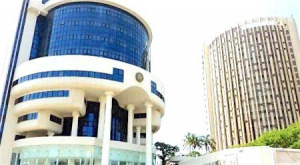
Subsequent to a successful bond issuance last October 12, Togo once again attempts to raise CFA50 billion on the regional financial market, via a simultaneous issuance of fungible treasury bonds.
The operation will be divided into two categories; one with a three-year maturity period and the other with a five-year maturity period, at a unit value of CFA10,000. Proceeds of the issuance will be used to finance its national budget.
The tender notice issued by UMOA-Titres agency for the issuance indicates that interest rates for bonds that will mature over three years (September 20, 2020) is 6% while the rate for the second category (September 20, 2022) is 6.25%.
Bids will be examined on October 26, 2018, and value date for the securities has been set to October 29, 2018. Capital reimbursement (In Fine) will occur on the first working day following the maturity date, for all securities. As for related interests, they will be paid yearly, every September 20th, throughout maturity period.
“Interests on treasury bonds are tax-exempt for investors living in Togo. However, non-resident investors will pay taxes in accordance to the tax system in place in their country of residence”, the notice reads.
Séna Akoda
Leveraging digital banking, Oragroup aims to gain two million new customers by 2022
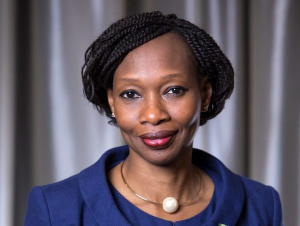
Binta Touré Ndoye, head of Oragroup which is set to “perform the largest IPO of the BRVM since its creation”, recently revealed the group’s statistics and perspectives.
With a total balance sheet of more than CFA2,000 billion, Oragroup currently has 43,000 customers. The group plans to add two million customers to this number by 2022.
According to Binta Touré Ndoye, to achieve this goal, the group will rely on digital banking.
Indeed, this strategy has proven less expensive than opening new branches. In addition, it is “innovative, better serves customers and most importantly, helps the group achieve greater financial inclusion”, according to the group’s managing director. “Digitalization helps make a substantial leap by providing access to financial services to the most remote and disadvantaged populations”, she declared.
As a result of its digitalization process, Oragroup’s customers can now perform various transactions, via their mobile or computers, and banking cards as well.
Séna Akoda
Togo: TVSAT ordered to pay more than one million euros to French TV service provider Mediawan
Last October 10, Togolese pay TV provider TVSAT was ordered by the Paris Commercial Court to pay more than a million euros to French TV service provider Mediawan. According to Ecofin Agency which reported the news, TVSAT failed to pay the royalties it owed Mediawan under a distribution agreement dating from August 2011.
Indeed, on 2 August 2011, AB THEMATIQUES, formerly AB SAT, owned by Mediawan, signed with Beninese pay TV provider TV COM an agreement to launch a satellite-based pay TV service. Under the deal, the Beninese firm was entitled to exclusively provide Mediawan’s channels in French-speaking Africa. However, on 2 November 2012, TV COM transferred its contract with AB SAT to Togolese TVSAT, all obligations included.
In September 2015, AB SAT negotiated with TVSAT to cancel exclusivity over its channels in French-Speaking Africa. Finally, the two parties reached an agreement under which AB SAT was to pay a monthly royalty for every subscriber receiving Mediawan’s channels through any other provider than the Togolese firm. Meanwhile, the latter would still keep paying AB SAT to broadcast its channels.
Yet, a few months after the deal was reached, TVSAT stopped paying what it owed AB SAT but kept broadcasting Mediawan’s channels. After many infructuous warnings issued to get the Togolese firm to pay, both parties tried to negotiate a new deal but failed. As a result, AB THEMATIQUES terminated its deal with the two parties on December 7, 2017, before suing TVSAT and its guarantor TV COM. Mediawan’s subsidiary then demanded payment of what the two operators owed, with interests.
In return, TVSAT and TV COM also sued Mediawan highlighting various grievances to the contract signed in August 2011. However, the two were ordered by the French legislation to pay the French firm, with provisional enforcement, meaning that the debt can be collected pending an eventual appeal.
Servan Ahougnon
Oragroup to make the largest IPO in BRVM's history
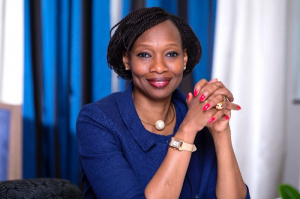
The Lomé-based pan-African banking group Oragroup announced it received approval from the Regional Council on Investments and Financial Markets (CREPMF), to launch its initial public offering on the Regional Securities Exchange (BRVM) in Abidjan.
“The subscription operated by the Management and Intermediation Companies (SGI) will take place from 29 October to 16 November, with the possibility of early closing in the event of oversubscription, for a share listing in February 2019, subject to validation by the BRVM,” said the company which operates in 12 Western and Central African countries.
Opening of 20% of the capital
In total, Oragroup plans to open 20% of its share capital, which it estimates at CFA56.92 billion (€86 million), in a public auction (OPV). The operation concerns 13,883,006 shares, including 6,097,561 new shares and 7,785,445 existing shares, which will be respectively sold on the primary and secondary markets of the regional stock exchange, at CFA4100 per share.
The remaining 80% of the capital will still be held by current shareholders. With this transaction, Oragroup will become the largest IPO on the Abidjan Stock Exchange since its inception in 1998.
Binta Touré Ndoye, the company’s Managing Director, said this capital increase will consolidate growth and support development. The company thus intends to invest in digital banking, strengthen its presence in Central African countries, increase its reputation among the financial community and the general public, and strengthen the equity capital of certain subsidiaries.
Positive performances
Since 2014, the group has been remarkably doing well, with a 45% increase in balance sheet total to CFA1794 billion (€2.72 billion) at the end of 2017.
Over this period, net banking income increased by 33% to CFA108 billion (€164 million). Motivated by this growth, net income has more than quadrupled in three years, reaching CFA21.97 billion (€33 million) last year.
Oragroup's latest performance is promising. Last year, a 45% increase in profit enabled the group to distribute dividends to shareholders.
Let’s note that following the transaction, Emerging Capital Partners (ECP) is expected to retain more than 50% of Oragroup's shares.
Fiacre E. Kakpo
BRVM should offer innovative products and services, Kossi Tofio says
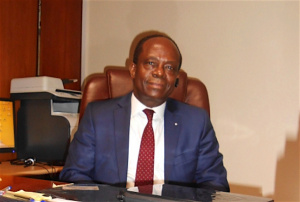
On October 18, 2018, the BRVM investments days was launched as announced. The event that is to be concluded today October 19, 2018, falls within the framework of a promotion campaign initiated by the West African regional security market (Bourse Régionale des Valeurs Mobilières-BRVM), to boost the number of companies listed on that market.
According to Kossi Tofio (photo), representing Togo’s minister of finance and economy, the choice of the theme "Innovation and development in the financial markets" is perfectly justified.
He ensures that Togo is resolutely committed "to supporting every new initiative aimed at ensuring the long-term funding of economies and companies as well as the sustainability of the Union’s growth [WAEMU]".
Indeed, "although our union has shown resiliency towards the slow down in economic activities observed these past years on the continent, after the 2005-2015 period, the challenge of consolidation of the foundation of our economies and their diversification remains the same”, the official stated adding that "the BRVM should play its part by offering innovative products and services”.
In view of the increasingly high expectations of the state and private entities of the union towards the BRVM, the security market should play an important part in the mobilization of increased resources for the state and private companies, he said.
Séna Akoda
Togo: Lomé hosts two-day workshop to discuss private sector’s contribution to PND’s implementation
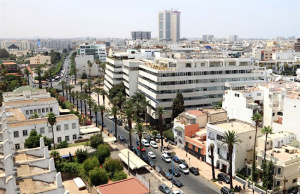
Lomé is currently hosting a top-level workshop for the appropriation of the national development plan (2018-2022 PND).
The meeting focuses on contribution of private sector to the plan’s implementation. This explains its theme, knowingly “Private investments for PND’s success”. In effect, authorities expect private sector to contribute 65% of financing required to implement the PND.
The workshop will end Saturday October 20 and covers main axes and actions that concerned actors are to take towards the plan’s realization.
Let’s recall the new development plan revolves around three axes, namely : developing a top-class logistics and business hub, creating transformation poles for agriculture, manufacturing and extractive industries. The last axis concerns social development and establishing inclusion mechanisms.
Séna Akoda