

Togo First
Vivendi will open Lomé’s second CanalOlympia movie theater this Saturday
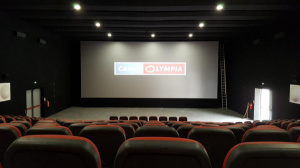
Announced a few weeks back, Vivendi’s second CanalOlympia movie theater will open on September 29, in the Agoè suburb of Lomé.
The theater that was baptized “Midè”, meaning “Your home”, will be located on the Bluezone Cacaveli site.
The 300-seat ultra-modern, polyvalent and eco-responsible infrastructures respects the government’s new objectives to use clean energy more as it is solar-powered.
Midè adds to Godopè, the first CanalOlympia movie theater opened at the heart of Lomé in October 2017.
Octave A. Bruce
BRVM to create IPO fund to help West African SMEs get listed more easily
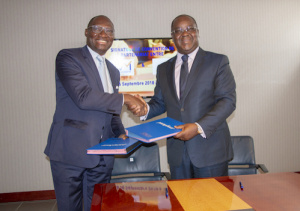
On Wednesday, the Bourse Régionale des Valeurs Mobilières (BRVM) and the private Equity fund Enko Capital signed a partnership agreement to get more firms listed on the stock market. “This agreement will help boost the listing process and attract more private actors on the stock market,” said Cyrille Nkontchou, Founding director of Enko Capital.
The move which mainly targets SMEs plans the creation of an IPO fund with an initial amount of $75 million. This fund will focus on investment in firms interested in getting listed.
Enko Capital bets on the BRVM’s elite programme, which Togolese firm Sodigaz adheres to, to attract more firms. The private equity fund says it has already approached some of the firms benefiting from the programme. “We have approached some firms that adhere to the BRVM Elite Lounge scheme, which we think could be recipients of our fund’s investments,” Nkontchou said.
However, our investments go beyond these companies. “We urge every potential firm interested in getting listed to come to us and we will be glad to see in what way we could provide you support,” the manager added.
Private equity funds help prepare, in a certain way, firms to list since throughout the 5 or 7 years of investments, they get involved in the firms’ management helping improve governance. From the start to the end of the process, you have a firm that is more or less ready to list, said BRVM’s director, Edoh Kossi Amenouve, explaining how private equity works.
Fiacre E. Kakpo
Energy: AfDB plans to invest $70 million in Togo’s private sector, including $14 million for BBOXX
The African Development Bank (AfDB) plans to invest about $70 million (CFA39.5 billion) in various energy projects initiated by Togo’s private sector.
This was disclosed last Tuesday during the midway assessment of the 2016-2020 Country Strategy Paper of the institution in Togo.
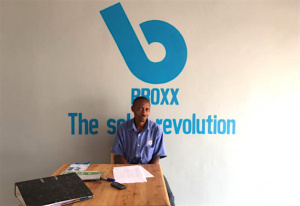
On the same day, the Abidjan-based Bank said it could by 2020 approve a $14 million (CFA7.9 billion) support for BBOXX, the British firm active on the CIZO project. Under the latter, the UK firm plans to deploy 300,000 domestic solar systems over five years.
In addition, AfDB could disburse $56 million (CFA31.6 billion) for energy projects carried out by the private sector. The financing should be approved in 2020 by the pan-African institution.
Fiacre E. Kakpo
Togo: 2032 land titles issued between January and August 2018, up 55%

Between January and August 2018, around 2032 land titles were issued, against 1034 over the same period the previous year. The rise (+55.8%) was spurred by the various reforms implemented by the Business Climate Cell and measures initiated by the Togolese Revenue Office.
In effect, the improvement is to be attributed to the tax office’s decision to sign up to 100 titles and 150 plot plans every week. In this framework, from September 1 to 13, 2018, 126 land titles were produced, against 75 in 2017, over the same period.
Meanwhile, significant efforts were mustered in regards to the issuance of post-registration acts such as mortgages and property transfers…
Since June, the tax commissioner, as conservator of land and mortgages delegated his signature to Bali Komi, head of Land Conservation, for the issuance of all documents related to post-registration activities.
This decision, he took to speed up processes, optimize revenues and facilitate access to loans for business owners.
For the tax commissioner's office, the adoption of the new tax code voted June 5, paired with purchase of new cadastre and land conservation equipment, paved the way for much more progress in regards to land management.
Fiacre E. Kakpo
Togo: National federation of cashew producing cooperatives eyes 130,000 tons output by 2024
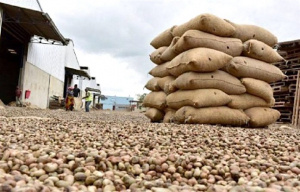
In Togo, the national federation of cashew producing cooperatives (FNCPA) expects local cashew output to rise from 20,000 tons currently to 130,000 tons by 2024.
To achieve this target, the FNCPA with the support of the ministry of agriculture, launched in the central region a workshop to train farmers to cashew grafting. Besides, the federation plans to provide the workshop’s participants with quality seedlings and help them shorten seedlings’ productivity cycle.
It will also develop orchards with grafted seeds for which first flowering begins after five months.
Let it be recalled that the government has already disbursed a three-year financing, valued at $5.6 million, for a project that aims to boost sales capacity and sustainability of the cashew and shea nut sector in Togo.
Séna Akoda
In 2017, Togo received 566,764 tourists, generating CFA44.7bn for hotels
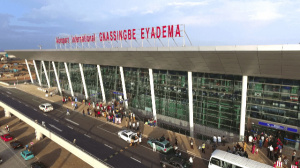
In 2017, Togo received 566,764 tourists, up 33% compared to 2016’s 425,669.
Consequently, hotel earnings surged as well (+17.9%). These rose from CFA37.9 billion in 2016 to CFA44.7 billion last year.
According to the minister of tourism, Ihou Attigbè Yaovi, this performance results from various major international events held in the country.
The official urged various actors engaged in the sector to "leverage on digital tools to develop their businesses". A statement that aligns with the theme "Tourism and digital transformation" picked for the World Tourism Day which is celebrated on September 27th.
To "further boost tourist arrivals in Togo and improve the country’s touristic image", a new promotional website is being developed according to credible sources.
Togo was in 2017, the second African country to record the highest growth in tourist arrivals (+46%), after Egypt, recent data from the World Tourism Organization (WTO) shows.
It should be emphasized that WTO’s figures take into account tourists who registered at "hotels and similar infrastructures".
Octave A. Bruce
Togo: US Self Help program grants civil society organizations $40,000 for community development projects
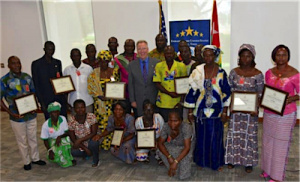
Through the Self Help program, the US embassy in Togo granted on Wednesday $40,000 to ten Togolese civil society organizations so they carry out various community development projects.
Focused on areas such as farming and husbandry, among others, these projects aim to help communities self-promote themselves.
In effect, part of the funding will be used to purchase equipment for mushroom cultivation, mills and cashew seedlings.
Another part will be used to build a poultry house, purchase 500 chicks, guinea fowl eggs, veterinary products and feed to ensure a better production of local poultry, etc.
David Gilmour, US ambassador to Togo declared regarding the new fund: "This new special fund for self-promotion, aims at improving communities’ financial, health and living standards, as well as their social welfare, through projects they will develop themselves". The official stressed on agriculture, husbandry, income-generating activities, as main sectors to benefit from the facility this year.
The self-help fund has been helping communities develop projects since 1964.
Séna Akoda
AfDB plans to disburse CFA80 billion in Togo by 2020
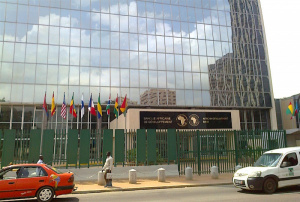
The African Development Bank (AfDB) announced last Tuesday that it will maintain the two pillars of its 2016-2020 country strategy paper for Togo. This decision was spurred by the many structural governance reforms initiated by the Togolese government and the weak operationalization rate of these reforms, due to the political crisis.
Midway down its five-year intervention plan in Togo, the financial institution is satisfied by its portfolio’s performance but urges local authorities to increase their efforts, to improve disbursement rate which stood at 55.3% over the period reviewed.
By 2020, AfDB plans to invest about CFA80 billion in activities related to the two pillars of Togo’s country strategy paper.
In detail, for the first pillar which is related to the development of inclusive growth and agroindustrial competitive poles, the bank could approve CFA60 billion of financing starting next year.
The second pillar related to the support of financial, sectoral and local governance, for its part, could benefit from about CFA20 billion.
Beside these, the institution will mostly support economic and sectoral evaluations (debt, local tax, private sector, public investment) and provide counseling.
Fiacre E. Kakpo
Togo and Gabon sign an agreement to suppress visa requirements for diplomatic and service passports holders
Last Tuesday, the ministers of foreign Affairs of Togo and Gabon, Robert Dussey and Regis Immongault, signed in New York an agreement to suppress Visa requirements for holders of diplomatic and service passports from both countries.
The agreement was initialed on the sidelines of the 73rd session of the UN general Assembly started September 18.
For Togo, this new arrangement adds to others it already had with Qatar, Morocco and the Central African Republic.
Since the beginning of 2018, Togo’s diplomacy has been engaging other countries’ diplomacy actively.
Beside the agreement to reciprocally suppress their Visas, Lomé and Libreville also announced the signing of an agreement to fight child trafficking.
Togo: Insurance sector recorded good performances in 2017

In 2017, the insurance sector fared well in Togo, according to Claude Daté Gbikpi, chairman of Togo’s Insurers Committee (CAT).
The executive who was expressing himself during celebration of the second edition of CAT days indicated that turnovers of firms operating in the Fire, Accidents, Risks, General and Transport insurances or Non-Life, reached CFA34 billion, against CFA29.7 billion in 2016, thus up 15%.
Same goes for firms operating in the Life sector. Their activity recorded a 6% growth generating CFA27 billion, at the end of 2017.
However, CFA27 billion was paid by insurers in 2017 to cover disasters, Gbikpi added.
Octave A. Bruce