
Togo First
Togo: At June 30, 2018, the National Fund for Inclusive Finance had raised CFA30bn from State and lenders
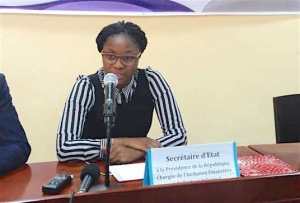
In Togo, the national fund for inclusive finance (FNFI) has at June 30, 2018 collected a total of CFA30 billion from the State and various lenders. This was disclosed Sept 18 by Assih Mazamesso, State secretary in charge of financial inclusion and informal sector.
Leveraging the funds, the FNFI has provided CFA75 billion loans through a revolving system. Compared to CFA73 billion announced a few months back, the figure is quite an improvement.
Looking at loan recovery rate, it stands at 93% like announced during the four-year review meeting of the FNFI. In this regard, the Savanna region is the best debt-payer with a reimbursement rate of 100%.
Encouraged by these performances, the State secretary said FNFI should achieve financial autonomy by 2019 and thus announced the arrival of new products.
Séna Akoda
Togo: Rehabilitation and modernization works on Avepozo-Aného road to soon begin

In Togo, the project to rehabilitate and modernize the Avépozo-Aného road will soon begin, according to a document obtained by Togo First.
In detail, populations affected by the project are being compensated. “The inter-ministry committee for the compensation of people affected by the project, after assessing built properties, is conducting negotiations and payments,” the document states.
In line with the project, a delegation including representatives from the African Development Bank (AfDB), the WAEMU commission, the European Investment Bank (EIB), and the European Union (EU), was in Togo between March 14 and 24, 2016, to assess and validate the project. Under the latter, let’s emphasize, the Avépozo-Aného road should turn into a 2x2 30m-wide axis; protection dikes also in addition to a 2x2 road linking Ouidah in Benin to Togo’s border will be built.
Séna Akoda
BRVM launches fintech challenge
To boost its support to the sub-regional financial system and anticipate future disruptions, the BRVM just launched a fintech contest.
Entitled BRVM Fintech Innovation Challenge, this contest targets young talents, aged between 18 and 40, and bearing innovative projects, Ecofin Agency reports.
Some of the selected applicants will benefit from a 6-12 months support to implement their projects at the BRVM Fintech Lab. Others will take part to a hackathon organized by the BRVM and AfricaFinLab, an African initiative that exists to develop and promote innovation in the finance sector.
With the upcoming challenge, participants with the most innovative projects could get contracts with partnering firms and secure financing.
Applications are opened up till October 17, 2017. According to the Abidjan-based stockmarket, application form is available on its official website.
A five-point review of Togo’s banking sector in 2017
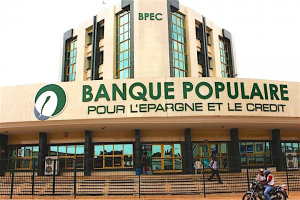
The Central Bank of West African States just released its annual report on banking conditions across the WAEMU in 2017. The document provides a detailed review of the union’s banking sector, with specifics regarding loans granted over the last year, as well as customers’ deposits and interest rates in place.
In five points, here is a summary of the apex bank’s report for Togo.
No new institution in 2017
Though three new banks joined the union’s market, in Côte d’Ivoire, Burkina Faso and Senegal, the BCEAO’s report indicates that in Togo, the banking sector recorded no new arrivals with 15 lending institutions, 13 banks and 2 financial institutions, operating in the country, just like in 2016. In 2017, indicators of the banking sector were overall satisfying, despite some corrective measures imposed on some institutions, including two State-owned banks. Also, though some banks show concerning signs, the central bank says measures were taken to improve affected ratios, such as social capital threshold. The latter is now set at CFA10 billion for banks and CFA3 billion for financial institutions.
Lower volumes of loans granted
Following consecutive surges, knowingly a 13.5% increase to CFA664.4 billion, in 2016, loans provided by Togolese banks slumped by about 4.2% falling at CFA632.2 billion. Out of this amount, private firms captured the most. However, on a year-to-year basis, the figure slumped by 10.4%; a decrease spurred by lower loans dedicated to equipment purchase which fell 61.9% to CFA39 billion. Moreover, housing loans also decreased by 42%. Same goes for loans given to support exports. Meanwhile, consumption loans increased but very slightly.
Loans granted to cooperatives, village associations, individual companies, insurance companies and pension funds also decreased. This is alarming, considering that in Togo, close to 70% of the people live off agriculture.
Overall, the slump is attributed to the socio-political crisis recorded in the second half of 2017. Indeed, due to the political uncertainty resulting from the crisis, some banks preferred pushing the risk on treasury loans. They indeed disbursed more than CFA327 billion (+19%) for companies treasury.
Higher interest rates for vulnerable groups
While average debit interest rates applied in WAEMU states remained stable in 2017 (about 6.93% in Togo), the lowering trend started since 2012 is maintained. Last year, rates were the lowest in the past decade. It improved 21 base points to 8.1%. According to the central bank, this is due to high rates imposed by intermediates. In detail, rates applied for cooperatives, village associations and insurance-pension funds were the highest, 9.15% and 9.74% respectively.
Long-term loans are safer
In 2017, long-term loans were the safest for banks. In effect, rates for 10-year loans were the lowest, while very short term loans (less than a month) had the highest interest rates.
Deposits plunged drastically
In 2016, customers deposited a total CFA1,742.2 billion. Last year, banks collected 28% less, knowingly CFA1,254.4 billion.
From private companies operating in the production chain, banks collected CFA313 billion, thus 25% more than the year before.
Fiacre E. Kakpo
Togo : Government suspends BTCI-UTB merger
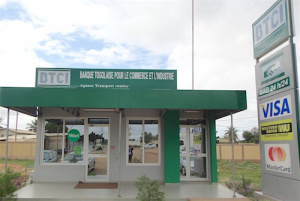
Approved during a ministers council end-March 2017, the merger between State-owned banks BTCI and UTB was suspended, sources close to the case told Togo First.
“The merger is suspended and its effective date has been postponed…until ongoing talks with the IMF, regarding other options to restructure or rescue BTCI and UTB are concluded. The two institutions will hence restart operations, independently,” reads a note addressed to the lenders by Patrick Mestrallet who is in charge of the merger.
The merger was decided by the government to “consolidate the banks’ financial situation and increase their respective capitals, thus solvability in order to improve their intervention capacities to better support the national economy,” after their privatization failed.
Concerning the latter, it was a measure initiated by the International Monetary Fund (IMF) in line with its 3-year ECF programme signed in May 2017 with the Togolese government. This program aligned with Lomé’s will disinvest from public banks.
Séna Akoda
Togo drops a rank in UNDP’s human development index (HDI)

Last Friday, the United Nations Development Programme (UNDP) released its latest human development index (HDI). In the rankings, Togo came 165th over 189 nations.
With an index of 0.503 against 0.500 in 2017, the country ranked under the category of countries with a “low human development”, alongside Nigeria (157th), Rwanda (158th), Benin (163rd), Senegal (164th) and Côte d’Ivoire (170th).
In details, the UN puts at 60.5 years life expectancy at birth in Togo, about the same as the average in the sub-Saharan African region.
Under the education segment, the index estimates to about 12 years the average number of years of schooling in Togo, against an average of 10 years in the region. As for expected years of schooling, it is estimated at 6.5 years.
Per capita income in terms of purchasing power parity stands at $1,453.
Compared to 2016, Togo’s global rank in the HDI fell one spot. However, compared to 2012, the country is 5 places up.
Norway is the number one on the index worldwide, followed by Switzerland, Australia, Ireland and Germany.
In Africa, Mauritius is the best-ranked, and holds the 65th position globally. The last five worldwide are Burundi, Chad, South Sudan, Central African Republic and Niger.
BOAD launches contest for best clean energy project across WAEMU
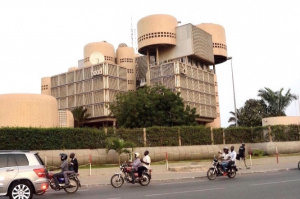
For its 45th anniversary, the West African Development Bank (BOAD) has launched a new contest which will reward the best bearers of clean energy projects (in WAEMU) with a CFA30 million grant.
Eligible applicants include civil society organizations, professional or non-professional associations, researchers, and private entities. Projects submitted should include an environmental resilience component, help create jobs for youth, boost Togo’s competitiveness in renewable sector, and meet basic social needs, among others.
The prize to be gained is one of many advantages that the contest’s winner is to benefit from. Applicants have until next October 8, to submit their candidacy.
Séna Akoda
Togo: Seventh International Agriculture & Agrofood fair of Lomé to be held Oct 23-29, 2018
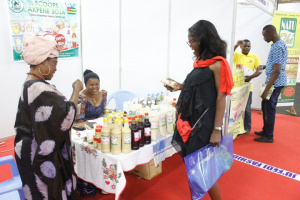
From October 23 to 29, 2018, the International Agriculture and Agrofood Fair of Lomé (SIALO) will take place. This was recently announced by the event’s coordination team on its official website.
The seventh edition of the fair will be held at the Centre Togolais des Expositions et Foires (Togo 2000) to be exact.
The Sialo brings together various actors of the Togolese agricultural, fishing, husbandry, agrofood, catering sectors, among others.
Its promoters aim to foster talks and exchanges between these actors, thereby promoting local agricultural projects and attracting subventions for these. The event also exists to improve access to the international market, information, research, training and innovations in the agricultural sector.
During the fair, there will be agrofood days across the country’s various regions, a market place with exhibitions of products, services, technologies, and innovations, B2B meetings, etc.
Paired with SIALO’s 7th edition is the 4th packaging fair.
Séna Akoda
Togo to open by September 2019 a school-farm in order to develop its own dairy sector
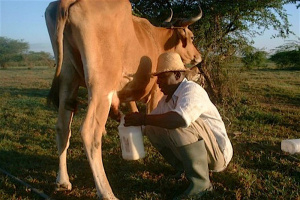
By September next year, Togo plans to open a school-farm in the Savanna region. The project falls under its 2018-2022 national development plan and will help train young breeders, and subsequently help the country get its own dairy production and processing value chains.
“We wish to have our own dairy sector. We are here to identify good partners to benefit from their expertise in cow genetics and their equipment,” said Dammipi Noupokou, special advisor at the Presidency, who headed a delegation present at the Rennes International Husbandy Fair (SPACE).
“This school will have its own herd. It will operate a small dairy unit supplied with cows around, and pasteurized milk, yogurts and fermented traditional cheese will be produced,” added Helene Bali, general secretary of ministry of agriculture.
According to French newspaper Ouest-France, Serap, a group specialized in milk storage and conservation, is interested in this value chain.
“We would be glad to collaborate with you,” said Ali Haidar, sales engineer at Serap's branch for Africa and Middle East.
The group would like to get engaged in everything logistics, such as transportation and conservation of milk: “Transporting milk, with no disruption of cold chain, from small family breeders in the Savanna to the school-farm’s small dairy unit. The milk will then be stored in refrigerated drums, then solar-powered milk tanks,” the French newspaper indicates.
Earlier on, Bèdibètè Bonfoh, managing director of Togo’s Institute for Agricultural Research, had announced a program to enable farmers to boost their milk production. “Through a genetic enhancement program, local species will be crossed with species with great milk production capacity. The cross-breds will then be given to farmers with the government’s support,” the official said.
Togo, it should be noted, currently imports a significant part of dairy products it consumes.
Fiacre E. Kakpo
PRODAK to benefit from $5.6M funding over three years
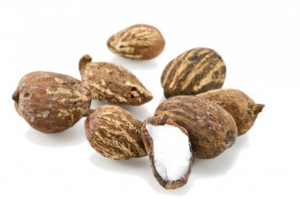
Launched by Bernadette Legzim-Balouki, minister of Trade, the Project for the sustainability and reinforcement of cashew and sheanut’s commercial capacities (PRODAK) will benefit from a three-year $5.6 million financing. This was disclosed by Commodafrica.
In this framework, Togo’s government and the World Trade Organization (WTO) signed a financing agreement last week. The monies will be disbursed via the Reinforced Integrated Scheme, which is led by the WTO.
The project’s end-goal is to improve the quality of cashew, sheanut and their derivatives. It should also help both sectors’ productivity, making them true cash crops. This will also help slightly raise revenues of the sectors’ actors.
Séna Akoda