

Togo First
Chinese firm Andaz Group interested in Togo’s power and transport sectors
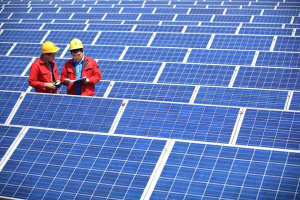
Last Thursday, top executives from Chinese firm Andaz Group met with President Faure Gnassingbé to discuss investment opportunities in Togo.
The group which invests mainly in infrastructures, energy, real estate and agricultural development, in Africa and elsewhere, eyes Togo’s transport and power sectors.
If concretized, the project would significantly boost Togo’s electrification strategy, contributing to a rapid realization of the government’s goal to achieve universal access to power by 2030.
Besides sectors mentioned earlier, the Chinese group invests also in oil, gas, cement, heavy machinery and chemicals. According to a press statement released by Togo’s presidency, so far the overall value of its transactions is close to a billion dollars.
Tech : President Gnassingbé meets with Jack Ma to offer young Togolese more opportunities
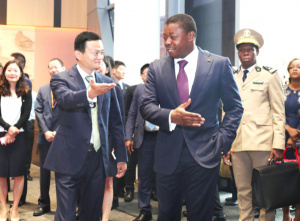
Last Thursday, Togo’s President Faure Gnassingbé visited Alibaba’s Xixi campus, in Hangzhou.
The African leader and his delegation had the chance to, in the presence of tech mogul Jack Ma, be introduced to Alibaba’s major projects.
The various projects cover smart logistics, financial and agricultural inclusion, and artificial intelligence. Following the introduction, Gnassingbé applauded Ma for his vision and humanism.
Moreover, in line with Togo’s vision to become a logistics and digital hub, the country will enter into partnership with Alibaba Group. Under this partnership, young Togolese will be able to benefit from various trainings provided by Ma’s group.
In the same vein, Ma expects young Togolese to join one of his e-commerce promotion and incubation programs in Africa.
This program which was announced last year by the Chinese billionaire is backed by a $10 million support.
Fiacre E. KAKPO
Togo: PNIASAN produces good results according to minister of agriculture
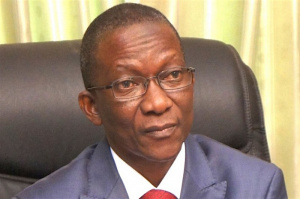
In Togo, the national programme for investment, food and nutritional security (PNIASAN) is bearing fruits.
Only a few months after its launch, this programme has registered 147,235 direct beneficiaries already out of a target of 150,000 by end-2018. This was revealed by the minister of agriculture, Ouro-Koura Agadazi, as he reviewed the Agriculture Support Programme (PASA) which falls under PNIASAN.
According to the official, so far “20.55% of people who benefited from the program are women, over a forecast of 18%. It also enabled the processing of 24,526 tons of agricultural products, over 27,070 tons targeted; that represents an achievement rate of 98.16%”.
In addition, the programme also helped boost husbandry in the country. “The size of livestock owned by beneficiaries grew by 245,084 herds, over a forecasted 271,943 herds. This represents an achievement rate of 90.93%. For agricultural products, corresponding volume soared by 30,765 tons, against 28.2 tons expected,” the minister added.
Togolese and Chinese firms held roundtable ahead of Togo-China Business Forum
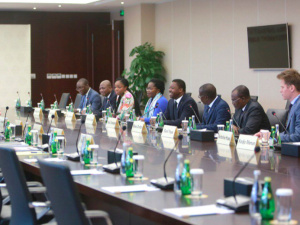
Ahead of the Togo-China Business Forum taking place today, in Hangzhou (China), Togo’s president, Faure Gnassingbé, chaired Sept 6 a roundtable gathering Chinese and Togolese business operators.
Present at the meeting was the chairman of the China Chamber of Commerce for Import and Export of Machinery and Electronic Products. There were also the president and vice-president of Togo’s chamber of commerce and industry (CCIT), as well as managing director of Togo Invest Corporation.
At the end of the meeting, CCIT and the China Chamber of Commerce for Import and Export of Machinery and Electronic Products signed a partnership agreement to attract private investments from China for the 2018-2022 national development plan (PND). The move aligns with the government’s ambition to raise 65% of funds required for the PND from private sector. The agreement will also spur skill transfer between Chinese and Togolese business operators.
The China Chamber of Commerce for Import and Export of Machinery and Electronic Products has more than 10,000 members and regroups various major commercial and manufacturing companies, as well as firms engaged in electronics and mechanical industries.
Ecobank’s CEO, Ade Ayeyemi, in Hangzhou to promote Togo’s national development plan
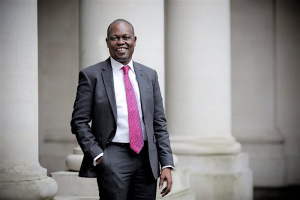
Yesterday, Ecobank’s CEO, Ade Ayeyemi, arrived in Hangzhou, China, where he attends the very first business forum organized by Togo.
Organized in partnership with the private sector, the ongoing business forum aims to get Chinese investors involved in Togo’s major projects falling under the 2018-2022 National Development Plan (2018-2022 PND) adopted last month. The event will focus on five major projects in sectors such as logistics, industry, agro-food and energy.
Ayeyemi and Paul-Harry Aithnard, who heads the bank’s division in WAEMU, will showcase during the forum business opportunities that Togo has to offer, along with its growth perspectives.
Also present at the event is the president of Togo’s big companies association, who landed in Hangzhou Thursday Sept 6.
According to Togolese authorities, about 30 Chinese firms are attending the forum where the famous Guinea Bissau economist, Carlos Lopes, is also expected.
Fiacre E. Kakpo, Special Envoy (China)
FOCAC: Togo and China sign various bilateral cooperation agreements
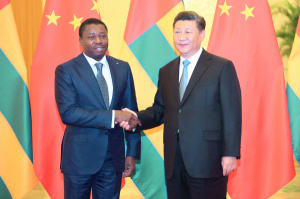
On September 6, President Faure Gnassingbé signed with his Chinese counterpart Xi Jinping various bilateral cooperation agreements. The signing ceremony was held in Beijing and comes at the end of the Forum on China-Africa Cooperation (FOCAC).
Gnassingbé took this occasion to congratulate Jinping for having successfully organized FOCAC. The African leader lauded the eight initiatives that Beijing announced it would engage in Africa.
For his part, Xi Jinping invited Togo to take part in the Belt and Road project. He also said his nation is ready to boost cooperation with Togo in sectors such as agriculture, energy and infrastructures.
Togo’s President is now in Hangzhou where a Business Forum is being held.
Vlisco launches the yearly VLISCO FASHION FUND for young African fashion designers

Vlisco, the Dutch Wax Hollandais manufacturer has launched its yearly competition VLISCO FASHION FUND aimed at emerging African fashion designers. The competition is open to passionate young designers with less than three years experience.
At the end of this competition, the jury will choose the seven most creative and innovative designers who will receive funding equivalent to €5,000 (CFA3 million) each and fly for a two-week masterclass at “Meester Coupeur”, a renowned Amsterdam-based fashion designing school where big names of the Dutch fashion industry had been trained.
With this competition, Vlisco which also owns Woodin, Uniwax, and GTP wants to support African fashion designers, provide them an increased visibility internationally and ultimately help them promote their fashion label.
Registration is open till September 16, 2018, on this link:
Togo: China Merchant Group will invest in industrial sector, in addition to its operations at Lomé’s port

Ahead of the Business Forum in China, President Faure Gnassingbé met various business moguls from the Middle Empire.
On Wednesday September 5, 2018, the leader met CEO of China Merchant Group Holdings, which holds 50% of Lomé Container Terminal (LCT). According to the communication cell of Togo’s presidency, the Chinese firm has most of port management assets in China, but its operations in Togo, Nigeria, Djibouti, Sri Lanka and Turkey are not marginal. Actually, operations in these nations recently grew by 5.7%.
During the meeting, both parties agreed to extend their partnership to the industrial sector. This would generate many jobs for the Togolese youth, among others.
Besides China Merchant Group Holdings, Togo’s president met on the same day with top executives of China Construction Bank, China’s second largest bank, to discuss potential investments in Togo, related to ore transportation infrastructures.
Meanwhile, a ministerial delegation from Togo met Yunfeng Diao, Vice President of Haier. The various parties discussed mainly about the modernization of industry and education, in Togo.
Séna Akoda
Togo: Chamber of Commerce and Industry launches fair in Baguida

On September 5, Togo’s chamber of commerce and industry (CCIT) launched the very first edition of the 'Quinzaine commerciale des vacances', in Baguida (24km from Lomé).
The event is a trade fair and its opening was chaired by Johnson Kuéku-Banka, managing director of Togo’s center for expositions and fairs as well as representative of the minister of trade and private sector promotion.
Initiated by the CCIT in line with its vision to extend fairs to towns around Lomé and other parts of Togo, the current fair aims at boosting trade and helping business owners get more customers.
In his opening speech, Kuéka-Banka declared: “This fair shows the government’s will to boost economic integration via intra-community exchanges. It will be a real brainstorming platform that could lead to great partnerships”.
Togo and China sign an agreement to open up their respective economic markets to each other
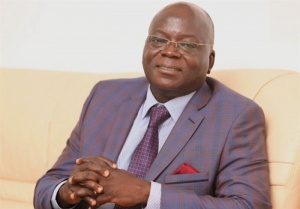
On September 5, 2018, Togo’s chamber of commerce and industry (CCIT) signed with the China Council for Promotion of International Trade (CCPIT), an agreement to boost economic cooperation between Togo and China.
The agreement signed by the respective heads of CCIT and CCPIT, Germain Méba and Jiang Zengwei, aims to ease access to the two markets. This would subsequently help increase trade between both countries, through a win-win cooperation.
CCPIT, through its diversified branches invests in many sectors such as textile, agriculture, commerce, construction materials, cereals and mining.
Séna Akoda